What's shown
The character is drawn in black outline: a round, hairless head, three or four horizontal wrinkles on the forehead, lowered eyebrows, and drooping eyes looking off to the side. The mouth is usually a straight or slightly downturned line, and the neck and shoulders are sketched with a couple of strokes. The overall expression is a listless, pensive sadness rather than acute grief.
The simplicity of the drawing explains why the meme adapts so easily. With no color, minimal detail, and a recognizable silhouette, the character reads instantly and suits any caption. The English name Feels Guy (from the word "feels") underscores the image's main function: it shows an emotional state rather than a specific story.
Origin
The word "wojak" means "soldier" or "warrior" in Polish. Under that name, the image first appeared in 2009 on the Polish imageboard Vichan, where the file was named "ciepłatwarz.jpg," roughly "warm face." The drawing's author is unknown, and no one can say for certain who first drew this character.
The earliest archived copy dates to December 16, 2009, and was found on the site Sad and Useless, which collected sad pictures and similar memes. In 2010 a user named Wojak posted the image on the German imageboard Krautchan, and the name stuck. The character has been known by that name ever since, while its creator has remained anonymous.
Spread on 4chan
By 2011 an image of two Wojaks hugging, captioned "I know that feel, bro," had become popular on 4chan. This fixed the phrase "that feel," and the abbreviation "tfw" (that feel when) came to denote a situation involving something sad or unpleasant but recognizable. The "tfw" formula can describe anything from a failed date to forgotten house keys.
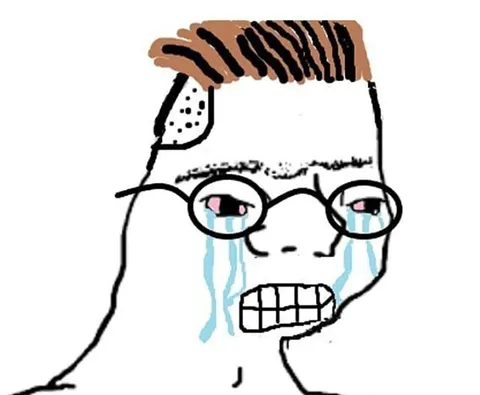
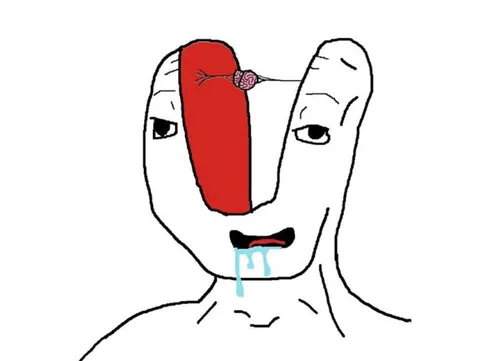
The image also began being used in comics about everyday experiences, and from there it moved into other communities. The character stopped being a single picture and turned into an entire family, where each version denotes its own type of emotion or personality.
Variants and political offshoots
In September 2018 the Doomer variant appeared, first spotted on 4chan's /r9k/ board: a character in dark clothing with a cigarette, embodying despair and nihilism. A female version, Doomer girl, appeared later. In 2020 Soyjak emerged, mocking stereotypes about "soy boys," and the site soyjak.party was created in September 2020. There are other variants too, such as Chudjak, Big Brain, Tradwife, and Wifejak.
In October 2018 the gray NPC Wojak appeared, with a blank expression, which was compared to background characters in video games. The image was covered by outlets like Kotaku and The New York Times, and supporters of Donald Trump played a notable role in spreading it, using the character to mock liberal opponents. In January 2019 the art collective The Faction replaced an image of Bill Maher with the NPC Wojak on a billboard for the show Real Time. Such examples show how a simple image becomes a tool of political polemics.
Why the meme endures
Wojak works because it describes a universal feeling familiar to almost everyone. The character isn't specific, so anyone can project their own story onto it. The combination of genuine sadness and irony allows it to be used both in serious conversation and in jokes.
In addition, the silhouette's recognizability allows the context to be grasped instantly. A Wojak picture is usually understood even without a caption, which matters for quick reactions in discussion threads and comments. That's why, despite its long history and many changes, the image remains one of the most recognizable in internet culture.