What the photo shows
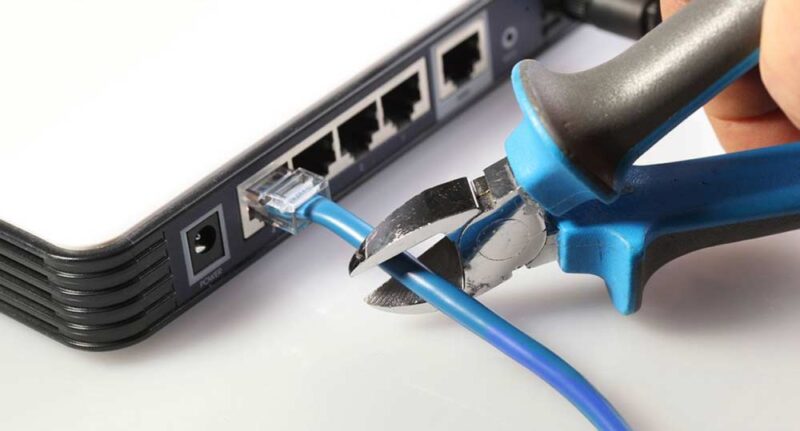
The picture is a close-up of the back panel of a black-and-white router with ports and a power connector. A blue network cable is plugged into one of the ports, and above it are wire cutters with blue handles. A human hand is visible only at the edge of the frame, and the background is light and clean. The shot looks like a typical stock illustration for an article about internet problems, and its deliberate literalness has become part of the joke.
According to meme reviews, the original photo appeared on a stock photo site around 2012. Who its author was and for which article it was made has not been reliably established.
How the photo became a meme
The picture became a meme around 2018 and gained noticeable popularity in 2020. The phrase “Maybe that's enough internet for today” sounds like the calm decision of a polite person: the caption is quiet, while the action in the picture is radical.
The meme is used as a reaction to something shocking, absurd, or simply excessive online: a horrifying post, an argument in the comments, a flood of news. Sometimes the picture itself is replaced with other images, but the phrase stays.
How the joke works
The main device is the contrast between tone and action. The words “maybe” and “for today” create the impression that a person is just taking a short break. But in the picture the cutters are ready to sever the wire: this is not a pause but an irreversible step. The result is a comic exaggeration in which minor fatigue is treated as a disaster.
The second device is self-irony. Everyone knows that cutting the cable does not cure dependence: the person will still find mobile internet. So the joke more often sounds like an admission of one's own weakness than like advice.
The third device is recognizability: the cable, the router, and the huge cutters are understood without words, so the meme works in a chat, in comments, and as a sticker.
Caption examples
“Saw the comments under a post about choosing a tea variety. Maybe that's enough internet for today.” A minor cause for catastrophe.
“Found out the spoiler for the series I was planning to watch tonight.” The caption describes the moment when you want to stop the flow of information.
“Opened the feed for the third time today just to check the time.” The meme turns into an honest confession.
“Mom asks why the Wi-Fi isn't working.” An unexpected twist: someone has already reached for the cutters.
How to use the template
A caption is best built as a short observation with an ironic conclusion: what exactly you saw and why you no longer have the strength. The smaller the cause, the funnier the phrase. There is no need to turn the meme into a serious conversation about addiction or mental health: it is about light fatigue from the feed. If the picture appears in a discussion of sensitive topics, it is better to choose playful rather than cutting captions.
The reverse approach also works well: the caption describes not shock but boredom. For example, a person opens the feed for a single notification and an hour later is still scrolling through repetitive videos. The cutters then become a joke about the powerlessness of willpower, not about bad content. If the caption is too long, the joke gets lost: the picture already contains the action, so the text only needs to name the cause.
It is also worth considering the visual side: the wire cutters sit right at the connector, meaning only one movement remains before the decision. This moment before the snap is what makes the picture expressive: the viewer completes the consequence in their own mind, and the caption merely nudges them toward the intended emotion.