Padonkaffsky slang
Padonkaffsky is an artificial language of internet users based on deliberately distorting words and spelling. It emerged on forums and in blogs around the mid-2000s. Characteristic examples include "preved" (hi), "krosavcheg" (handsome), and "zdarova" (yo). The slang served as an ironic mockery of illiteracy while also being a way to stand apart within a community where knowing the in-jokes was valued more than grammar rules.
Words from padonkaffsky slang spread quickly across the network because they were short, funny, and easy to copy. It was exactly this environment that became fertile ground for the phrase "preved medved."
Birth of the phrase
The phrase "Preved, medved" plays on a childish way of speaking and deliberately mangles words, attaching an absurd character to the greeting. The exact first publication couldn't be established; it is usually linked to forums from 2006, where users began exchanging greetings in the new style.
The sound of the phrase itself played an important role: "medved" sounds like an emphatic, almost fairy-tale-like form of address, and that makes the phrase convenient for repeating in comments and image captions.
The picture with the bear
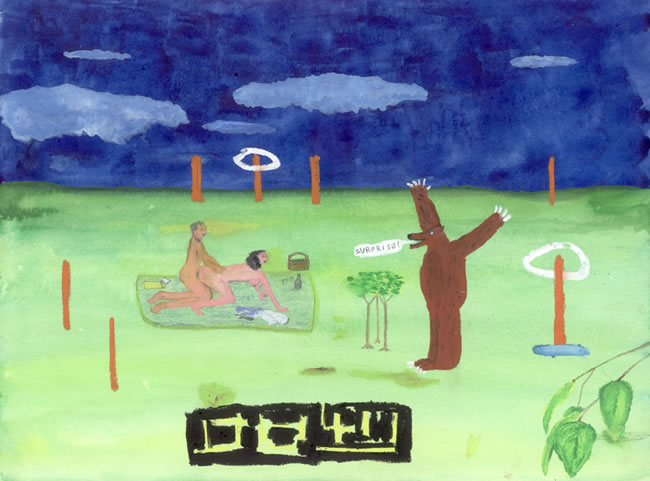
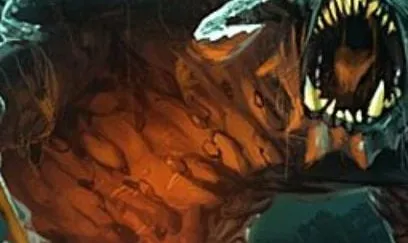
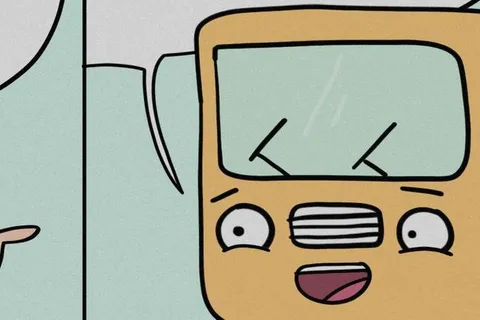
The visual part of the meme is a drawing or photo of a bear that seems delighted at someone's arrival and shouts "preved." The image spread across forums, blogs, and imageboards, and was superimposed onto all sorts of situations. Among the variations are naive drawings where the bear barges into an outdoor scene and shouts "Surprise!" — the same device of a character's sudden appearance.
The naive style of such drawings, with bright colors and simple shapes, itself became part of the meme: it emphasized the deliberate simplicity and made the joke instantly recognizable.
Spread and variations
The meme became a template: "preved" was inserted into comments, photo captions, and headlines. Variations included greetings, expressions of surprise, and congratulations. Over time parodies appeared featuring other animals and characters, as well as adaptations in other languages that preserved the same play on distorted pronunciation.
In certain communities the meme was used as a sign of belonging to the "old" internet culture. The phrase would come up in response to newer jokes and helped identify those who had been around for the early forums.
Legacy
"Preved medved" became one of the first mass examples of how distorted language turns into a cultural code. The word "preved" long remained a marker of early internet culture, and the phrase itself is often recalled in nostalgic roundups about the Runet.
Today the meme belongs to the neutral heritage of the Runet. It's interesting as an example of how a short phrase and a simple image can outlive several generations of users and keep living on in speech and jokes.
It also matters that the meme existed simultaneously as text and as an image. The phrase without the picture sounded like a plain greeting, and the picture without the caption remained faceless. Together they created a complete joke that could be summed up in one word and understood without explanation. It's precisely this economy of expression that explains why the template outlived many louder internet phenomena of its time.