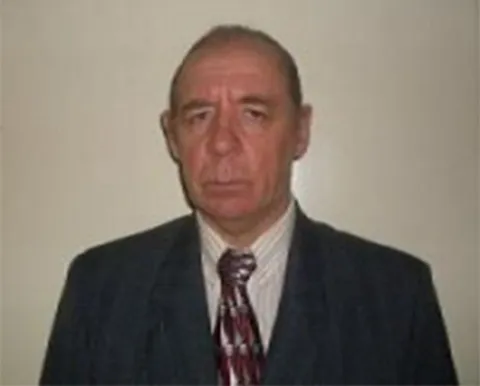
Polygraf Polygrafovich on the sofa
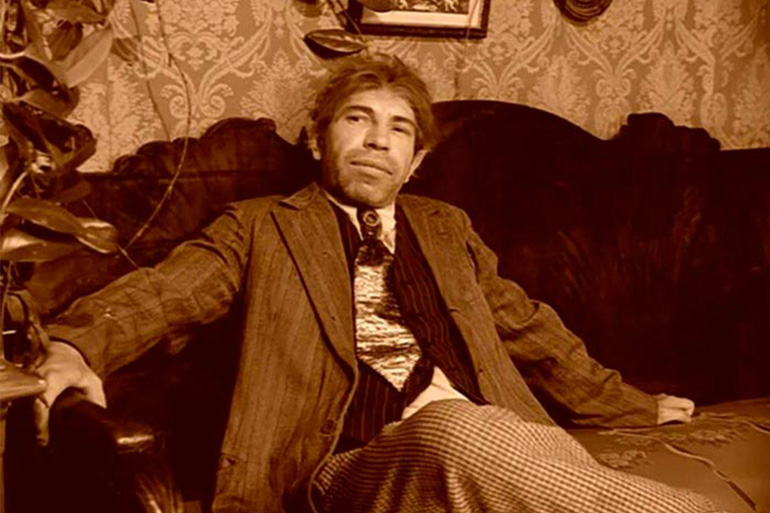
The picture shows Polygraf Polygrafovich Sharikov, played by Vladimir Tolokonnikov. The frame is from Vladimir Bortko's two-part TV film Heart of a Dog (1988), based on Mikhail Bulgakov's novella. In the scene, the character sits in Professor Preobrazhensky's apartment and talks about things in which he fancies himself an expert. His relaxed pose and confident face preserve what matters for the meme: Sharikov has no doubts about himself, even though viewers can see his reasoning is far from deep.
The frame's meme life revived especially in 2023, when users began overlaying new lines on it. It is not just a joke about a rude or unpleasant person. The meaning is more precise: the character unhesitatingly passes off a simple thought as the final truth and does not notice the limits of his own knowledge. The film scene gives cultural context, but to understand a new caption it is enough to see the contrast between the important pose and the dubious conclusion.
Confidence with nothing behind it
Sharikov's pose looks almost proprietary: he has taken over the sofa, speaks freely and seems not to expect objections. A short caption in his voice can therefore sound convincing even when the thought itself is clearly shallow. The comedy comes not from ignorance as such, since anyone can be wrong, but from the absence of doubt and of any willingness to hear a correction. The bigger the gap between the tone and the actual basis, the better the meme lands.
For example, a person watches one video about home repair and announces that now he can explain how the power grid works: "it's simple, you just turn off the light." Or an acquaintance reads a book's title and already delivers a final verdict: "I've read it, the conclusion is obvious." These examples do not mock a beginner for learning. They target situations where limited knowledge is presented as expertise. If the other person is genuinely trying to understand, using Sharikov as a label can be unfair.
The link to the novella
In the original work, Sharikov is not an abstract internet commenter but the product of Preobrazhensky's fantastic experiment: he turns from the dog Sharik into a man after an operation. The novella pits scientific intervention and social change against the question of whether human nature can be remade quickly. The on-screen character is abrasive, quick to pick a fight, and insistent that his new status be recognized. The sofa frame picks out one side of his character: smug entitlement to judge.
Still, the meme replaces neither the film nor the novella. Outside that specific scene it often becomes a simpler sign: "talks loud, knows little." If viewers remember the context, shades of a debate about power, status and education come in; if not, the joke still reads from the expression and the caption. Do not attribute to Tolokonnikov or to the character a specific line that is not in the image: many text variants were invented by users.
How to adapt the frame
It is best to build the caption as a confident conclusion after minimal exposure to a subject. Everyday observations work: "read the instructions up to step one, can teach a course now," "cooked rice once, now I rate every restaurant," "heard a new word, now explaining its origin." It helps if the text names a specific field and a tiny basis that clearly cannot justify such bravado. Then viewers instantly fill in the missing argument.
You can leave the image without a caption if it answers someone's categorical claim: the contrast is already in the pose. But the meme easily turns into an insult when sent to a person directly. Without a shared joking context, the image says not only "you were wrong" but also "you are stupid." Use it as a comment on a recognizable way of arguing, not as a replacement for an argument in a serious conversation.