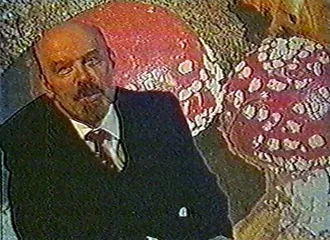
Who is in the portrait
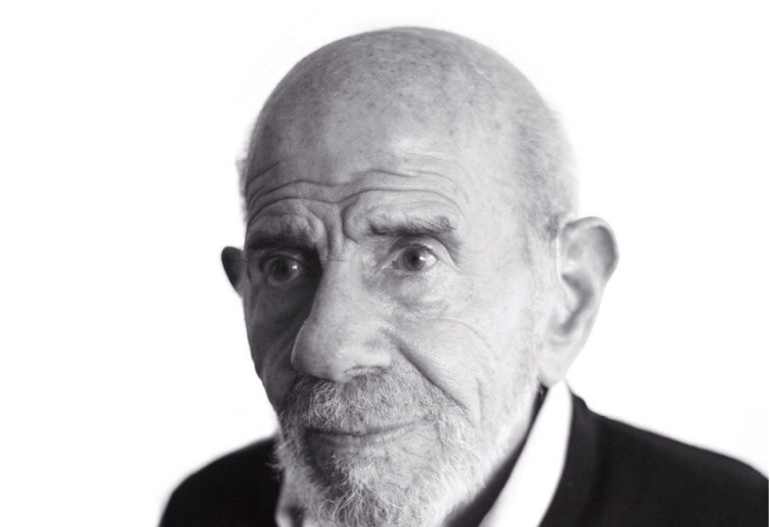
The photo is black and white: an elderly bald man with a high forehead and thick gray eyebrows, one of which is raised. A short gray beard, an attentive and slightly tired gaze, the head slightly turned. He wears a dark jacket and a white shirt collar; the background is entirely white. There are no ornaments or symbols, so the expression reads as thoughtfulness and mild wariness.
Jacque Fresco was born in 1916 and died in 2017, living 101 years. He was an American designer and futurist, and together with Roxanne Meadows he founded The Venus Project in the United States.
Ideas he promoted
Fresco proposed replacing the monetary economy with a “resource-based” one: a society in which the planet’s resources are distributed on the basis of scientific data and routine labor is automated. He made models and drawings of future cities, and talked about this in lectures and films that spread across the internet, including in Russian.
Fresco’s ideas drew both support and skepticism. Critics considered them utopian; supporters saw in them a serious attempt to think about technology and ecology. For the meme, something else matters: his speech and manner were remembered for the way he spoke about global matters calmly and without a shadow of doubt.
How the portrait became a template
It is not possible to say precisely when and where his portrait became a meme in the Russian-speaking world. The main thing is visible: the image is used not for the sake of his theories but for the sake of the persona. A thinker’s face with a slight squint can be placed under any caption, and the phrase immediately gains an air of importance.
Two tones work. The first is exaggerated pathos: a trivial thought is presented as a revelation. The second is irony about the “prophet” himself: someone in a chat starts reasoning about the fate of humanity, and is answered with this portrait.
Examples for your own caption
“When over tea I suddenly decided to explain to my friends how the whole world economy works” — the serious face heightens the self-irony.
“It’s 2 a.m. and I’ve just come up with a perfect system for tracking the food in my fridge” — the scale of the idea doesn’t match its significance.
“Grandpa at the dacha explains how the house should have been built” — the portrait as a composite image of a sage on a garden bench.
“A colleague who, during a discussion of a button color, started talking about the fate of civilization” — pathos out of place.
Another way to work with the portrait is to place it under a deliberately dull topic: the instructions for a kettle, parking rules, a grocery list. The solemn face makes a trifle important, and in that contrast lies the whole mechanism.
How to use the portrait
The picture works best when the accompanying text is pretentiously serious or, on the contrary, deliberately mundane. Do not attribute real quotes to Fresco or invent political statements in his name: he is a real person, and the joke should remain a joke. A monochrome portrait without extra background rests on one raised eyebrow and a squint, which already look like “well, here we go,” so the caption can be made very short.
A caption can be built like a “lecture”: a short phrase in the spirit of “let me explain how everything works,” followed by a down-to-earth topic. The more solemnly the introduction is delivered, the harder the punchline lands.