What is visible in the frame
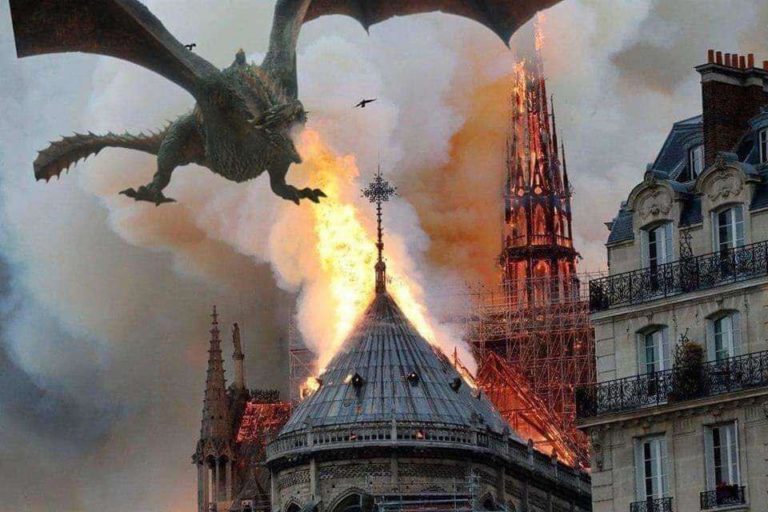
At the center of the shot the cathedral's roof is burning: bright flames rise above the gray surface, and to the right a thin spire is visible, surrounded by scaffolding that is also engulfed in fire. Stone spires stick up on the left, and on the right stands a residential building with balconies and attic windows, while thick smoke rises all around.
The dragon occupies the upper left part of the frame. Its wings are spread, its head is lowered toward the flames, and the fire at the roof visually continues its breath. The lighting and sharpness of the figure differ from the rest of the photograph, so the frame looks like a composite: the creature has been added on top of the real image. This is a deliberate staging, not a documentary picture. A small bird is also visible above the smoke, but it belongs to the original photograph.
The fire of 15 April 2019
The fire at the cathedral began on 15 April 2019. According to reports from that time, there were no deaths, and several people were injured, among them a firefighter. The cause was not named at once: one of the versions considered was a link to the repair and restoration work being carried out on the site, and the details of the versions diverged in the first days.
Jokes appeared quickly, in the first days after the event. Who first combined the photograph and the dragon is not reliably established, so the authorship remains unclear. What matters is that the meme depicts a building and an invented creature, and does not concern people affected by the fire.
Where the dragon comes from
In April 2019 the final season of the TV series “Game of Thrones” was airing, and Daenerys's dragons were among the most recognizable images of the show. That is why the composite works as a parodic frame: the viewer instantly recognizes the series' sign and understands that what they are looking at is fantasy, not reportage.
The mechanics of the image matter here. In the series a dragon arrives and sets cities alight. Pairing it with the cathedral turns a real fire into a plot conflict, with a “culprit” and an “epic” cause. It is this absurdity that makes the picture a joke.
Other pictures with motifs from the series use similar devices: characters “arrive” at the scene of events or comment on them. Similarity does not mean a common author.
Captions on the same contrast
Below are examples of captions that can be placed under this frame. Each uses the same contradiction: a calm, everyday remark against a grand spectacle.
First: “The dragon stopped by to check how the restoration work was going.” The caption combines official language with an absurd pretext. What is funny is not the action itself but the seriousness with which the pretext is stated.
Second: “Daenerys dropped in on the way, and everything is already on fire.” The words “on the way” make the visit mundane, and the contrast stretches across the whole plot.
Third: “They said it would be hot, but not this hot.” The irony is built on an everyday remark about the weather and suits situations where you want to show an unpleasant surprise.
Fourth: “I did ask not to keep anything flammable next to it.” The line sounds like a neighbor's complaint, and the drama turns into a domestic dispute.
How to use the picture
The frame suits jokes about an excessive reaction, an unexpected visit, or a disproportionate event. If the caption is presented as a parody, the viewer will understand for themselves that it is about fantasy and will not take it for reportage.
In captions it is better to stick to plot-based and everyday humor, without addressing specific people and without turning a real misfortune into mockery of anyone. Short one-line remarks work well: the picture itself is striking enough and needs no lengthy explanation.