The word and the character online
Skuf is a Russian slang word that became prominent online in the 2020s. It is used as a mocking nickname for a man whom the speaker considers unfashionable, unkempt or stuck in a familiar routine. Meme culture linked the word to a user named Alexey Skufin, but the generalized image quickly broke away from the specific person and became a caricatured archetype.
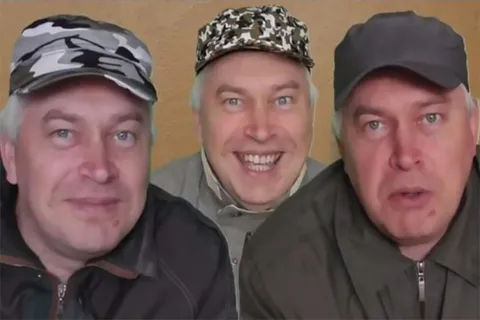
The picture shows several frames of one man in different circumstances: an interview or on-screen splash, a home scene at a computer, reaction images and the caption "skuf." A line with a name and an age is also visible at the top, but not all details can be made out from a low-quality copy. It is therefore safer to describe the visible elements than to infer a person's biography or habits from the collage.
How the meaning changed
Early use of the word was tied to an outward resemblance to a particular online character and to a mocking characterization of men. Later the term broadened: in some communities it is a self-ironic label for a tired adult, in others an insult or a tool of gendered humiliation. The context shifts, so the same word can sound like a joke between friends or a deliberate slight.
Today the word is sometimes applied to people who like home comfort, simple leisure or familiar clothes. But such habits say nothing in themselves about a person's character or worth. The criteria for a "skuf" are deliberately blurry and depend on the meme's author, not on objective age or appearance. The collage demonstrates precisely this assembly of an image out of separate frames and captions.
What the collage emphasizes
Mixing portraits makes the character look like a replaceable role: the same man is shown now in a studio setting, now at home, now as a reaction image. This sequence suggests that the label can be stuck onto different sides of everyday life. Because of the large "skuf" text, the viewer picks up the category faster than he or she tries to work out whether all the frames really show the same person.
Variants of the meme often set an ordinary adult against the image of a "successful young person," but this scheme can reproduce contempt for age, weight or income. Gentle self-irony works when the author jokes about his or her own routine; targeted bullying becomes more visible when the picture is used to publicly judge a stranger. A meme label should not be passed off as an objective description.
How to use it without stigma
For your own caption, you can play on wanting to stay home, choosing comfortable clothes or refusing to change a familiar TV series: "evening plan: change nothing." Such a version focuses on an action, not on a body or an age. If the subject is a specific well-known person, check the original frames and do not attribute to him circumstances that are simply written into the montage.
The term can be perceived as offensive, so consider your audience and context. Teenage and adult users sometimes use it in a self-ironic way, but that does not make every use of it safe. The word reflects online usage and the visible collage; it makes no diagnoses, and it cannot be claimed that the man in all the frames is the same person unless that is confirmed.