The image
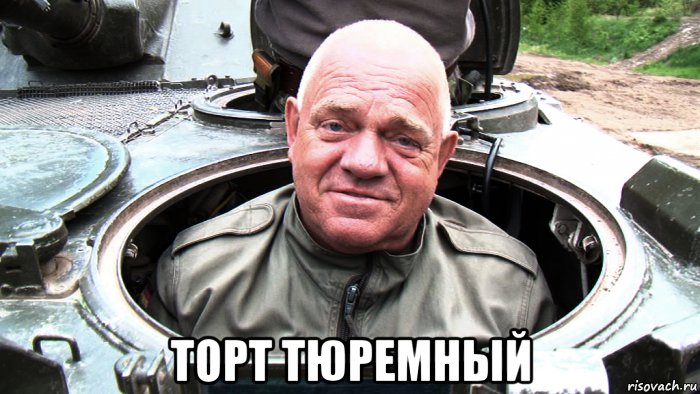
The photo was taken outdoors: a green background, foliage along the edge of the frame, and part of an armored vehicle. A man in a dark jacket leans out of a round hatch and looks straight into the camera with a faint smile. His expression is calm and a little sly, and this ambiguity likely helped the picture become a convenient template. Across the bottom center, the words “PRISON CAKE” are printed in large letters. In the lower right corner there is a watermark from a website that hosts captioned images, which points to the photo coming from an online gallery of picture captions. The man in the photo is not named and is not identified here: in the meme he serves as a visual backdrop for the text, not as the target of the joke.
Text without context
The phrase “prison cake” is not tied to a specific event, character or quote that could be cited. It reads like a set of words from a story that doesn't exist: prison and cake collide for no reason. That is why the text, which circulated on VKontakte without the picture, was seen as a viral, inexplicable spam. Users received such messages in their feeds and could not understand why they had been sent. In this case, the nonsense itself became the mark by which the message was recognized and discussed.
How Spam became a meme
The shift from spam to meme usually happens when a nonsensical text starts to appeal to an audience precisely because of its absurdity. First the text is forwarded as a strange oddity. Then people begin to repeat it deliberately and attach it to other pictures, testing how far it can drift from its original meaning. The photo with the tank hatch works well because it is both neutral and expressive: the man looks as if he knows the answer to a question nobody asked. Caption variations in this spirit keep the structure of the original phrase but shift it toward everyday absurdity. For example: “Prison cake, please, no nuts” or “Prison cake for those who've just gotten out.”
The genre of abstract memes
The “Abstract Memes” tag groups images whose meaning is built on a combination of random elements rather than a recognizable situation. Such memes require no knowledge of context and work through recognition of tone. The subject's facial expression helps here: it is serious and almost ceremonial, and viewers tend to look for a hidden meaning in it. The more a user tries to explain the joke, the faster it spreads. In this genre, abstraction works as a frame: it allows the text to be repeated without explanation, new captions to be added, and different stories to be seen in a single picture.
Origin
The author of the phrase “prison cake” and the first post of the meme are not established. Judging by the watermark, the photo was taken from a site that collects captioned images, and the picture itself appears online in several versions. Who wrote the caption and when it first appeared is not known. The meme spread on VKontakte, but without an exact date or a link to the first post, the timeline remains incomplete.