How the format works
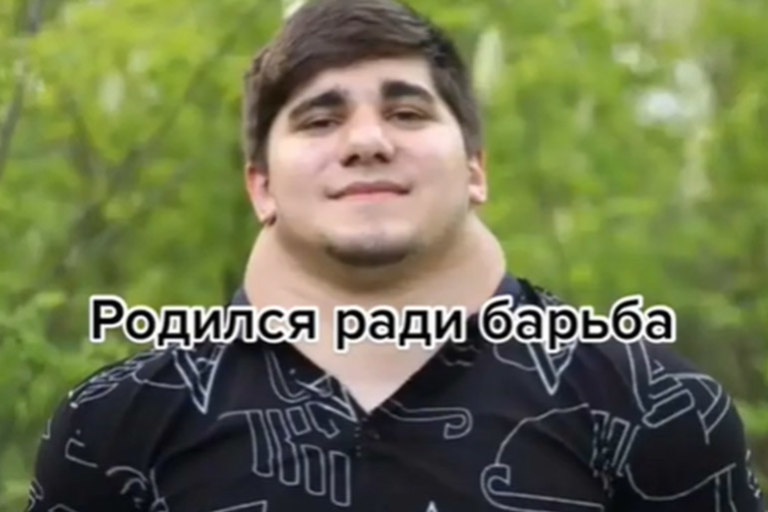
The meme is built as a chain of stages: a person was born, went to school, grew up, got married, or started working — and each time, all of it happened "for" one particular thing. In the photo, a young man stands in front of a green background, and the caption sets "wrestling" as the goal. The combination of a deliberately solemn biographical formula and a simple interest creates an absurd effect.
In early versions, the format used photos of the streamer and fighter Anatoly Tamaev, paired with short captions about wrestling at different life stages. But individual images and remixes can take other heroes and pursuits. This image shows just one person and only the first part of the presumed story; it shouldn't be assumed that it shows every stage of the original chain or reliably identifies the person without a caption.
Post-irony and exaggeration
The words sound like an epic biography, but the goal can be the most mundane thing: playing a favorite game, eating dumplings, or watching a show. The meme deliberately exaggerates the role of a passion, as if it determined every decision since birth. Post-irony allows this to be said with a completely straight face about a cause that is obviously out of proportion. The more specific and modest the activity, the more noticeable the exaggeration.
The format simultaneously mocks and glorifies devotion. The creator may genuinely love a sport or a game but understands that presenting an entire life as preparation for that passion is absurd. In other cases, the meme gently teases a person who keeps coming back to the same topic. It isn't necessarily mockery of the activity itself: more often people are laughing at the overly solemn way of describing it.
How to come up with a sequel
The template naturally grows into a sequence: "born for board games," "went to school for recess," "got a job for the vacation time." You can swap the activity for a profession, a hobby, or a favorite food. For example: "Downloaded the app for one order / a year later I keep a whole shopping list in it." New lines shouldn't repeat someone's real biography unless the post is specifically intended as an accurate parody of a public figure.
The image often becomes the first frame of a carousel or short video, followed by the next stages. If the photo shows only a single portrait, the story of growing up in full is implied by the text template but not shown visually. The image represents one particular variant of the meme, not an exhaustive sequence of frames. The reader can continue it with their own caption.
The original and new versions
The internet trend quickly spread from repeating a single formula to videos about celebrities, athletes, and fictional characters. Variations swap the name, the photos, and the target passion while keeping the rhythm of "a whole life for X." That's why the template's name stays stable even as the character in the image changes. Copies don't always preserve the author of the original edit or the full context; establishing priority for a specific shot from this file alone isn't possible.
The formula "born for X" is best understood as literary hyperbole about wrestling or some other passion, not as a serious psychological statement about the person in the photo. It doesn't prove that the person actually lived only for the chosen goal. A public write-up can explain the comic principle and give new examples without copying long fragments of someone else's captions. That way the article describes the mechanics of the meme and leaves room for people to play with it themselves.