What the photo shows
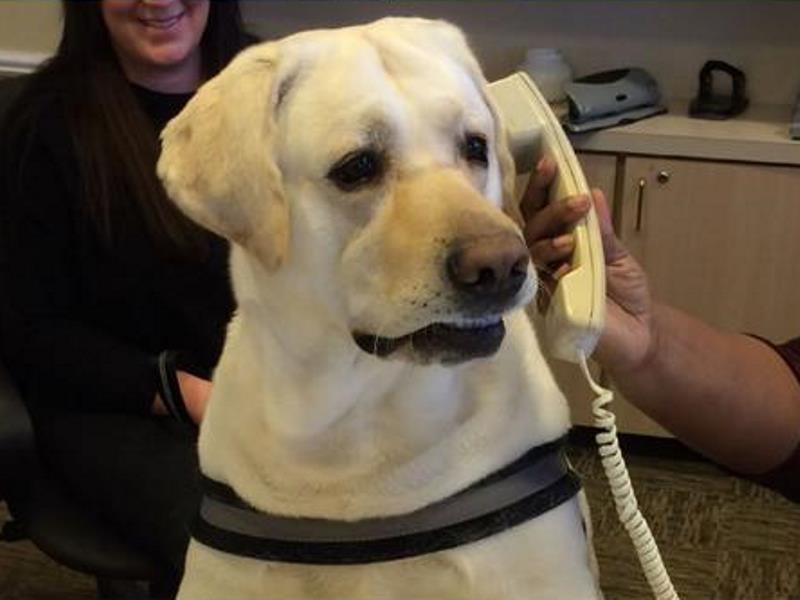
The photo is a close-up of a light-colored Labrador, its muzzle turned slightly toward the camera. It wears a dark harness with a gray stripe. A corded landline receiver with a white coiled cord is pressed to its head by a person’s hand on the right. On the left, in the background, a woman with long dark hair laughs; further back there are an office cabinet and office equipment.
This is a single frame, not a ready-made three-panel sequence. The sequence of “cheerfulness, waiting, annoyance” is created by the caption writers, and the reader assembles it into a story. The dog’s expression is calm and slightly attentive, so it is easy to read in different ways.
Origin and time of spread
The meme with the dog and the telephone receiver spread on social media in January 2019. Who first published this specific picture and what was actually happening in it is not reliably established, so it’s best not to attach a particular story to the photo. Judging by its appearance, the frame resembles an office scene, but that is only an impression.
The template was built around the idea that the dog is “having a conversation” and reacting to unpleasant news. Variants featured work, customer-service calls and everyday failures. Some versions were single images, while others became three-frame series.
Three frames and the shift in mood
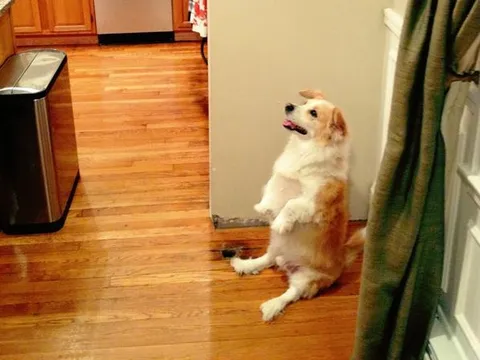
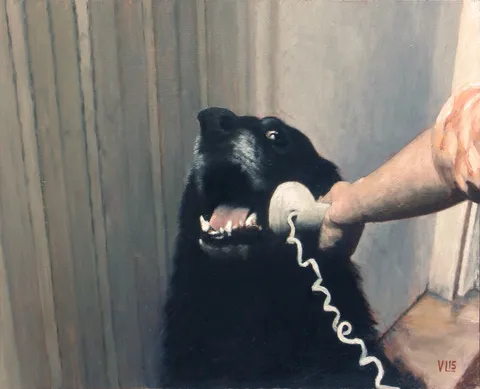
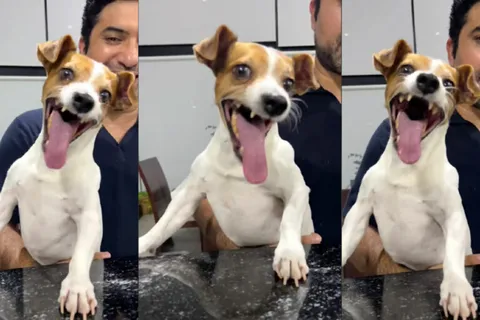
The classic order is this: in the first frame the dog is lively and happy, in the second it listens and waits, and in the third it is bewildered or annoyed. The dog’s expression is ambiguous enough that viewers can supply any emotion: joy, anxiety, resentment.
Why is it funny? The dog says not a word, so the viewer voices its thought. The shift from hope to disappointment is quick, and the pause between the first and last frame carries the entire joke. The shorter the captions, the stronger this shift works.
Captions for three frames
The examples are invented for this template. In each one, the first frame sets up an expectation, and the last one breaks it.
Frame 1: “Sent my résumé at 3 a.m.” Frame 2: “They’re calling!” Frame 3: “We need work experience.” The shift from joy to disappointment works: the dog retraces the path of everyone waiting for a reply.
Frame 1: “Finally got through to customer service.” Frame 2: “I’ve been put on hold.” Frame 3: “The music has been playing for forty minutes.” The irony is in the rhythm: the wait takes the form of an endless tune.
Frame 1: “The courier wrote that they’re already nearby.” Frame 2: “A call from the entrance.” Frame 3: “The courier has already left, but left a note.” The contrast between waiting for a delivery and the reality delivers the punch in the last panel.
All the examples share one mechanism: the first frame sets up hope, the second adds tension, and the third brings us back to reality. It’s convenient to come up with the last caption first and then pick the others to fit it.
How to use the template
The template works best for everyday stories about waiting for an answer: a call, an email, a decision on someone else’s question. The dog here plays the role of a person who listens patiently, so both self-irony and jokes about service departments can work.
Don’t turn the people in the background into targets: the joke rests on the dog, not on those nearby. If you are drawing or editing three panels, change only the captions and keep the same framing, so the shift in mood reads through the text.