A dog on the phone
In “Landscapes in the Fog,” a girl talks with her mother and then hands the phone to a dog. The dog barks into the receiver; the short everyday episode turned out to be easy to retell, because the human gesture of holding a phone to a muzzle already looks like the beginning of a conversation. Jovan J. Jovanovic directed the film, which came out in 1984. The moment itself was not yet an internet joke: the comic dialogue appears later, when a viewer takes the barking for a line of speech and invents a speaker on the other end of the line.
How the phrase "this is dog" appeared
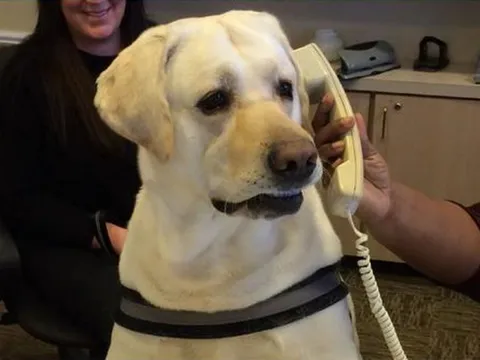
In early October 2011, Tumblr user VivaDixies posted a photo of a dog captioned “Hello, yes, this is dog.” Soon after, the picture reached Reddit under the title “It’s for you, boy,” and then new variants and an animated remake by MrWeebl appeared. More than two decades separate the film from the caption: the scene dates to 1984, while the earliest known version with this phrase dates to 2011. The phrase then moved to other platforms and into new forms. As a short line, it works as a polite phone introduction, even though the speaker is an animal. Its deliberate grammatical simplicity makes up half the joke: the dog does not explain who it is, but announces it with unruffled businesslike calm. Later captions could do without any explanation of where the frame came from at all; it was enough to attach the phrase to the picture, and a casual viewer would already hear in the dog's pose a confident “yes, that's me.” The meme thus separated from the specific film, although the scene remained its visual starting point.
What the VLS drawing changes
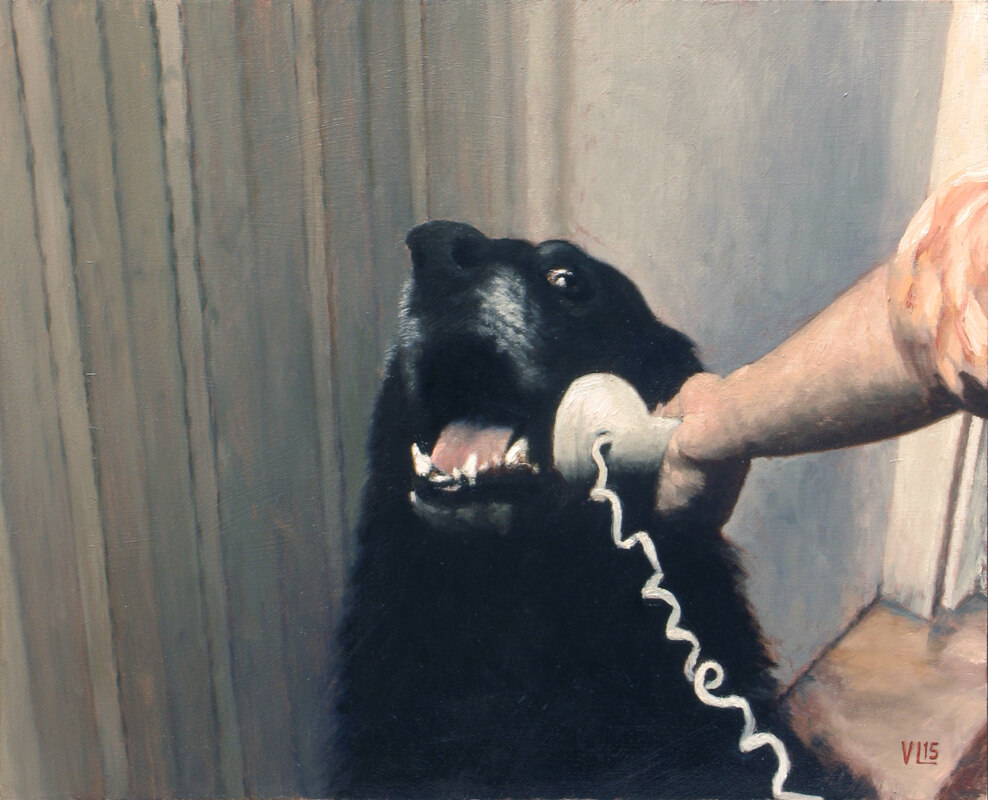
The version signed VLS conveys the familiar phone pose through painting. The black dog is shown up close; a pale receiver is pressed to its muzzle beside an open mouth, and an arm enters the frame from the side. Brushstrokes and soft color transitions are visible, so this is an illustration rather than a source still. The caller stays outside the picture. Here the imagined “hello” is especially audible: the arm performs the action for the dog, while the mouth seems to carry it on. The artist kept the prop needed for the joke and focused attention on the animal's face. The absence of an added line leaves the tone of the reply open: a polite introduction, surprise at the call, or a businesslike report to the owner.
Invented conversations
“Hello, this is the dog. You asked who ate the slipper?” — this invented reply turns an everyday accusation into an official phone call. Another version: “Yes, this is the dog. The owner is busy right now, he's walking me” — the roles of speaker and the one being served swap places. One can also imagine a call from a delivery service: “The package is at the door, I checked — there's a bone in it.” These are new captions, not real lines from the film or from an early post. They show different continuations of one device: not simply giving a dog a voice, but making it calmly settle into human phone etiquette.