A fake on top of a real photo
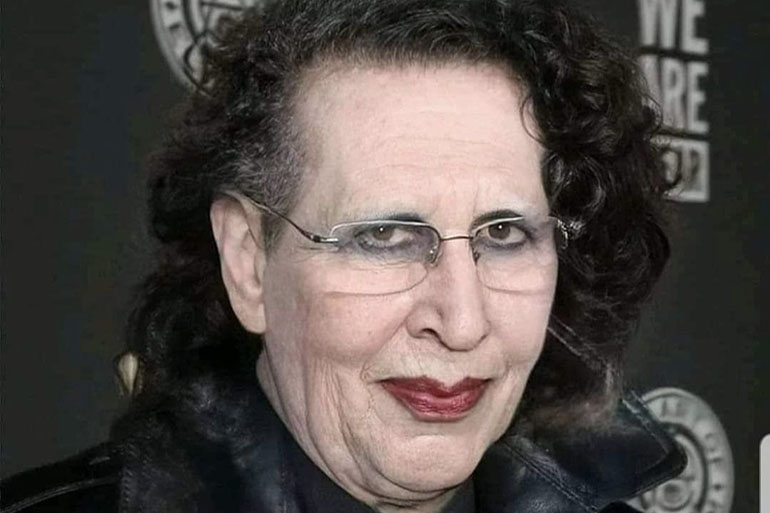
The frame shows a face in glasses with thin metal frames, dark curly hair, pale skin, red lipstick, and deep wrinkles around the mouth and eyes. Behind is a backdrop with lettering. All of this has been edited: the real portrait was distorted by aging the face.
The source photo was taken in January 2020 at the Elysium Heaven gala in California. In it the artist looks his usual self, with no signs of old age. The age in the picture is the result of editing, not his real appearance.
How the picture spread
The image began to spread rapidly in late September 2021, trending on social media. Judging by a watermark, the author is a Reddit user with the username Jimmy_Fallen, but this is only a version.
Users began comparing the resulting face to elderly acquaintances, well-known actresses, and journalists. The meme quickly moved away from its original occasion: what turned out to be funny was the effect itself, in which a familiar gothic image sits alongside the look of a kindly grandmother.
The internet has used this device with other celebrities more than once, so the ready-made frame is clear to everyone: a portrait, an age, laughing comments. Still, one nuance matters: the effect was invented by one of the users, not captured by a camera, and it became funny precisely because everyone understands its artificiality.
Marilyn Manson is the stage name of the rock musician Brian Warner, born in 1969. The name in the meme’s title refers to his image, but the picture itself says nothing about his life.
Why it is funny
The meme uses the old trick of “aging a celebrity.” The viewer knows what the artist looks like and notices that the result is both recognizable and unrecognizable at once. Glasses and wrinkles turn a provocative image into a cozy one, and the contrast between reputation and appearance is what makes the joke.
The second part of the mechanism is resemblance. People find familiar features in someone else’s face and are delighted by the match. That is why captions often start with “My teacher” or “The aunt from the next stairwell.”
Captions in the spirit of the meme
“The building attendant who knows what time I got back.” The image of a stern person whom nothing can fool. The glasses suggest the right expression.
“Grandma when she sees I ate the soup without bread.” A domestic threat hidden behind an unperturbed smile.
“My form teacher thirty years later.” Nostalgia for school with a light touch of fear.
Everywhere the key is a role from everyday life and a look over the glasses that confirms the role.
A good caption is built on a specific detail: not just “grandma,” but a grandma with a particular habit. The more precise the detail, the easier it is for the reader to recognize someone from their own life in the face, and the warmer the laugh.
Taking care when using it
Since the picture is fake, do not present it as a real photo or draw conclusions about a real person’s appearance or health. Caption it as a joke about an imaginary character: that is safer, and the meaning is not lost. Do not use the meme to mock anyone’s real age, and do not link it to news about the artist.