What is in the picture
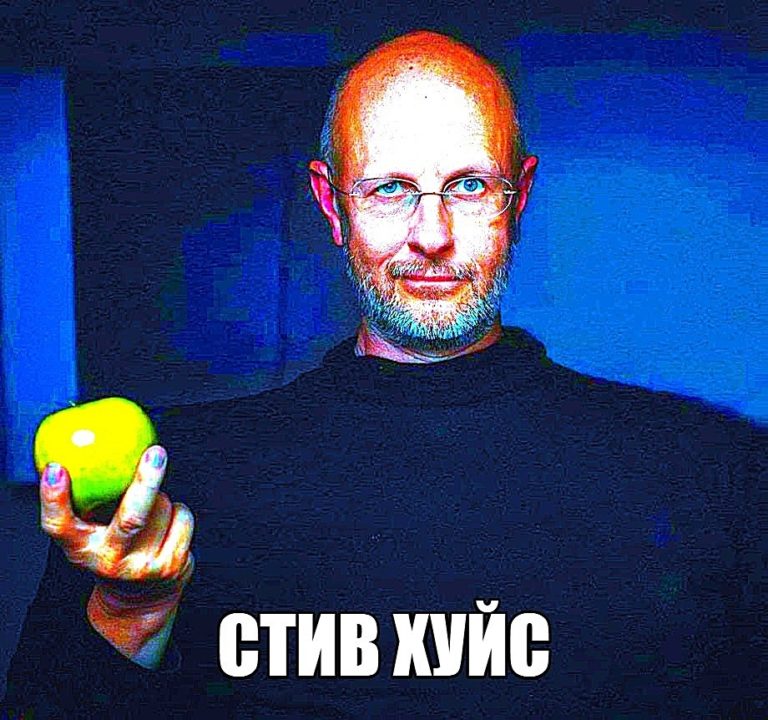
The frame is processed to the extreme: contrast, saturation and grain are cranked up so that the bald head looks orange, the background turns into blue blotches, and the black turtleneck nearly merges with the darkness. In the foreground is a man with a grayish beard, blue eyes and thin glasses. In his outstretched hand he holds a green apple. Across the bottom, a caption is set in large white letters.
With its pose, turtleneck, glasses and apple, the photo is deliberately reminiscent of the image of the Apple founder. The word in the caption is a crude distortion of the name “Steve Jobs”; it is given only in abbreviated form.
Who is pictured
According to descriptions of the meme, the original photo shows Dmitry Puchkov, known as Goblin, a Russian publicist and author of film translations. The original photograph was a fairly ordinary portrait, and everything strange about the current picture belongs to the later processing and the caption.
This caveat matters: the meme makes no claims about the man himself and is not a story about his biography. It uses only the recognizability of his pose and appearance, as in joke photomontages and friendly parodies.
How the meme lives in communities
Post-ironic jokes rarely get explained, and this one is no exception. People send the picture to friends as a sign of a shared sense of humor: whoever laughs does not have to understand why it exists. That pointlessness is the main part of the joke, and the viewer enjoys not the meaning but the very fact that no one demands one from them.
So there is no point in looking for hidden criticism or a judgment of the person pictured. This is a game with form: the reworked name, the apple in hand, the oversaturated colors and the overly serious pose. Together they make a picture you want to send to someone without any explanation.
When and where it appeared
According to available descriptions, the picture first appeared on February 19, 2019 in one of the Russian-language absurdist communities on VKontakte. The date is approximate: no earlier confirmations have been found. The template then spread quickly across post-irony pages.
Playful variations with reworked names of other famous people grew out of it. This is typical behavior for post-ironic memes: a successful formula becomes a template into which new faces and words are substituted.
Why it is funny
The meaning of the meme is deliberately small. The viewer sees a recognizable pose, guesses at the parody, and then runs into a caption that breaks expectations: instead of a respectful caption for a portrait of an entrepreneur, there is an insulting reworking. The contrast between the decorous composition and the crude word creates the effect.
The overfried image strengthens the impression: the picture looks like a copy of a copy, forwarded dozens of times. This aesthetic is often used in memes as a sign that the joke is not to be taken seriously by anyone.
Examples of captions
“Presenting to you... the result of finishing before the deadline” — the solemn gesture of unveiling a new product is applied to a completely ordinary report.
“Before I announce to my friends that I baked an apple pie” — the apple in hand and the solemn pose turn ordinary baking into an event.
“I open the app that asked me to update 40 times and see that it is still the old one” — the glasses and serious gaze convey smug superiority.
How to use the template
The picture works best where viewers already understand the post-ironic manner: in themed communities and in chats with friends. For a broad audience, a crude word in the picture may be out of place, so consider the platform before posting.
Do not attribute any words or actions to the person pictured. The caption should speak to the situation of the joke's author, not to the real person whose photograph is used as a background.