The figure is older than the caption
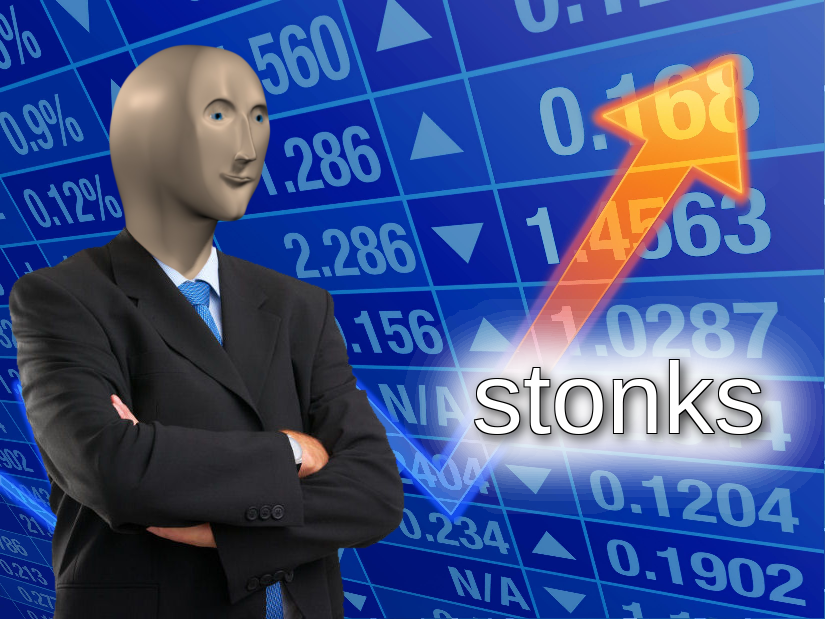
The gray 3D figure is usually called Meme Man. According to data on early publications, the image appeared in August 2014 as a profile picture on a Facebook page. This is an early known trace, not a proven first publication: earlier appearances are not ruled out. The author of the 3D model is unknown, and versions of its origin remain unverified.
It follows that the joke has two layers: the strange smooth character itself, who lives in surreal memes, and the word “stonks”, which gave it a stock-market meaning.
The date of the caption
The earliest known “stonks” caption dates to 5 June 2017: the figure stands in front of an image of a stock board with this word. Wide spread is linked to 2019, when the picture went beyond niche communities and became a common template.
It is important to distinguish three dates: the appearance of the figure, the first “stonks” caption, and the period of mass spread. They do not coincide, and it is not worth mixing them up.
What is visible in the image
The figure stands in a dark suit and blue tie, arms folded across its chest. The face is smooth, gray-beige, with small light-blue eyes and a faint half-smile. Behind the figure is a blue background with a board: percentages, decimal numbers and small up and down arrows are visible, and in some cells “N/A” appears.
The main element of the frame is a glowing orange-red arrow rising to the upper right. The white word “stonks” lies right over the board. The arrow and the lettering set the reading: the viewer sees growth, although some of the numbers on the board show nothing of the kind.
Caption examples
The examples are invented for illustration and do not refer to real companies.
“My salary on Monday: stonks. My salary on Friday: nonks.” The joke relies on contrast: the same image gets opposite meanings, and the distorted letter reads at once as a fall.
“Decided to save on coffee — stonks.” Here an everyday decision is presented as a stock-market success, and the seriousness of the gesture makes the example funny.
“Out of my to-do list, 2 done, 14 postponed for later — stonks.” The example uses deceptive precision: the numbers look like a report, but the meaning breaks expectation.
In all variants the humor rests on the figure’s pose: folded arms look confident, and any statement sounds like an expert’s conclusion.
How to use the template
The template suits situations where someone confidently announces a result that in fact means little. The bigger the gap between the serious look and the mundane occasion, the stronger the effect.
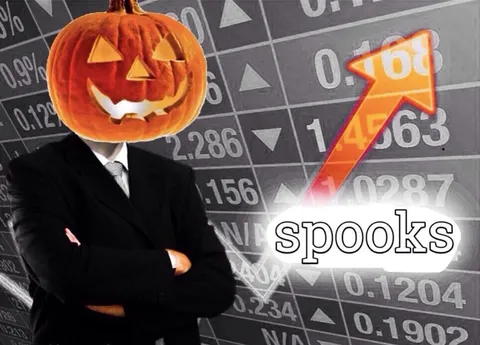
The word and the figure are linked but not equal: the figure existed before the caption, and the caption gained its meaning only against the stock board. So when remaking, it is more convenient to keep both the figure and the arrow.
The template works well with short captions: one word sets the intonation, and extra explanation breaks the effect. If a caption needs explaining, it is better to choose a different frame.
The image is neutral toward any specific company, so it can be used for jokes about everyday decisions without mentioning real stocks or their issuers.