The Prank “Leak”
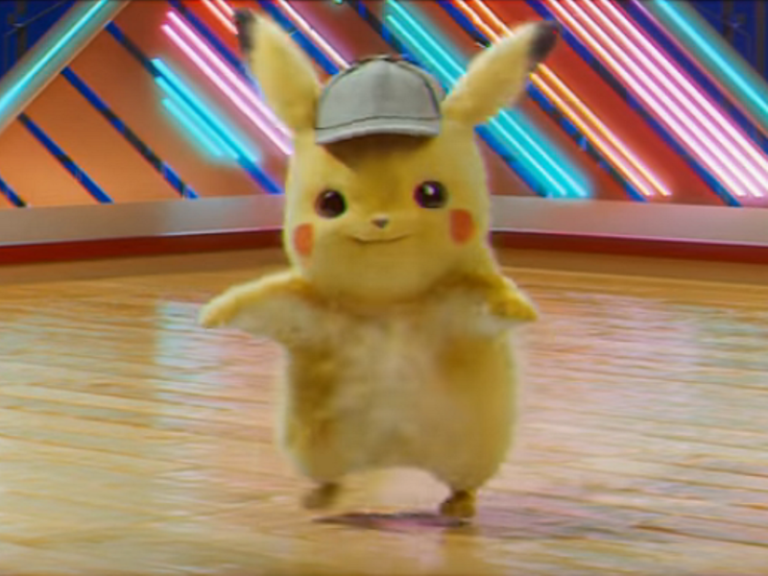
On May 7, 2019, Ryan Reynolds, who voiced Pikachu in the film, posted on Twitter a link captioned as if it were a leak of the full film. Those who clicked it were shown an almost two-hour video: after an intro, the picture cut to a retro-style studio, where Pikachu danced in circles. According to media reports, millions of people opened the link.
The joke was part of the film’s promotion: there were only a few days until the US premiere. Headlines called the video a “leak,” but it was in fact a prank, so it cannot be considered a leak. The dance proved contagious, and short looped versions were quickly made from it.
What is on screen
The character stands on a wooden floor with a glossy sheen. He wears a gray cap, his eyes are round and shiny, and his cheeks are reddish. His arms are slightly spread to the sides and one leg is raised, so the pose looks like a moment of motion rather than a static pose. Behind him, coloured neon stripes converge in a corner, creating the feel of a studio or a TV show stage.
The character is made with computer graphics and looks like a living, fluffy creature. The contrast between the fur and the glossy stage makes the frame memorable. Picture quality is low, but that doesn’t matter: the template is recognized by its silhouette, the cap and the neon background.
Why the dance fits any music
The core mechanic is repetition. The dance is short, its moves are easy to read, and it is easy to loop to any track. Within a few days, users were syncing it to all kinds of songs, from electronic to pop hits. The more unexpected the music, the funnier the same move looks.
Timing also played a role: the prank coincided with the film’s release, so the joke worked both as an advertisement and as entertainment in its own right. People forwarded the video to friends even knowing there was no film in it, and Pikachu got a life of its own outside the plot.
Examples of captions and how they work
Captions here usually describe a reaction or a situation, and the dance becomes the response.
“When the Monday meeting gets moved to Friday.” The dance shows that the decision was taken easily and with enjoyment. The contrast between the official occasion and the cheerful reaction keeps the caption short and clear.
“Accounting when the quarterly report balances on the first try.” A rare achievement is presented as a celebration. Pikachu acts as a silent witness to the joy, which works better than a long text.
“An evening alone, but the music is turned all the way up.” A scene of loneliness turns into a party. The effect relies on a shift of expectation: the viewer thinks of sadness and gets a dance.
How to choose music for the template
What works is music that contrasts with the situation. An energetic track under serious news, or a calm melody under a chaotic event, strengthens the effect. Don’t put the dance under a long speech: a fast tempo and a short clip hold attention.
If you use the template in response to someone’s news, make sure the dance reads as a joke about the situation, not about the person. Then the reaction stays friendly and doesn’t turn into mockery.