The 2014 press release
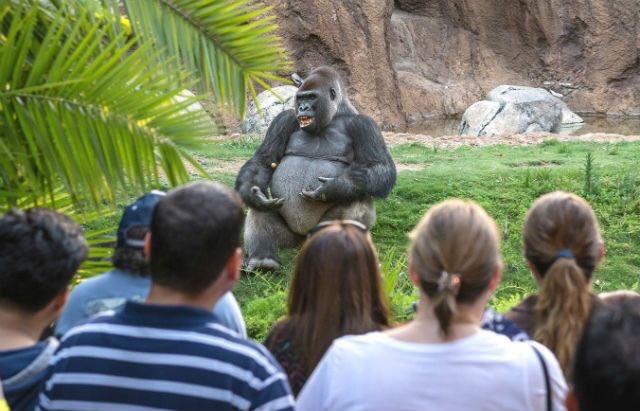
The earliest known appearance of the photo is tied to a Los Angeles Zoo press release dated July 23, 2014, which promoted the Brew at the Zoo evening, an event with beer. The gorilla is not named, and the photographer is unknown.
The photo existed long before the jokes. It was published as promotional material with no hints about a lecture, and the meaning emerged later, when users saw a resemblance to a speaker in it.
What is shown
The gorilla sits on green grass by a stone wall, with palm leaves visible at the top left. It holds its hands in front of its belly, as if gesturing, its mouth is open, and its pose is calm and non-aggressive.
In front of the gorilla stands a group of visitors, all shown from behind: a man in a baseball cap, a person in a striped shirt, a girl with her hair in a ponytail, and several more people in light T-shirts. This composition creates the effect of an audience, but there is no podium or lectern in the frame. The "lecture" is the viewer's reading, not a caption on the photo.
June 2017: how the photo came back
On June 22, 2017, the LAist account on Twitter posted the photo in a roundup titled "20 Events in Los Angeles," and a user joked that the gorilla was giving a street lecture on philosophy. On June 23–24, jokes about the "gorilla lecturer" spread across Twitter, and the outlet UPROXX gave it the name "TED Talk Gorilla."
On June 25, 2017, the photo was posted to Reddit's /r/pics, where it collected more than 131 thousand points and became the top post of the day. The same day, the zoo confirmed on its account that the photo was taken at its Roaring Night event. The actual date of the shoot is unknown: the 2014 press release and this confirmation point to different events.
Why the gorilla looks like a lecturer
The funny part of the photo is the transfer of human gestures onto an animal. The viewer sees familiar movements of a speaker: an open mouth, raised hands, a gaze toward the audience. When people sit in front with their backs to the camera, the composition resembles a lecture hall, and the gorilla's pose looks like meaningful speech.
The joke relies on expectation. The viewer assumes the gorilla is just sitting on the grass, but it seems to be giving a talk. The more serious the expression, the sharper the contrast: the animal cannot give a lecture, yet the frame makes it seem plausible.
Captions that work with this photo
Below are four standalone examples. In each, the caption calmly describes a speech, while the frame shows an everyday scene.
"The carrot presentation ran long, but the audience isn't leaving." The audience seen from behind creates room for subtext, and the topic is chosen to be as mundane as possible.
"A five-minute huddle at a meeting, after which everyone realizes you made the decision." The formula of a business meeting is transferred to an animal, and the contrast between an official speech and the gesture creates the humor.
"When a coworker tells you about their vacation, and you already know how it ends." The gorilla takes the place of the storyteller, and the viewers become the ones who figured out the ending long ago.
"A new hire at the meeting starts with the phrase: let's get to the main point." The pause between the introduction and the listeners' expectation makes the caption recognizable to anyone who has worked in an office.
How to use the template
For your own captions, it helps to keep the tone dry and businesslike: the joke comes from a serious description that doesn't fit reality. Exclamation marks aren't needed, because the pose is already expressive.
The photo contains real visitors who are shown from behind. So it's better to keep captions about the animal and the scene, without inventing personal stories for the people or singling out specific viewers.