Origin
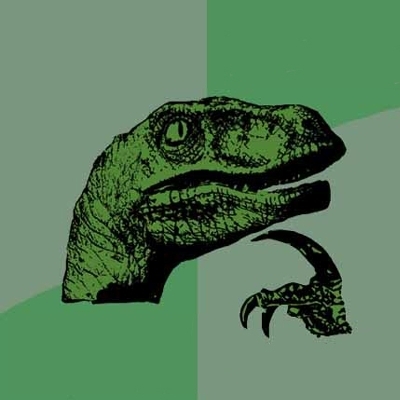
The meme is based on an image of the head of a dinosaur from the dromaeosaurid family, with a characteristic half-open mouth and a stern look. The exact author of the original drawing and the date of its first publication have not been conclusively established in open sources, so what's described here is what's confirmed by the picture's spread. It's most often linked to English-language imageboards and forums of the late 2000s, where it became the basis for captions.
The name "Philosoraptor" is derived from the words "philosopher" and "raptor" (a predatory dinosaur). The Russian name "Raptor-filosof" entered the Russian internet through translations and comment-section discussions, and in the Russian-speaking environment it's known under both names.
It may well be that the simplicity of the outline is what helped the picture stay recognizable for so long, since even a rough copy reads instantly.
Format and the mechanics of the joke
The classic template consists of a question that sounds profound and an answer that reduces it to an absurd or paradoxical conclusion. For instance, captions are often built around questions about choosing between two meaningless options, or about the nature of obvious things. The point of the humor lies in the contrast between the serious tone and the emptiness of the content.
The picture functions as a genre marker of the advice-animal format. Users add their own text above or below it, and even without a caption the drawing conveys the tone of a self-satisfied know-it-all. That's why the template is often used in conversation when people want to ironically portray someone's pseudo-wisdom.
Spread
The meme's popularity rested on how easy it was to repeat: the raptor is easy to recognize even at a small size, and the text accompanying it can be changed without limit. In English-language communities it ended up in compilations of memes about philosophy and in discussions of "deep" phrases. On the Russian-language internet it was carried over to topics about school philosophy, studying, and everyday matters. Many users made their own versions with local jokes, which helped the template last longer than most one-day pictures.
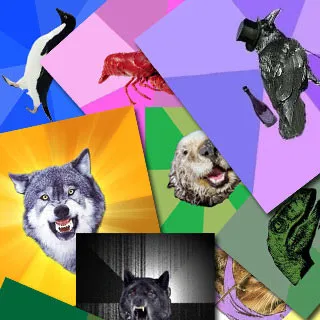
Over time the template became part of the general stock of advice-animal memes, alongside other talking-head characters. It's still used in discussions and comments today, but it rarely becomes the center of a new wave, since it rests on recognizability rather than on a storyline.
Variations and criticism
There are many variations: some captions preserve the question-and-answer structure, while others turn the raptor into a commentator on current events. Sometimes the picture is used ironically, to mock pseudo-intellectual posts that pass off platitudes as discoveries.
Interestingly, the meme itself isn't tied to specific people, so it's rarely seen as offensive. The main complaint leveled against it in arguments is overuse: the template quickly grows stale if repeated without variation.
A separate branch of the meme involves carrying the template over to recognizable topics from film and games, where the character asks questions about the meaning of what's happening. Such captions worked as a parody of philosophical dialogue, with the raptor becoming a kind of narrator.
For those studying the history of advice animals, the raptor is interesting as an example of a visual symbol that outlived its own genre: the drawing itself became a sign, even once the text had already gone out of fashion.