The character and the show
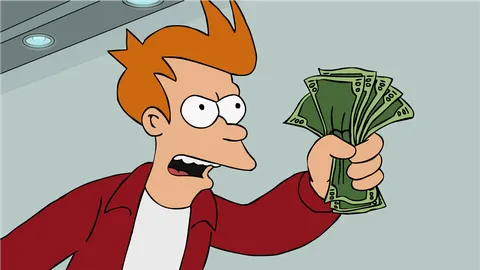
Futurama is an animated series created by Matt Groening and David X. Cohen, which premiered in 1999 on Fox. The main character, Philip J. Fry, works as a delivery boy in New York, but on New Year's Eve he accidentally gets cryogenically frozen and wakes up in the year 2999. This premise let the writers build jokes on the contrast between an old-fashioned simpleton and a futuristic world. Fry is voiced by Billy West, and it's precisely his intonations, drawn-out pauses, and off-hand manner that give the character the distinctive comic delivery that many memes later drew on.
Origin of the frame
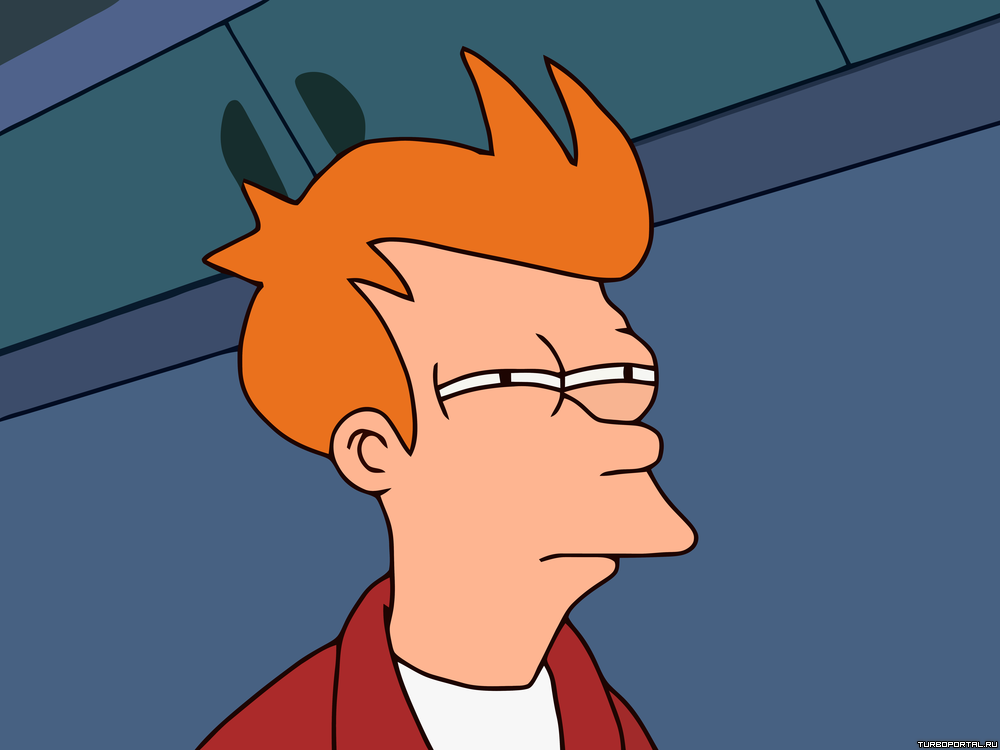
The frame itself, with narrowed eyes and skeptically pursed lips, isn't tied to one specific scene that can be confidently called its source: in the materials available to me, the exact episode and the date the image first spread are not confirmed. According to the entry itself, the meme dates to around 2011. That's when the image began actively appearing on English-language forums and blogs, and the accompanying "Not sure if..." captions set the basic format. The same idea was later rendered in Russian as "Мне кажется, или..." ("It seems to me, or...") and "А что, если..." ("What if..."), and these versions became fixed in Russian-language comments.
Mechanics of the template
The meme's mechanics are simple. The top part of the caption states a claim, an observation, or a hypothesis, while Fry's face shows that the author isn't in a hurry to believe it. This creates irony: the question sounds serious, but the character's reaction gives away that the answer is already suspect. The template was used for absurd versions of events, for ironic doubts about obvious things, and for "conspiracy theories" about everyday matters. For example, a line like "Not sure if, or Monday was invented on purpose" is instantly understandable, because the facial expression sets the tone right away.
Russian-language adaptation
The format took root especially well in the Russian-language internet. The question construction "А что, если..." ("What if...") fit naturally into the local habit of rhetorical questions and sarcastic musing, and the short captions were convenient to drop into comments, posts, and messenger chats. The image was often used in groups devoted to TV shows and humor, as well as in replies to news items and loud statements. Thanks to this, the meme got a second life: today many users know it with no connection at all to the original source and simply take it as a visual sign of distrust.
Why the image endures
Why has this particular frame proven so durable? First, the facial expression is subtle and easy to read: the squint, the downturned corners of the mouth, and the restrained sideways glance convey doubt without extra words. Second, Fry as a character was already both naive and ironic, so viewers readily attribute skepticism to him. Third, the image is universal: it can be used as a reaction to almost any situation where something seems suspicious. Finally, the meme has a comic balance to it: the doubt looks clever, but it's often applied to utterly mundane things, and that gap between the serious look and the trivial occasion creates the comic effect.
The meme's legacy
More than ten years after it first spread, Not Sure If Fry remains one of the most recognizable reaction images tied to Futurama. It shows how one well-chosen frame from an animated series can become a stand-alone grammar of internet communication, where the image sets the tone and the caption supplies the content. The show, already popular on television, gained a new audience through the meme, and the character himself turned into a convenient symbol of a distrustful outlook on the world.