What the picture shows
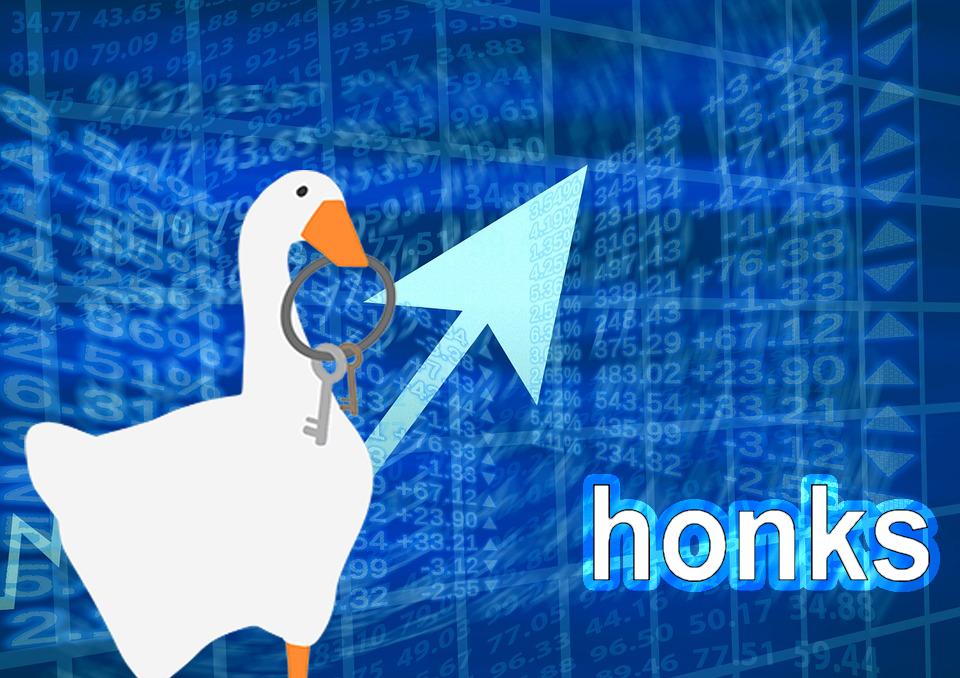
The frame shows, close up on the left, a white goose with an orange beak: in its beak it holds a metal ring with two keys. The background is blue, a stylized stock table with small numbers, percentages and triangular growth and decline indicators. A light arrow pointing up rises above the goose, and in large letters at the bottom right is written “honks.”
The caption follows a familiar pattern: in the well-known meme template with a stock table and a growth arrow, a word about shares is replaced by an onomatopoeia for the goose's honk. The result is a two-layer joke: “shares are rising” becomes “the honking is rising.” The picture is assembled from ready-made elements rather than taken from the game, so it is convenient to use as a reaction to any good news, especially when the news has a mischievous flavor.
The goose game and its release
Untitled Goose Game was made by the small Australian studio House House, and the publisher was Panic. The game came out on September 20, 2019 on Nintendo Switch, and also on Windows and macOS via the Epic Games Store. In September 2020 it appeared on Steam and itch.io, and at the same time a free two-player mode was added, where you can control two geese at once.
The title is itself a joke: the game seemingly has no name, so the hero is simply called the Goose by everyone. The advertising slogan is built on contrast: in the village it is a wonderful day, and you are a terrible goose. The player receives a list of small tasks like those given in quests, and carries them out by scaring residents, stealing things and ruining people's day, with no violence on screen.
Why the goose went into memes
Short videos and screenshots spread the game across social media, in which the goose does something absurd: drags off someone else's item, slams a door in someone's face, or proudly strides off with a stolen object. The image is very simple: a white silhouette, an orange beak, a brazen bearing. Such a character is easy to draw, cut out and insert into any template.
One of the most noticeable templates became a picture of the goose with a knife, captioned “Peace Was Never an Option,” a line that goes back to a quote from the X-Men comics. A tweet with such a goose gathered tens of thousands of likes within a week. The goose's cry, “honk,” also became an independent reaction: people type it under a post to express approval, excitement, or a jokingly “I'm about to do something stupid.”
Caption examples
“My rate of laziness after the meeting got cancelled” treats the upward arrow and “honks” as a success report that only pleases its author. The joke rests on the fact that the graph is rising for a bad habit.
“My chances of taking someone else's sandwich from the shared fridge” makes the goose with keys in its beak look like someone who is sure they'll get away with it. The keys suggest that it has already grabbed something.
“Monday schedule: ask for time off, brew tea, honks” replaces a serious action with a goose's cry in the last item, and the absurdity becomes the punchline.
“When the bonus notification arrived” uses the picture literally, as a joyful reaction to growth.
How to apply the template
The picture works best where there is a contrast between the serious language of finance and a silly occasion. The caption should be short and answer the question “what exactly is growing?” The smaller and more mundane the occasion, the funnier the solemn arrow looks.
If you need a softer reaction, a single word “honk” in a comment without the picture is enough. Together with the image the goose already reads as a hint of light mischief, so the template does not suit sad or serious news.