A snapshot between serious poses
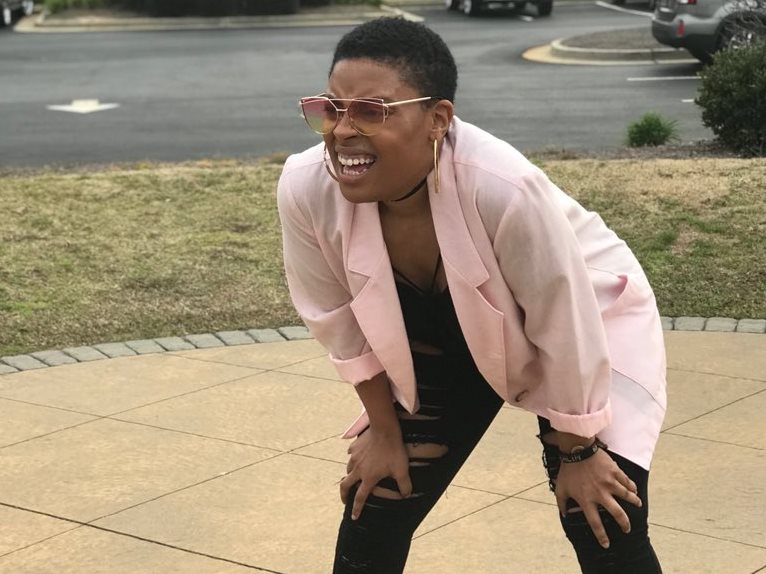
In March 2018, Calin Elisa posted a funny frame taken while preparing photos for Instagram. The main shoot called for a more serious look, but it was the extra shot that spread on Twitter. Captions connected the pose with the feeling of needing rest after even a small movement. Then the photo began to explain situations completely unrelated to that photo shoot.
In early April, Calin told a journalist that she enjoyed seeing her image in various jokes; she herself forwarded the successful variants. By then users were already pairing the photo with “Tired SpongeBob,” who had a similar pose. The resemblance helped read a stranger as a ready-made reaction. However, the origin of the picture remains mundane: it is a funny moment from Calin’s shoot, not a staged scene from a TV series or a documented ending of a sports competition.
A pink blazer and palms on the knees
In the photograph, Calin leans forward and supports herself with both hands on her knees. She wears a light pink blazer over black clothing, metal-framed glasses, and jewelry. Her hair is short, her mouth is open, and her brows are drawn together; her gaze is directed forward through the glasses. Behind her are grass, a road, and parked cars; light tiles lie underfoot.
The outfit gives the pose additional expressiveness. The blazer and jewelry promise a composed look for a photograph, but the body position looks like a sudden break from that look. The palms give a sense of support, and the lean reduces the distance to the presumed interlocutor. There is no caption on the image, so the reason for the effort or bewilderment appears only in a particular meme. One pose can signal several different states without any change to the image itself.
Tired of doing or tired of understanding
The first reading relies on the familiar pose of a person who needs to catch their breath. The caption may name a very modest action, while the image lends it disproportionate weight. The smaller the task, the stronger the comic gap: the person looks as though they have walked a long road, though they have only finished one short operation.
The second reading uses the squint and the close-up on her face. Calin seems to be trying to examine a detail, understand someone else’s decision, or find the right place in a long text. Here fatigue becomes intellectual, and the physical support of the knees depicts the effort to make sense of something. These meanings can combine: what tired the person was the very necessity of searching for meaning. The photo is especially convenient for this ambiguity, because the direction of the gaze and the open mouth do not give a single definitive line.
When a short job unexpectedly drags on
In an invented scene, a person assembled a small shelf and discovered that the last part was left over. The caption for Calin reads: “Trying to figure out whether this is a spare shelf or the start of a second piece of furniture.” The lean turns into peering at the result, while the palms on the knees preserve the fatigue after assembly. The joke links both meanings of the photo through one concrete object.
Another invented version shows a reaction after being asked to choose one photo from an almost identical series. Calin seems to be looking for the difference between two shots that everyone else has already called completely different. In a third example, a person came to pick up an order and received a box, a box inside it, and yet another layer of packaging. The frame is captioned “made it to the actual product.” Here the facial expression refers to the effort of reaching a simple goal: solemn readiness to buy gives way to a pause after an unexpectedly long unpacking.