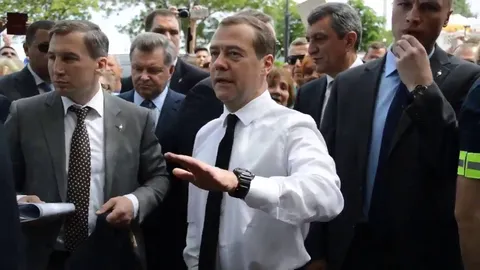
A scene from “DMB”
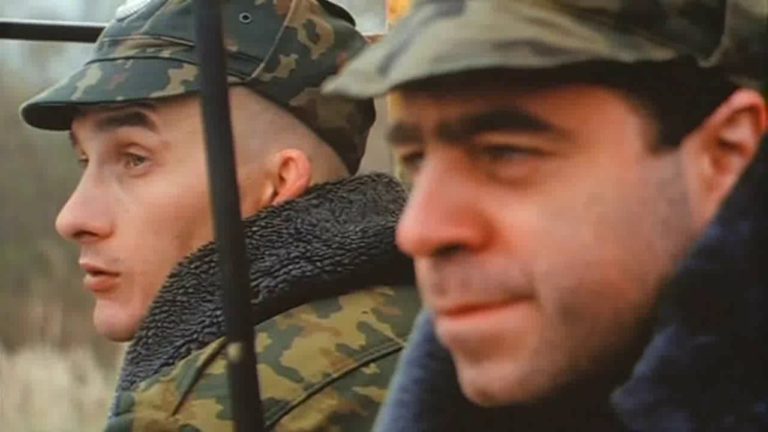
The dialogue appeared in Roman Kachanov's comedy “DMB,” released in 2000. Kachanov directed the film from a screenplay written together with Ivan Okhlobystin. In the published script, the episode is embedded in a conversation about the unusual twists of army life: a senior-ranking man points into a field, asks about a gopher, hears an honest “no,” and replies that he doesn't see it either, but the animal exists. The final “Understood” closes the joke: the interlocutor accepts not proof but the confident tone.
The frame shows two men in military uniforms and camouflage caps. The nearer man occupies the right side of the image, the second the left; there are no captions over the picture. In later versions of the line, the word for the gopher is replaced with other words, carrying the same exchange over to new topics.
In a review of “DMB” published in 2000, the invisible gopher was singled out as one of the film's memorable verbal images. The meme did not create the joke from scratch, but turned the short dialogue into a convenient form for talking about disputed “facts” and things that cannot be produced as evidence.
Confidence instead of proof
The line's structure is simple and easily transferable: one person does not see something, the second admits he doesn't see it either but keeps insisting it exists. In the original, the film's characters trade this absurdity. In new variants, the word “gopher” is replaced by the name of a hidden feature, a promised function, a secret event, or a thing that cannot be shown.
Intonation determines who gets the joke. If it's about a discount a company promises but doesn't show on the bill, the meme mocks the promise. If you caption a story about your own plan that no one yet understands with this line, the picture can sound like self-irony. And if you substitute the name or belief of a real person, the joke becomes mockery of them; it's better to aim it at a verifiable claim or at the absurdity of the situation itself.
Invented captions
Hidden fee. A client looks at the receipt and asks an employee where the promised free delivery is. The answer: “I don't see it either, but it's there.” The invisible gopher becomes a service that was advertised but could not be found in the final total.
The update is already done. A developer tells the team the new feature works, though during the demo the button still does nothing. The meme comments on the gap between a confident status and the observable result, without blaming a specific employee.
Free seat. An organizer insists there is still a chair in the hall, but all the seats are taken. The humor is not in the argument about whether a chair exists at all, but in the persistence of someone who sees the same packed room as everyone else. The captions keep the rhythm of the original scene: a short question, a denial, then unruffled confidence.
When the quote fits
The line fits next to a table, a report or a promise where the claimed result is hard to find by eye. It can also be used in talk about things that exist only in retellings — for example, a “general agreement” that none of the participants remembers. Then the image of the invisible animal shows the gap between words and what participants can actually observe.
However, the line does not prove the absence of every fact: a person may not know about it, may lack access to the data, or may be looking in the wrong place. The most precise version appears where confidence clearly exceeds the grounds: the promise is repeated but the result cannot be produced. In a short caption it helps to name the subject of the dispute, so it is clear which “gopher” is currently not visible. The frame from “DMB” adds a recognizable dialogue and army setting, while the new topic gives the meaning of its use.