The character and the comic
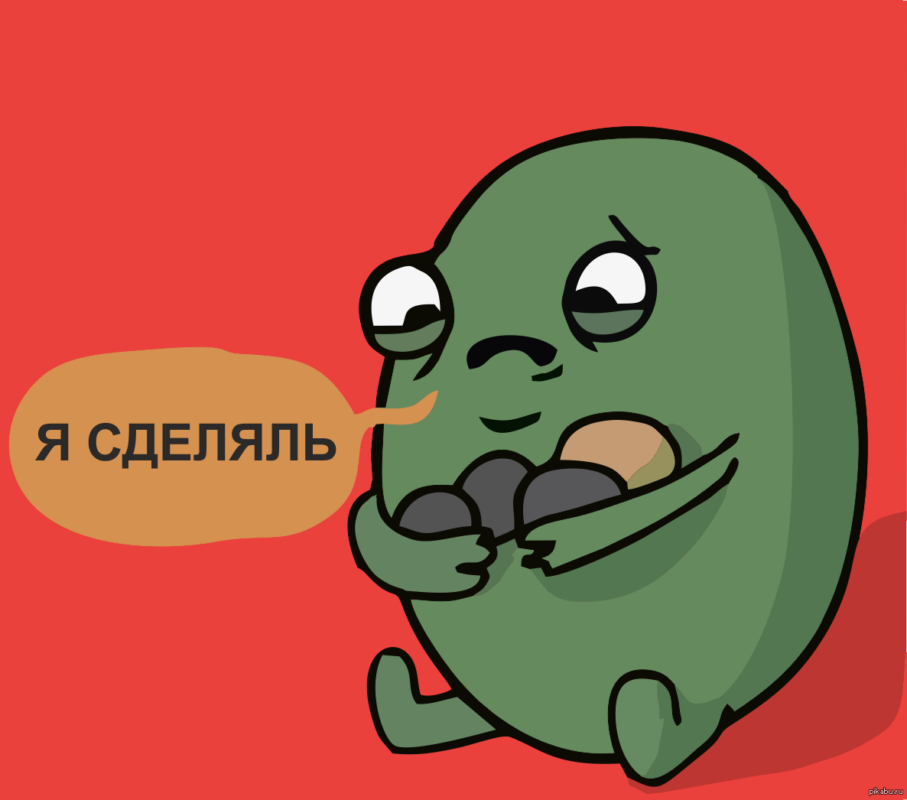
The green creature resembles an oval shape with large eyes and a small mouth. In the comic it represents a gallbladder, the organ in which, under certain conditions, stones form. The authorship and exact title of the series haven't been established, so the character is described differently across various sources. By users' general impression, it's precisely the simplicity of the design that let the picture spread quickly across forums and threads without any explanation needed.
The comic is built on humor with deliberately childish speech: the character says "maded" instead of "made," like a child bragging about an achievement. The image is done in a simple cartoonish style with bright flat colors, which is what made the picture so recognizable.
Origin of the meme
According to the catalog tag, the meme dates to 2014. It most likely spread through image macros and communities where users cropped individual panels from comics and captioned them with their own lines.
The exact date of the first publication and the original author haven't been established. The phrase "I maded it" has no standard grammatical form and relies on a deliberate error that underscores the character's childish tone.
Meaning of the expression
The expression is used when someone proudly talks about a result that's questionable or useless. It could be a collection of unnecessary objects, a failed project, or a notable but pointless victory. The funny contrast comes from the gap between the character's joy and the actual substance of the achievement. The phrase is most often applied to everyday pursuits: piles of accumulated junk, loud but useless achievements in games, or home projects that don't change anything.
The image with the stones works as a visual metaphor: the character is proud of what it created, even though the stones are a painful byproduct. That's exactly where the joke lies, and the viewer gets the irony without any explanation.
Use online
In chats, the meme gets posted under photos or screenshots where someone is bragging about dubious results. Sometimes it's used as self-irony, when a person admits they made something nobody needs and is still proud of it anyway. In such discussions the meme often follows a short message and serves as the final punchline, after which the exchange usually ends in shared laughter.
Caption variants appear with different verbs, but the general principle stays the same: a misspelling and a deliberately childish tone. The meme doesn't require knowing the comic, so it's understood even by people seeing the character for the first time.
Cultural context
The meme belongs to the category of Russian-language pictures in which inanimate or anatomical characters are given human emotions. Comic and meme authors often use this device to joke about everyday topics, including health.
Importantly, the joke isn't aimed at real people and doesn't mock illness. The character's image remains harmless and works through its recognizable expression, which is why the meme keeps turning up in discussions and remains understandable to a broad audience. That's also why the meme stays a handy tool for joking about one's own failures, which can still be presented with pride and without undue seriousness.