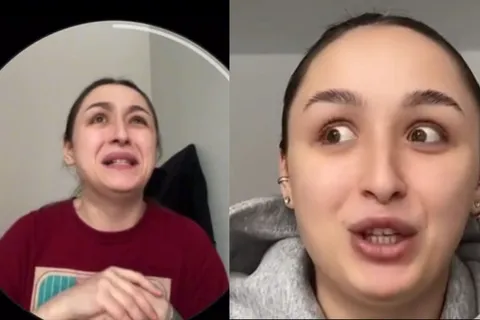
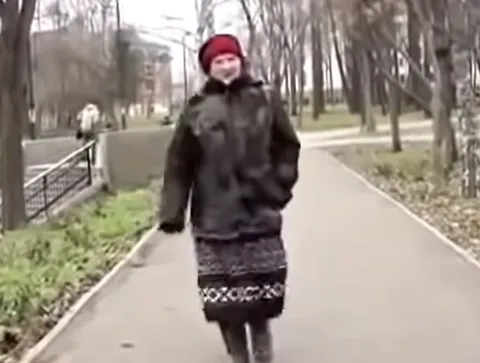
What you see in the video
The woman in the white T-shirt turns quickly, sways, and moves side to side. Repetition creates the impression that she is trying to do several things at once and cannot decide which to choose. Against rhythmic sound, these movements look like miniature choreography; with a new caption, they become a reaction to a hectic day or chaotic plans.
The catalog image shows a sequence of several movement phases: her torso changes direction, arms move, the background stays domestic. This does not necessarily mean real anxiety or loss of balance. You cannot diagnose or conclude about the participant's state from a short edit. In the meme context, rhythm and exaggerated movement usually matter more.
From a dance clip to a metaphor for chaos
Such videos become memes when viewers can easily connect the movements to a task that demands attention in multiple directions. The caption might describe an approaching deadline, choosing between plans, or trying to answer five messages. The heroine seems to physically perform the inner monologue of someone torn between options.
The dance basis makes the joke clear even without text: directional changes repeat, so it is easy to sync words to the movement. In one version the heroine represents someone facing a morning schedule; in another, a computer with too many tabs open. Thanks to the caption, an ordinary clip comes to stand for more than a dance: it symbolizes a familiar feeling of overload.
How to read the edit
In short videos, the original footage is often sped up, looped, or cut to a few repeats. This makes behavior look more chaotic than it might be in full recording. Editing becomes part of the joke: the viewer sees not the start or end of a scene, but a movement repeating again and again. So it should not be described, without a caveat, as real frantic dashing about in the everyday sense.
To explain a specific clip's origin, it is important to find the first publication and understand what music accompanied the original. If such data is missing, do not name the author or invent a reason for the dance. In a meme card you can describe the observed movement and meaning of later captions, while keeping the difference between the original video and its reinterpretation.
Examples of new captions
"I try to pick what to do on my day off: cleaning, a walk, or making a to-do list again." Against the heroine's movements, planning looks like a physical struggle with options. Another example: "When the calendar reminds you about a meeting, an order, and a call all at once." Here chaos is not assigned to the participant but created by the situation with which a viewer can relate.
You can also write about the moment a computer freezes and the user tries to work out which tab to save. The key is for the caption to explain exactly what the character is torn between. If you just write "she is strange," it stops being a situational joke and can turn the woman into a target for the way she moves.
Limits of humor about anxiety
The format suits light bustle and hesitation, but should not be used as diagnosis. Quick movement does not prove that a person has an anxiety disorder, a neurological condition, or any other medical problem. Attributing illness from a video is incorrect and may reinforce stigma. In a chat with friends it is safer to describe your own busy schedule rather than the woman in the video's psychological state.
If someone is genuinely talking about serious anxiety or crisis, a meme about chaotic movement should not be the response. Such a reaction can come across as dismissive. In a comedy context, it is better to keep the target of the joke an overbooked day, task confusion, or comically impossible choice. Then the movements stay a visual metaphor rather than an assessment of a real person.