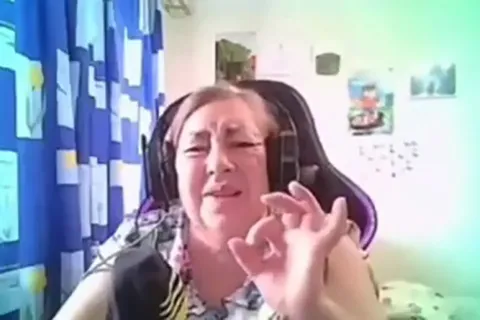
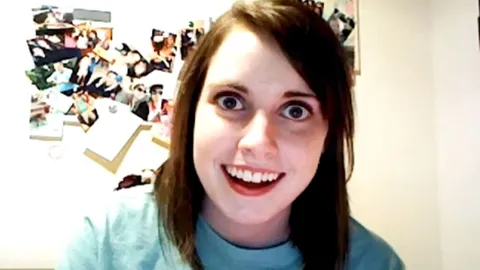
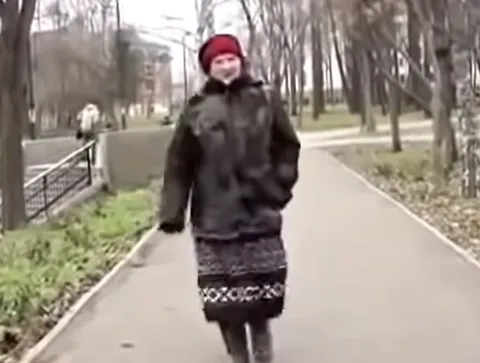
Three frames in a row
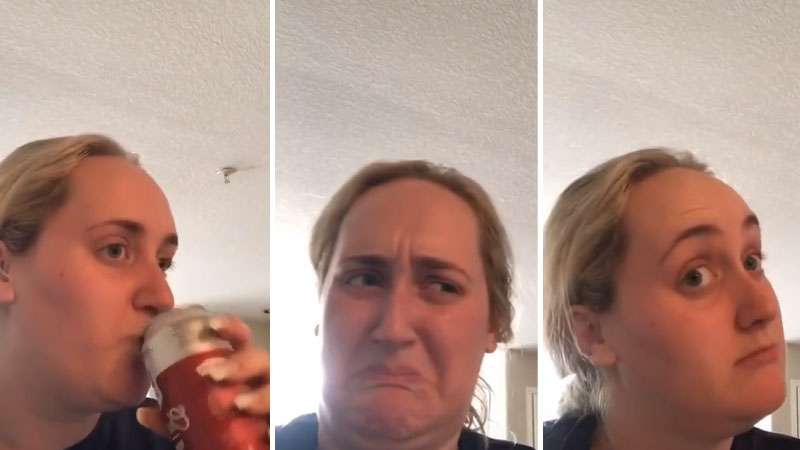
In the left frame, a woman with light hair drinks from a red can, her gaze fixed in the distance. In the middle one her face is distorted: brows furrowed, corners of the lips turned down, eyes almost squeezed shut. In the right one her eyes are wide open and her head is slightly turned; she looks to the side and seems bewildered, as if she hasn't yet decided how to feel about it.
The background is the same in every frame: a ceiling with a textured finish and a corner of a room. It's an ordinary home video shot on a phone. The transition from enjoyment to disgust and then to reflection fits into a few seconds, and this very sequence became the basis of the meme.
How the video became a meme
The original clip, “Me trying Kombucha for the first time,” was posted on TikTok on August 6, 2019 by blogger Brittany Tomlinson. She sniffed the can and said the drink smells like a public toilet, then took a sip and for several seconds looked as if she couldn't decide whether it was tasty or not.
The video spread widely via Twitter. On August 9, 2019, one user posted it with a different caption, and within four days the clip collected tens of millions of views. On August 11, another user posted yet another version, which gathered more than a million views in two days. By August 12–13, major online publications were already writing about the phenomenon. After that, the reaction began to be captioned for all kinds of situations.
What the reaction means
Kombucha is a fermented tea drink with a sour taste, and it was what prompted the video, but the meaning of the meme has long since detached from the drink. The three frames correspond to three stages: anticipation, an unpleasant surprise, and an attempt to figure out how to feel about it. The last frame is especially valued: it's not just disgust, but wavering between “I don't like it” and “maybe it's not so bad after all.”
Thanks to this, the template suits “mixed feelings”: a film with a strange ending, a joke with an unclear delivery, a new job about which it's not yet clear whether one likes it. The meme doesn't require knowing the original, because the emotions read on their own.
Caption examples
Left frame: “I was told the new series is a masterpiece.” Middle: “Episode one.” Right: “It'll probably pick up speed later.”
Left: “I tried a new diet.” Middle: “Day two.” Right: “I still haven't decided whether this is heroism or stupidity.”
Left: “I opened an email with feedback on my work.” Middle: “First line.” Right: “The second line seems not so bad.”
Left: “A colleague offered to try his signature tea.” Middle: “A sip.” Right: “Smiling politely.”
How to use the template
Each of the three frames should get its own caption or at least a clear semantic role: attempt, reaction, reflection. It's better to choose an occasion familiar to many and understandable without explanation, and not to forget the last frame: the main joke lies precisely in it, because it shows not the outcome but the wavering.
There's no need to name the heroine in the captions. The meme is about the situation, and a caption about the woman herself only distracts.