A double you can’t tell apart at first glance
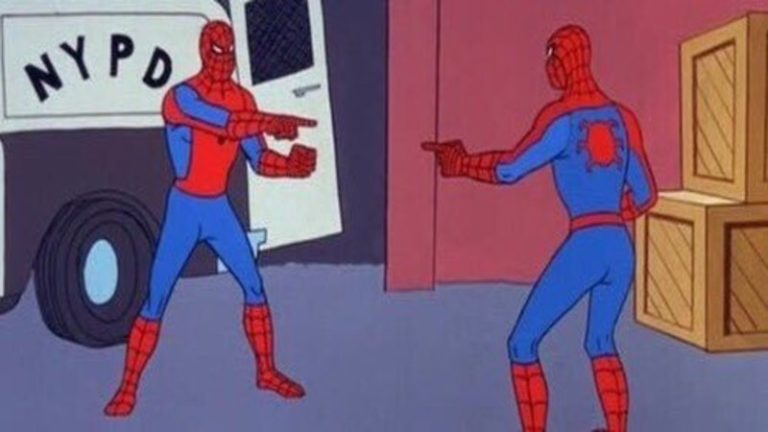
The frame comes from the 1967 Spider-Man animated series, in the episode “Double Identity.” In the plot, the villain Charles Cameo can transform into other people and commits crimes disguised as Spider-Man. The real hero tries to expose the impostor, but on meeting, each points at the other. For the viewer, it’s both a chase scene and a visual riddle: two identical masks argue about which of them is the real one.
The internet turned this exchange of gestures into a standalone template. One of the early dated uses as a meme is traced to 2011, but that doesn’t prove the format first appeared then. What matters is that the original scene already contains a closed comedic construction. Each accuses the other of what they themselves represent, and the viewer sees the resemblance before the heroes do.
What has been changed in the familiar frame
The image shows two Spider-Men directing their index fingers at each other. On the left, behind the hero, there is a white surface with large NYPD letters and part of a wheel; on the right, a pink wall and cardboard boxes. One figure is shown from the front, the other from behind, but the costumes and pose make them visual doubles. The position of the arms creates an almost symmetrical arrow: the accusation returns to the one who makes it.
In the full episode, the gesture completes the confusion with the impostor: the real hero faces a man who wears his image. In “Spider-Man: Into the Spider-Verse” from 2018, the old scene could already be referenced as a familiar internet image for viewers. The film winks both at the cartoon series and at the frame’s new online life.
A resemblance nobody wants to admit
The most direct version is two sides blaming each other for the same mistake. For example, two colleagues send a file named “final_definitely_last” and both complain that the other messed up the folder. This is an invented example: it shows how mutual accusation turns into a recognizable visual echo. In another invented variant, you could place two apps that both ask for an update right before an important meeting.
The template also works for similar but not fully identical things. Two different brands of headphones can argue about who drains the phone’s battery faster; the viewer immediately sees that both consume charge. Such a case doesn’t require a literal duplicate: a shared trait that the participants don’t notice or don’t want to notice is enough. Hence the flavor of self-exposure: the gesture points outward but returns to its owner.
Invented pairs for a caption
Invented example for a group chat: two people argue about who started discussing a TV show in the work channel, even though both sent five messages there. Under the frame, you could write their names instead of the characters’. What’s funny isn’t the discussion itself but the equality of contributions that the characters refuse to acknowledge.
Another invented pair is an old alarm clock and a phone that ring at the same time on a weekend. Each seems to blame the other for waking the owner. You could replace the objects with two nearly identical versions of one document, or with two friends who are equally late and explain it with traffic. But sometimes symmetry is funnier when the difference is visible too: one file is called “draft,” the second “draft_final,” and their contents are identical. The image needs no long explanation: two fingers already show the circular logic of the situation.