A switch that came out of the interface
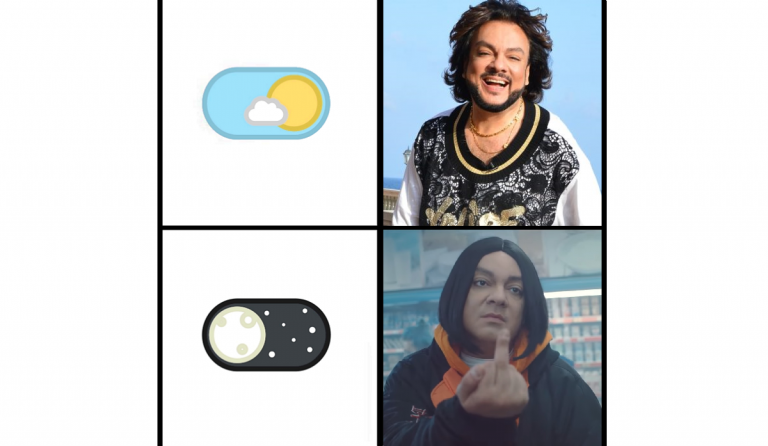
The button picture is linked to designer Ramakrishna V, who showed a day-and-night switch for iOS on Dribbble. The idea received software implementations: the DayNightSwitch library separately credited the authorship of the design and animation. So the sun, cloud, and moon came into the meme from a specific interface project. In the original task they helped distinguish two states of a setting, and users later transferred this clear opposition onto people and characters.
An early well-known meme with these icons was posted by AussieDude32 in the Reddit community r/MemeEconomy on April 4, 2018. Soon variants appeared with characters from Spider-Man and other works. Instead of telling the reasons for the transformation, the author needed only two images and a changed button position. In the spring, the format reached Russian-language remakes; the Kirkorov version combined his familiar stage image with the screen hero of the 2018 music video for “Color of Mood Blue.”
Two Kirkorovs in one table
The picture is divided by black lines into four cells. In the upper left is a blue switch: a yellow sun stands on the right, with a small white cloud in front of it. Below it is a dark button with a moon on the left and stars on the right. To the right of the sun, Kirkorov smiles against a blue background; his beard, chains, and patterned clothing are visible. The two columns form pairs that read from top to bottom.
The lower Kirkorov looks completely different: a straight black wig, an orange hood under a dark jacket, a serious face, and a middle finger raised toward the viewer. This is a performed image, set against the upper portrait. The meme does not require assuming that the singer really changes character after sunset. Its material is the difference in appearance and gestures, while the icons give conventional names to two versions of one recognizable person.
Character as a phone setting
The joke reduces a complex change of behavior to a single movement of the switch. The day row suggests a calm or public image; the night row suggests boldness, uninhibitedness, or an unexpected passion. The sun and moon spare the author from explaining “usually I'm like this, but sometimes I'm totally different.” At the same time, night does not necessarily mean a literally late hour: it can signify a circle of close friends or a situation in which a person stops following the usual role.
What matters is the continuity of the hero between the lines. The viewer must notice that the mode of the same person has changed, rather than simply seeing two random photos. In the Kirkorov variant, recognition is strengthened by makeup: the famous face is preserved under a deliberately foreign style. The tabular strictness adds comedy. The two states of a personality look as if they could be chosen in a menu next to screen brightness and notification volume.
New switches for familiar situations
In the invented joke, the upper row is captioned “calmly discussing the menu for the week,” the lower one “spotted the last piece of cake.” The smiling portrait stands for negotiation; the defiant gesture stands for a sudden readiness to defend dessert. Another variant moves the button into musical tastes: by day the person insists he listens only to quiet instrumental music; by night he recognizes the first two notes of an old dance hit and can no longer stay still.
The third example is about a board game. Under the sun: “explaining the rules to newbies”; under the moon: “newbies win against me for the first time.” The switch reveals a hidden rivalry, even though the evening started out friendly. These situations give the night row different causes: the wish to get one's own way, an unexpected passion, and a thrill of competition. In every case, the button marks a brief moment after which a second, previously unnoticed role emerges in the same person.