How Ben became Dimas
The drawing comes from The Square Comics by the artist Alvin Juano. These comics feature simple colored characters with square heads and short stories with a sharp final line. The original comic about a hero named Ben is known from a post dated June 19, 2018. Ben is beaten and injured, but he keeps his composure. When asked about an unusual ability, his answer is the word “depression” — a grim punchline from the author.
The Russian-language remake appeared in late June 2018 and substantially changed the story. The panels were rearranged, the original text was replaced, and Ben was renamed Dimas. Now the reader is first told that everyone hates the hero, and then invited to find out why. His own answer reveals an irritating habit, and the attack scene becomes the finale. The name of the first author of this adaptation has not been established. The remake kept the drawing but changed the basis of the conflict and the meaning of the last panel.
One frame with an impassive face
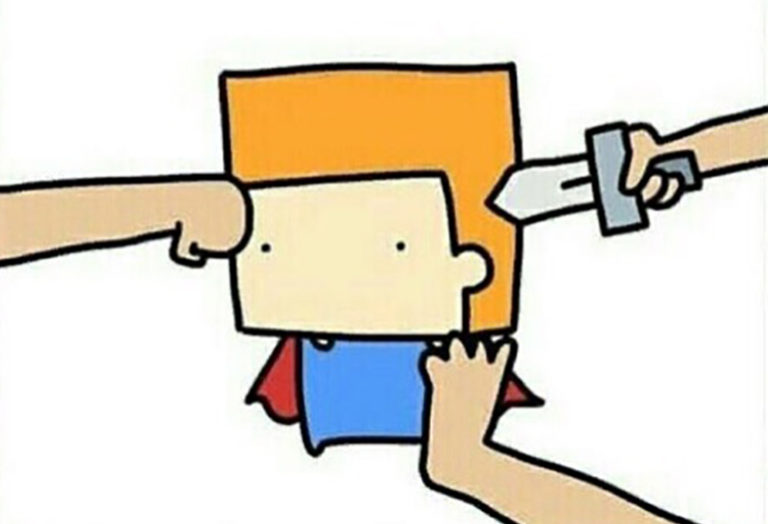
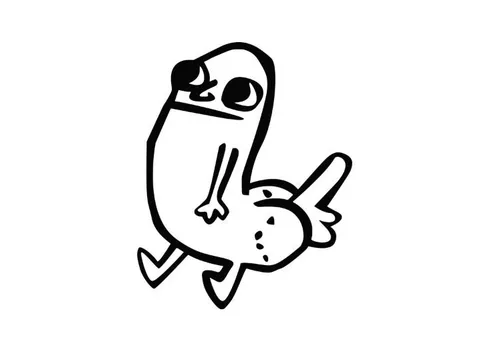
This image shows a single fragment, without the other panels and without any lines of dialogue. The little figure has a large pale rectangular head, two dot eyes, orange hair, and a blue top. The face expresses almost nothing. A fist approaches from the left, a knife points in from the right, and another arm extends from below. The white background removes details of the location and leaves only the hero surrounded by attackers.
The sharp mismatch between the calm face and what is happening around it makes the fragment recognizable. Even without the full comic, it conveys a sense of pressure from all sides at once. But the frame itself does not say the name Dimas or give a reason for the attack. Those elements belong to the meme captions. That is why a standalone drawing can work both as a reaction to unanimous condemnation and as the closing panel of a re-assembled story.
Whom collective hatred ridicules
In the typical version of the comic, the hero’s answer fills the main gap: why is he so disliked? If he names an everyday habit that bothers the people around him, the meme gathers the shared irritation into one character. Dimas becomes a symbolic carrier of a trait rather than a specific person with a biography. Readers may recognize familiar behavior in him, and then the attack depicts an overblown indignation of a whole company.
But when the answer concerns a harmless preference, the crowd itself becomes the joke. It reacts to a difference in taste as if the hero had done something terrible. The same drawing therefore allows two directions of humor: mockery of an annoying habit and mockery of people who cannot tolerate someone else’s choice. Dimas’s unchanging expression strengthens both readings: he seems to have simply stated a fact and not had time to be surprised by the scale of the response.
Invented reasons for a new comic
An invented version may begin with a standard introduction of Dimas, and name as the reason for the hatred his habit of playing long voice messages out loud in a quiet office. Here an understandable everyday irritant is pushed into caricature. In a second invented example, the hero confesses: “I skip the opening credits even for my favorite show.” Such a trivial choice makes the collective condemnation absurd and shifts the mockery onto overly zealous fans.
A third invented answer: “I reveal the ending of the mystery before the others have finished reading.” Here the hero spoils everyone else’s enjoyment, while the drawing replaces the unanimous cry of protest. These examples do not retell the posts from The Square Comics that have been found. They show how a rebuilt story allows a new cause with the same ending: first an introduction to the character, then an explanation of the conflict, and after it the recognizable frame with the calm face amid other people’s hands.