A vertical frame with a caption over the battle
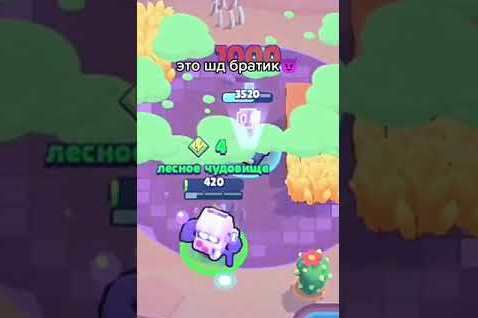
The picture is a screenshot of a vertical phone-recorded clip with black bars on the sides. At the center is a game field in light lilac and green tones: bushes, low obstacles, a cactus at the bottom edge. Above the character in the center you can see a health number, and on the left a username is written in large font along with a phrase about a forest monster. Over all of it, in white letters, runs the caption "it's SD bro" with a smiley face.
This is the typical look of the clips posted as short-form videos: a recording of a match plus a single line of text that turns the game scene into a one-liner.
What "SD" is and where the phrase comes from
The meme is tied to the mobile game Brawl Stars, and "SD" is most often decoded as short for the mode "Showdown," where everyone plays for themselves and the last one standing wins. This explanation shows up in user replies, but the primary source hasn't been established: the specific author, the first clip, and the exact date couldn't be pinned down. The only mention that could be found dates to 2021, and that's all that can be said about the timing.
There's also no way to say which particular player or character in this frame is the "main" one: the picture only shows that it's one of the matches, with a gamer tag on screen.
The mechanics of the joke: politeness with a catch
The joke is built on a broken expectation. The player spins in place or makes a gesture that looks like a greeting, and the other person seems to understand there won't be a fight. Then comes the line about "SD," addressed to "bro." The tone is condescendingly friendly: nothing personal, that's just how the rules are.
The word "bro" is there for contrast. It's used warmly, while the action it accompanies isn't warm at all. That's how the formula turns into a universal excuse: any somewhat dishonest behavior can be explained away as something the game's conditions required.
The second detail is the abbreviation itself. Someone who knows the game reads it instantly; someone who doesn't sees a mysterious code, which creates a sense of belonging to an in-group.
Example captions
Below are invented examples for everyday situations.
"Took the last piece of pie off the table in front of the whole family: it's SD, bro." A fight over food is dressed up as a game mode where the rules forgive everything. It works because the scale of the crime is tiny while the excuse is delivered solemnly.
"Shoved a coworker away from the outlet: it's SD, bro." An office squabble over a shared resource is framed as a fair match.
"A friend suggested splitting the winnings evenly, and I'd already closed the tab." Here the phrase itself stays off-screen, and the viewer finishes the thought themselves. The joke rests on the missing link.
"Hit the gas at the light before everyone else: it's SD." The short version, without "bro," shows the formula is flexible, and the dry "it's SD" becomes a universal answer to any "that's not fair."
How to use the frame
It works best with low-stakes competition: a line, the last piece, the seat by the window. A pointedly calm tone also helps: the caption should sound like a confident explanation, not an apology. Serious grievances turn the phrase into a mean joke, when it's meant as a playful excuse.
There's no need to spell out the abbreviation in the caption itself: the joke relies on the word being familiar to insiders. And there's no need to invent gameplay details if you've never played — the tone of justification is enough on its own.