A toy that is easy to recognize
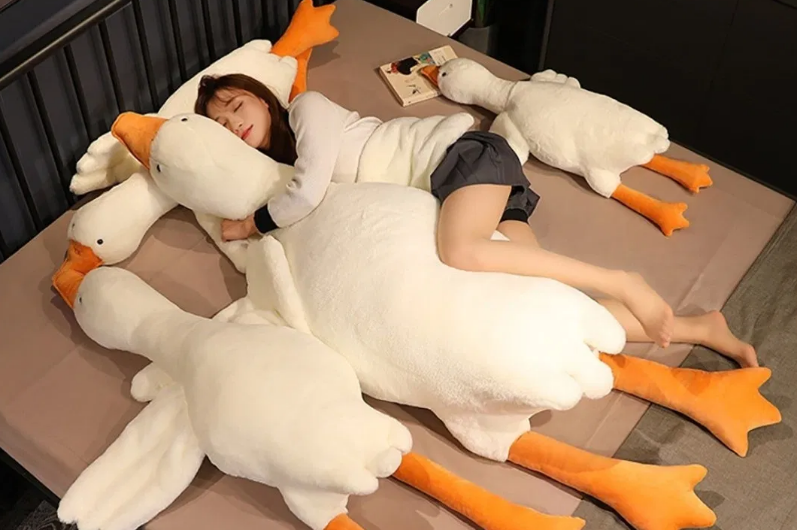
The popular goose has an expressive silhouette: a long neck, a broad body, a yellow beak, spread wings, and soft feet. Its large size makes the toy look like a pillow, a blanket, and an unusual pet all at once. The Russian name "gus-obnimus" sounds like a children's rhyme and describes its purpose exactly: the goose is easy to hug, lay on a bed, or use as a soft support.
In photos the toy can look almost alive because of its size, its dangling parts, and the way a person holds it in their arms. This gives rise to jokes about a companion who always takes up half the couch, a night guard for the bedroom, or a creature that needs its own space. Unlike a picture of a real bird, here the fabric texture and the deliberately exaggerated softness matter.
Connection to the internet goose
The popularity of big goose toys grew out of a long-standing internet love of cheeky geese. In 2019 the game Untitled Goose Game let players control a goose that disturbs the peace of a village: stealing items, honking, and meddling in the residents' plans. This strengthened the bird's image as a comic troublemaker, although this particular plush toy is not a character from that game and should not automatically be identified with it.
In the early 2020s large plush geese began to show up widely in shopping roundups, short videos, and buyers' photos. In Russian-language posts the toy picked up affectionate names, and "obnimus" ("let's hug") emphasized its tactile purpose. Different sellers and factories make models that vary in size, beak shape, material, and seam quality; there is no single universal original.
How goose jokes are built
Most often the humor comes from disproportion: the toy takes over the bed, goes on trips with its owner, or looks too imposing for an ordinary room. A second kind of joke humanizes it. The goose is assigned the duties of a roommate, bodyguard, therapist, or boss, even though it stays a motionless plush toy. The more serious the caption and the sillier the situation, the better the contrast works.
A third device flips the expectation of care. Usually a person buys the toy for themselves or a child, but in the meme the goose itself seems to demand space, attention, and regular hugs. A shot with a person next to it helps show the scale. If the photo is cropped too tightly, much of the visual joke disappears, so the silhouette and a comparison with furniture are often kept in the frame.
Ideas for new captions
"Bought a travel pillow. The pillow: took the window seat and picked the route." This caption turns the toy into a passenger with a mind of its own. It suits a photo where the goose is buckled in or settled next to a suitcase.
"When I said I'd go to bed early, but the goose has already taken the bed and isn't negotiating." Here the toy becomes a roommate. A concrete object and a simple situation keep the joke clear without any backstory about the manufacturer.
"My new personal rest coach: the plan is to lie down, cuddle, and not answer work messages." This version applies serious productivity language to a plush bird and keeps the tone cozy rather than mocking.
Don't mix up the toy and the game meme
The Gus-Obnimus toy and the goose from Untitled Goose Game overlap through the shared bird theme, but they are different cultural objects. The first is about a physical toy and its size; the second is about a video game and the mischievous behavior of a playable character. You can use them together in a remix, but don't claim the toy was made directly from the game's design without confirmation from the manufacturer.
A person in the frame may be holding a specific model with a brand name, but if there are no markings, it is better to just say "a large plush goose." Meme captions don't establish an official product name and don't confirm the origin of the whole category. The description should reflect visible traits (shape, size, how it is used) and keep the history of the trend separate from the history of individual sales.