How the duck's look is put together
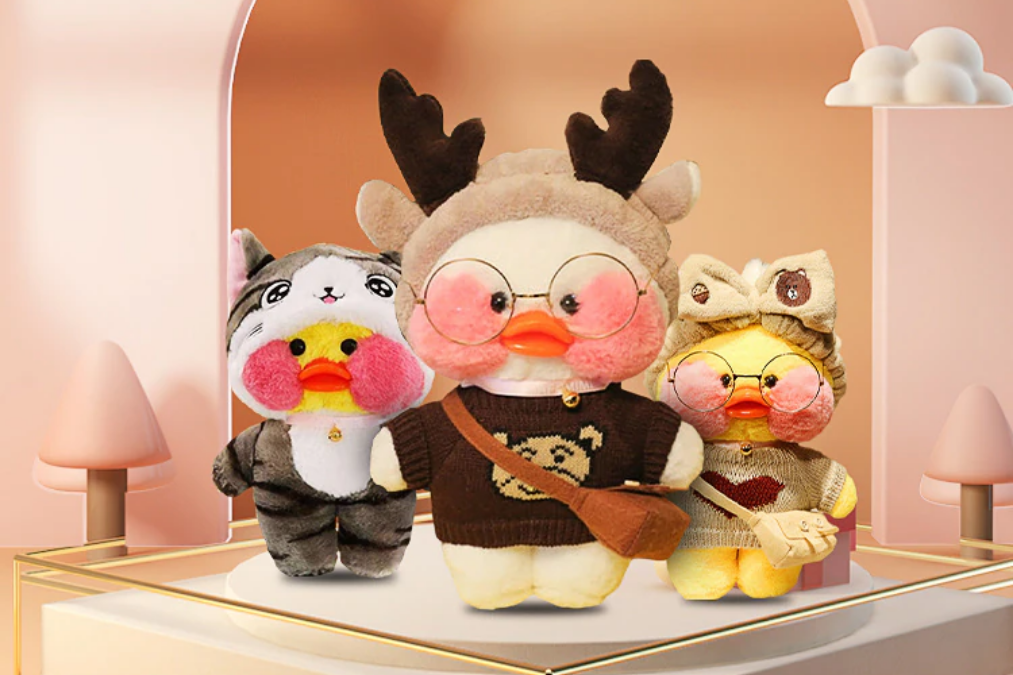
Lalafanfan is a plush duck with a rounded yellow body, an orange beak, and bright pink cheeks. The image shows a group of ducks: the central one wears glasses and a dark patterned sweater, while the other two are dressed in different outfits. Accessories matter just as much as the toy itself: they help turn an identical base into several characters, each with their own personality.
The toy is linked to the South Korean studio Cafe Mimi. Early versions of the design appeared long before the wave of mass popularity, and the duck became globally visible in short videos and photos in 2021. On social media, owners showed off outfits, invented habits for their ducks, and posted on their behalf. From this particular picture it's impossible to establish who owns these specific toys or exactly when the photo was taken.
Why the toy started being photographed so much
The duck is well suited to visual storytelling: it has a stable, recognizable silhouette, but enough detail to tell characters apart. Glasses might signal seriousness, a hat might mean getting ready for a walk, and a sweater might suggest coziness at home. Changing the outfit changes the character's role too, so even a still photo looks like a frame from a tiny series.
The popularity is also fed by hands-on personalization. The toy gets photographed on a table, on the road, next to food or other objects, and then paired with a first-person caption. Unlike a meme built on sudden conflict, the humor here often comes from attributing everyday worries to a soft, cute character. The viewer understands the conceit and fills in the duck's "voice" from a single detail — glasses, a hat, or a sweater, as with the three toys in this picture.
Caption ideas
Three toys in one shot are especially well suited to assigning roles. For example: "The one who picked the route," "The one checking the weather," and "The one who forgot the umbrella anyway." Or you could show them getting ready to head out: one duck is already dressed, another is still picking an outfit, and the third is holding the bag and waiting. Captions like these are tied to visible differences between the characters.
For a single duck, short everyday lines work well: "I went out for bread and came back with a new sweater" or "Today's plan: tea first, then another tea." The text should play off a specific accessory or pose rather than restate the obvious, like "this is a duck in glasses." Then the photo turns into a character scene that's easy to continue in the next post.
Toy, character, and commercial versions
Lalafanfan doesn't have one required backstory or a fixed personality. Owners invent their own versions: one duck might be a traveler, another a homebody, a third a strict boss. It's precisely this openness of the character that let it cross over from a toy context into meme culture: the audience doesn't need to know a plot to get the joke.
At the same time, the popularity has spawned many similar toys and knockoffs, and the name is often applied to items of varying origin. Not every duck with pink cheeks is automatically a genuine Cafe Mimi item. This article describes the visual image and its online use, but doesn't confirm the authenticity of any particular toy from a single photo. In posts, it's better to discuss the style, outfits, and invented backstory rather than make unverified claims about the manufacturer.