Several traces instead of a single origin
Jokes with H have a history that predates this picture. In August 2012, a YouTube video by motdef about Moonbase Alpha appeared; among the in-game messages was the command “summon h.” In July 2014, a clip circulated in which H was spoken, with a reference to JonTron. These episodes show early attention to a single letter, but they do not establish one author for all the later variants.
In 2017, another notable trace appeared on Reddit, in r/OldPeopleFacebook, where a screenshot of a Facebook message containing H was posted. In January 2018, journalist Jason Koebler discussed the meme with researcher Ryan Milner. Thus the letter became the subject of a separate conversation about humor. The dates refer to different publications; they do not mark when this particular image of the bridge appeared.
The letter takes the place of a caption
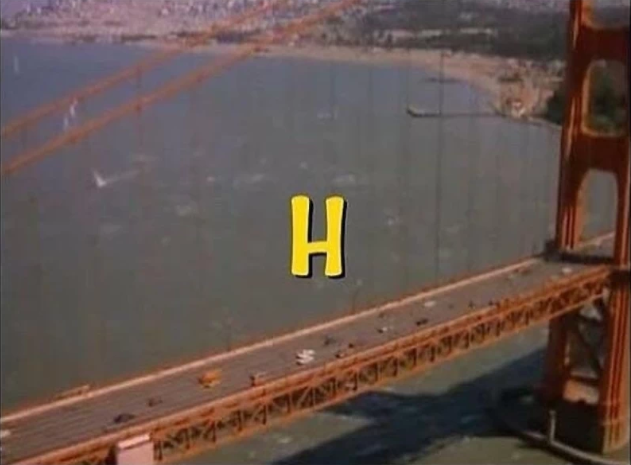
In the picture, the top-down view shows water, a shoreline, a roadway, and the red structures of the Golden Gate Bridge. In the middle sits a capital Latin H, yellow and outlined in a dark contour. It is large enough that the eye lands on it before it reaches the details of the landscape. There are no other words, characters, or explanatory title here.
The background promises an ordinary photo of a landmark, and the letter breaks that expectation. However, it does not form a clear geographic caption. One could try to link the vertical strokes to the bridge's supports, but such a visual rhyme does not yet explain where the joke comes from. The visible details allow us to describe the composition, not to reconstruct the intent of the unknown author. The content rests on the fact that a familiar landscape unexpectedly becomes the backdrop for a single sign.
Why the absence of a punchline is funny
A meme usually promises a small story: a question, a comparison, or an unexpected conclusion. H takes the place of that conclusion and explains nothing; no continuation follows the letter. That pause is the joke: the viewer waits for a payoff, doesn't get one, and laughs precisely at having waited in vain.
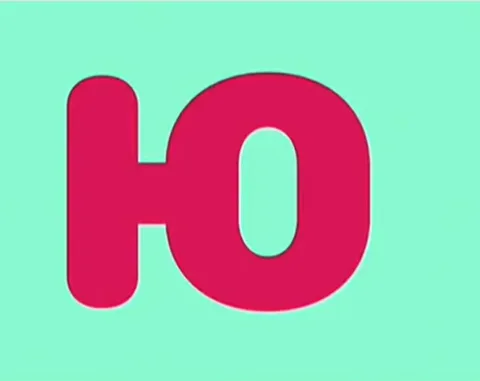
This does not make every post with H the same. In a chat, the letter may look like an accidental keypress; on a photo, like an absurd caption; in a comparison, like a replacement for the entire sense of humor. One interlocutor expects a thorough answer, another an expressive picture, a third a witty phrasing, while the meme each time shrinks the promised content down to a single letter. In the Latin alphabet this is H; its resemblance to the Russian letter Н merely adds the possibility of reading the sign in different ways.
Invented situations for a single letter
A hypothetical example: friends compile a list of what made them laugh at school, and at the end of the list, instead of a final story, they insert a single photo, a yellow H. Swapping long memories for one letter is the deliberately absurd outcome; the bridge itself in such a comparison remains just background.
Another invented case: a chat member solemnly announces that they have found the best answer to the question about evening plans, and sends an H. The comic effect rests on the gap between promise and result. A third hypothetical example is a poster for a home meme night where, instead of the party's name, a single yellow letter is printed across the whole poster: guests familiar with the joke understand the invitation without a schedule or a time. These examples describe uses of the format, not real early posts.