Three restrictions from the film
In the 1992 “Aladdin,” the Genie explains which wishes he can grant. The Russian meme replays this conversation as a list of rules that has to be extended after an impossible request. One of the early dated examples of the format appeared in the MDK community on VKontakte in August 2018.
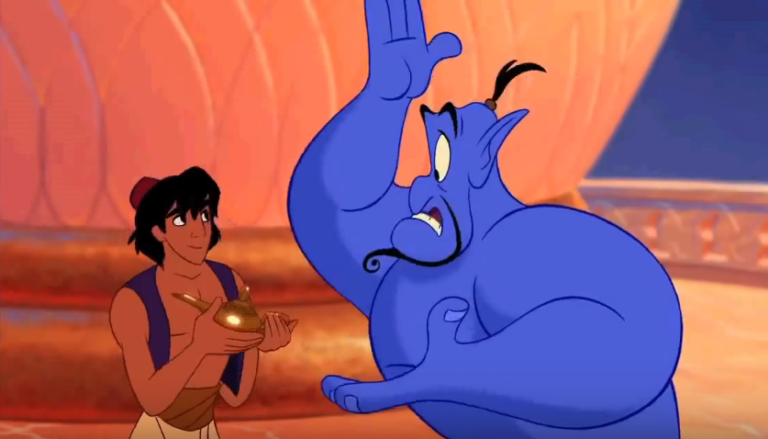
The frame shows one moment from the cartoon: Aladdin holds the lamp, while the Genie has raised a hand, as if about to clarify something. There is no text in the image. This is not a ready two-panel version nor a frame with a list of three prohibitions; the meme joins a familiar plot of rules with a separate moment from the film.
A new request extends the list
The comic logic resembles an argument about the rules of a game. The host lists prohibitions, the other player finds a loophole, and the list has to be supplemented. The fourth restriction is funny precisely because it arises after the demand: the limit looks like a reaction to a request that is too clever or completely impossible. Sometimes the meme speaks of the technically impossible; sometimes of how nobody wants to fulfill a whim even though magic is supposedly all-powerful.
In the story, the Genie explains the limits of his power, and the viewer understands that the rules here can be discussed and gotten around. The new panel turns this game dynamic into a short exchange: request — prohibition.
Invented wishes
The examples are invented. “I want meetings to never appear in my calendar again” — and the Genie adds a rule that you can't cancel an entire work week. Here the request promises to get rid of small obligations, but its scale makes the refusal understandable. “Make sure the fridge always contains exactly the ingredient that's missing” provokes a new prohibition on endless stocking up.
In a third variant the request is funnier and more specific: “Let the neighbor each time remember on his own that he promised to return the book.” The new rule could forbid magical control over someone else's memory. For this twist to read, the second part must respond precisely to the request — not be a random moral or an unrelated riddle. Otherwise the mechanics break: the viewer expects the Genie to add a restriction because of the wish just made.
Two voices instead of a literal wish
The Genie's raised hand and Aladdin's lamp assign roles even before any text is added. One character sets the frame, the other is in the position of a petitioner. A meme remake can keep the characters' names, or it can give them everyday roles: for example, the host of a game and a participant trying to get an exception. The recognizable pose then holds up the structure of the conversation, even though the object of the request is no longer connected to magic.
An unlabeled frame preserves only one moment of the exchange. For a consistent joke, neighboring images or lines of text can present the question and a new refusal: that is an invented continuation, not lines from the film. Such editing turns the hand gesture into punctuation — the answer seems to stop the interlocutor before they can develop their loophole. The device also works without a picture: one line of text answering the previous request is enough for the viewer to supply the missing prohibition themselves.