Image
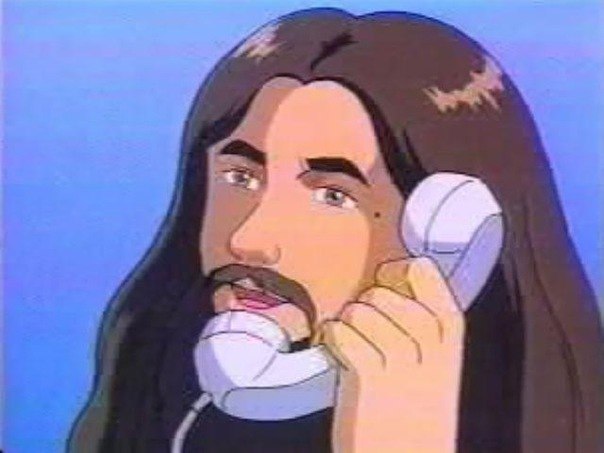
The picture shows a cartoon character with long dark hair, a thin mustache, and a calm expression. He holds a white telephone receiver to his ear against a flat blue background. The frame is drawn in an old animation style and has the picture quality typical of video from that era.
The image contains no clear features that would allow the character to be identified. The association with Jesus Christ comes from the catalog and from the tradition that developed online around the image's use, not from the frame itself.
The phrase and its meaning
The phrase "Alo, vy sho ebobo?" sounds like a conversational line used to open a phone call while expressing outrage. On the Russian internet it is used to convey bewilderment or indignation, often in an ironic, exaggerated way.
The catalog notes that the phrase is used together with the picture. It is precisely this combination that creates the comic effect: a serious, almost solemn-looking character delivers a sharp, everyday insult.
In text messages the phrase is often written with an exclamatory intonation, which strengthens its comic effect and makes the caption recognizable even without the picture.
Judging by common descriptions, this kind of phrase structure — a short greeting that abruptly turns into an accusation or a question — also appears in other conversational memes on the Russian internet, which apparently made it easier for the line to become established as a stand-alone phrase, used without any connection to the original frame.
Origin
The meme's origin could not be established. A search turned up no original source for either the frame or the phrase, and no indication of an author or the date of first publication. The origin remains unknown.
The meme is associated with 2010 and 2017. These dates probably correspond to periods when the meme was popular.
The lack of a confirmed original source is typical of many similar memes on the Russian internet: the image and the phrase may have existed separately for some time before users combined them into a fixed pair, which makes it difficult to reconstruct an exact timeline.
Combination of picture and caption
The combination appears in various forms: the frame is used as a reaction to someone else's words, as an illustration of irritation, or as a joke about phone conversations. Thanks to its recognizable look, the meme reads instantly even without a caption.
The meme spread through the same communities where collages with short captions are popular, and so it became established as a convenient way to convey outrage with a single picture.
It appears that the contrast between the character's presumed solemnity and the crudeness of the everyday line became the main source of the comic effect, which is why the meme kept being reproduced in different visual variations — from static pictures to short videos with a voiced reading of the phrase.
A note on identifying the character
The identification of the character relies on the catalog rather than on the frame's visual features. The connection to Jesus Christ here comes from the entry's description and from the tradition of use, and readers should keep this in mind when assessing the material.
This kind of uncertainty in attributing a character is typical of old animated frames that get a second life as memes long after their original context has been forgotten by most users.