Structure of the format
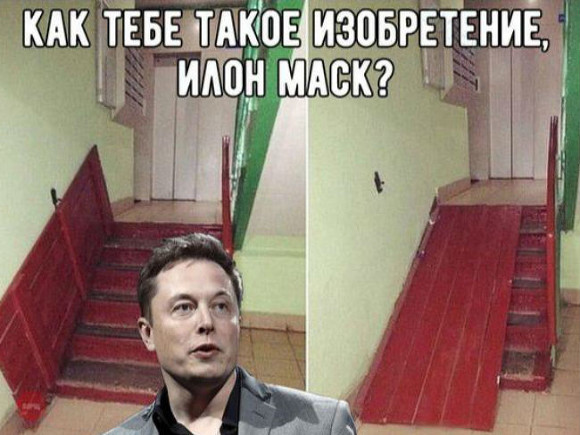
A typical picture consists of a large all-caps caption at the top, one or more photos, and a cut-out portrait of Musk. The caption poses the question, and the photos show the answer in the form of a household fix. In the picture shown here there are two parts: on the left, a staircase with red wooden railings; on the right, the same staircase with a sloped ramp in place of the steps.
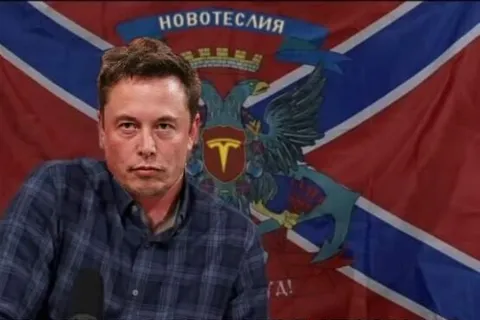
In the bottom corner is a photo of Musk with a tense stare, as if he were assessing the construction. The contrast between the engineering authority of the entrepreneur and makeshift materials is the basis of the joke.
Why Musk
The choice of figure is no accident. In 2018 Musk was one of the most visible entrepreneurs in the world, and the launch of the Falcon Heavy in February of that year, with a Tesla car on board, became a symbol of technological optimism. The meme's description in the catalog explicitly sets such achievements against Russian everyday life.
The format uses a name associated with technical progress to show how far that progress is from ordinary life. The question "How do you like that?" reads as irony, not as a genuine request for the entrepreneur's opinion.
The English-language wave
According to BFM, an article about the meme was published on August 26, 2018. It began with a tweet by the user Courtney (@andromedamn), who told her English-speaking followers that Russia has a meme with the caption "How do you like that, Elon Musk?" under absurd "inventions." Three photos were attached to the tweet: an energy-saving light bulb locked to a pipe with a bicycle lock, a washing machine with a gas stove mounted on top of it, and a man wearing a toilet seat ring around his neck who uses the lid as a beer holder.
The tweet was retweeted about 25 thousand times over several days. Motherboard and Metro wrote about it, after which many other Russian Musk memes appeared. Musk's reaction to the meme is not mentioned in this material, so it cannot be claimed that he had one.
Origin of the genre
The exact first post with this format could not be identified. Russian-language discussions, including questions about the meme's origins on Yandex Q, do not give a definitive answer. It is therefore worth distinguishing two events: the appearance of the Russian format, which probably took shape earlier, and the English-language spread, documented in August 2018.
The date "2018" refers to the second event. For the first there is no known date, and any specific date would be speculation.
Examples and development
The format expanded easily. All it took was finding an absurd solution and captioning it with the question. Examples of such captions include "Saving on both the socket and the bicycle at once" and "A stove on a washing machine, because the space is needed." Each caption spells out a specific piece of household ingenuity, with Musk cast as the judge who is called in to rate it.
Unlike many internet templates, this one requires no complicated editing. Two photos and a short caption are enough, so anyone could put together their own version in a few minutes.
Why the format endures
The meme endures because it works on two levels. On the surface it is humor about household fixes; underneath, it is irony about national self-image and the idea of technological progress as something that bypasses ordinary people.
This perspective does not require knowledge of any specific event and is clear to anyone who has seen a homemade repair in a building entrance. That is why the format stays recognizable even when the news hook has long since faded.