What the frame shows
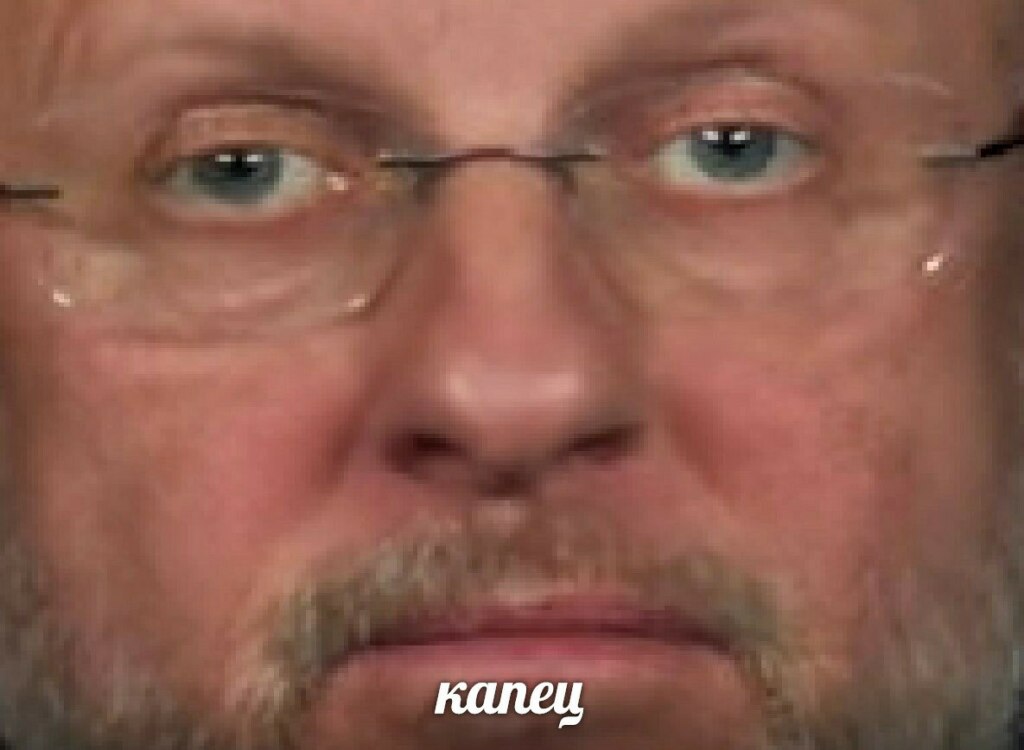
The image is almost entirely filled by a face shot from very close. Light eyes behind thin rimless glasses are visible, along with a straight nose, light stubble, and tightly pressed lips. The picture is blurred and grainy, which is typical of a heavily enlarged still from a video rather than a studio photo.
At the bottom center stands one word: “kapets.” It is written in lowercase italic with rounded strokes and resembles popular handwritten fonts such as Lobster. The expressive gaze plus a short word is enough to convey the intonation.
The font as part of the image
The caption is set in a typeface resembling Lobster, a popular typeface with rounded italics that is often used on pictures for short remarks. For the meme, what matters is not the history of the font but what it gives: a soft, everyday flourish of handwriting instead of strict machine typesetting.
This soft flourish and the expressive, almost icy gaze in the photo create the needed contrast: the rounded letters sound like a calm exhale, and the face like a silent verdict. Whether the caption is really set in Lobster cannot be determined from the image, but the italic style alone already sets the right intonation.
How the short word is used
“Kapets” is a colloquial word that marks the extreme degree of anything, from minor annoyance to bewilderment. It is posted as a standalone reply, and then it sounds like an exhale. That is why the meme is most often placed in response to someone else's news rather than at the start of a conversation.
The picture adds an expression of disbelief to the word. It works not through emotion but through restraint: the person says nothing, yet the gaze has already delivered a verdict. The reply takes one line and is understandable without context.
Example lines with this picture
— They said the rate will go up by the end of the week. — Kapets. A serious forecast meets a short exhale, and the face adds irony.
— The meeting was moved an hour, then another evening. — Kapets, I've already taken the day off. The second line adds an everyday detail and turns the complaint into a joke.
— The courier has been “almost there” for three hours, the app says. — Kapets. Everything rests on the pause: a couple of words and a glance say more than any detailed reply.
In all these scenes the caption is short, and the meaning comes from the combination of a deadpan face and a specific occasion. The more precise the occasion, the funnier the reaction.
What is known about the picture
Who is depicted in the picture and which video the frame comes from cannot be determined from the image itself: only an extreme close-up of a face is visible, with no name or credits. The source of the still, its date, and the first publication of this picture have not been established, so the template's history can only be discussed in general terms.
This does not prevent its use: the meme works as a universal reaction. The face is best regarded as an anonymous image, and the caption should be built on the situation rather than on the person. That way the joke stays harmless and understandable to every reader.
Practical advice: the picture works best in response to news involving numbers, deadlines, and promises, because there the word “kapets” sounds like a verdict. If the occasion is too serious or involves someone else's grief, it is better to skip the joke and write an ordinary comment.