An introduction players memorized by heart
S.T.A.L.K.E.R.: Shadow of Chernobyl by GSC Game World came out in March 2007. At the start of the game, Sidorovich talks to the Marked One, who survived a dangerous incident and lost his memory. The trader presents help as grounds for a return favor: after the hero is saved, assignments now await him. This introduction simultaneously brings the player into local relationships and gives them a practical reason to leave a safe place for the Zone.
The address quickly became part of the game's memory. It is recognized by its first words, even when the continuation has been replaced entirely. Later the monologue was transferred to other games, conversations at the checkout, and everyday requests. The internet history of the format stretches from discussions of the first part to new remakes, but the exact earliest post is not established. The May 2018 variants were another return of the old line, not the moment Sidorovich or his address was born.
The trader at the table
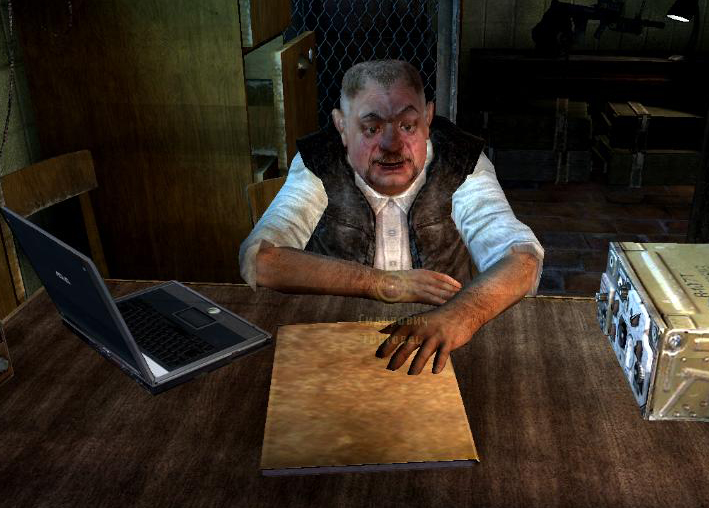
In the picture, Sidorovich sits in a cramped room at a wooden table. He wears a light short-sleeved shirt and a dark vest; his face is turned to the viewer. On the left an open laptop stands, a light rectangular object lies in front of the character, and a metal grille is visible in the background. There is no game interface or printed monologue here: recognizability rests on the character himself and the setting of the conversation.
The table separates the interlocutors and makes the scene resemble negotiations. Sidorovich is at home, has things and information at his disposal, while the viewer takes the place of the hero who came for help. That is why even without a caption the image reads as the start of a business explanation. The combination of cozy crowding and the harsh game world helps the joke: great dangers beyond the door may begin with a perfectly mundane errand from the man behind the laptop.
From a request to an inevitable quest
The comedy rests on confidently claiming the other person's attention. The word “long story short” promises to save time, yet it may be followed by a long explanation, a list of conditions, and a new chain of obligations. The original in-game debt turns into a universal model: one participant in the conversation has already decided the other will agree, and only the details remain to be laid out.
The contrast of scale works especially well. Sidorovich begins with a small favor, and a caption or voice-over takes it to absurdity: pick up a package, find a missing cable, rebuild an entire system. His calm demeanor keeps the scene from panic. For the trader, everything looks like ordinary work, although the assigned executor is already mentally picturing several hours of trouble. The familiar opening serves as a signal: an assignment is coming, and in this small story it will be hard to get out of.
Everyday tasks in the Zone's intonation
In an invented family chat, Sidorovich writes: “Long story short, Marked One, grab the bread on your way. Just find a shop that's still open first.” An ordinary purchase grows a route search and turns into an evening quest. Another variant shows the administrator of a game server: he asks to fix one icon, and then it turns out that to do so the entire interface must be reassembled. The trader's image conveys the calm of a person who judges other people's work by the size of the final result.
Another invented scene concerns a friend's move. A request to help with one box gradually unfolds into moving a library from the fifth floor. Here the meme amuses not through danger but through the familiar change of terms: the interlocutor has already arrived, and the real substance of the request becomes known too late. The character from the game links these different stories with a shared intonation of a practical negotiator who always has something to assign.