What's shown in the picture
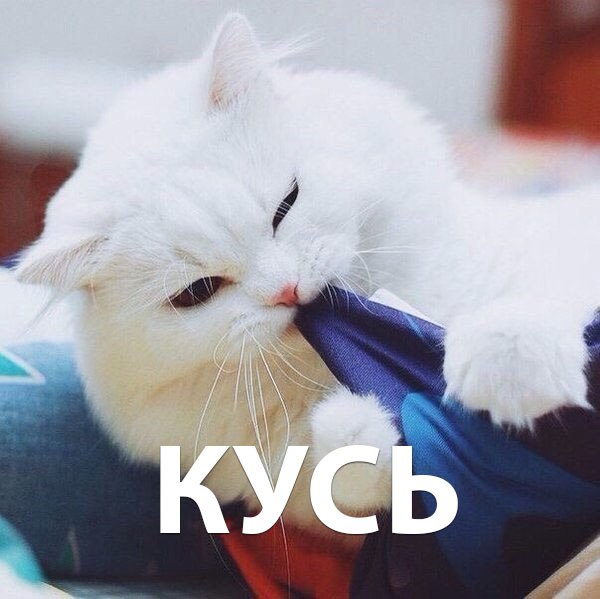
In the photo, a white fluffy cat with soft fur holds a piece of blue fabric in its teeth, looking like the edge of clothing or a pillow. The cat's eyes are narrowed, and its paw gently presses the fabric down, creating the impression of a relaxed, contented animal. The background is blurred, so attention is entirely on the playful motion.
The large caption "KUS" at the bottom of the frame turns an ordinary photo into a meme. The caption sets the meaning: the cat isn't just chewing fabric, but, per the caption, tenderly biting it — that is, expressing affection. This format is standard for cute pictures associated with tenderness.
Origin
The word "kus" appeared among anime fans and gradually spread beyond that circle. In the Russian-speaking internet it spread around 2013. No direct original source for the word in Japanese culture, or a specific anime that introduced it, is known, so its origin should be considered unconfirmed.
Like many anime expressions, "kus" quickly moved into everyday speech and picture captions. Fans used it in comments and messages, and over time the word came to mean an affectionate nip rather than an actual attack.
Over time the word became part of everyday slang within the fandom: it's said in chats, in stickers, and in captions on fan art. This adaptation isn't tied to any one anime, which is why the word has survived without needing knowledge of a specific show.
How the meme is used
The expression "to give a kus" means a light playful bite as a gesture of affection. In messages it's used in place of a kiss when someone wants to show warmth without saying it outright. The caption often accompanies pictures of cats, puppies, and other cute animals that appear to be giving each other these little gestures of attention.
The meme is also used jokingly: for instance, offering a "kus" to a friend who shared something funny or touching. The word is light and short, so it's easy to drop at the end of a message as a small token of fondness.
There's also an ironic use: the word gets dropped in reply to a flirty or awkward message, turning embarrassment into a joke. That way "kus" works as a gentle reaction that eases tension and signals the other person doesn't need to worry about things getting too serious.
Why the meme works
The meme's power lies in combining a cute image with a word that sounds both threatening and affectionate at once. A bite is normally associated with danger, but in the caption it becomes a sign of tenderness, and this paradox creates gentle humor. The viewer understands no real harm is meant, and smiles.
On top of that, the meme works well with the visual imagery of cats, already associated with cuteness. The white fluffy cat with narrowed eyes immediately sets the mood, and the short caption finishes the joke, so the picture is easily recognized and spreads quickly.
The meme is also convenient for a brief expression of affection. There's no need to write a long message: one word and a picture already convey warmth, which is especially valued in fast-paced messaging where emotional lightness matters.