A question that becomes a caption
The line is framed as a dramatic question: the speaker addresses "mother" and asks whether something really must be swallowed. In ordinary speech, "swallow" can mean both physically eating something and putting up with an unpleasant circumstance. It's exactly this double meaning that lets the phrase be applied to different images: you can show strange food, heavy news, or a rule people are forced to accept.
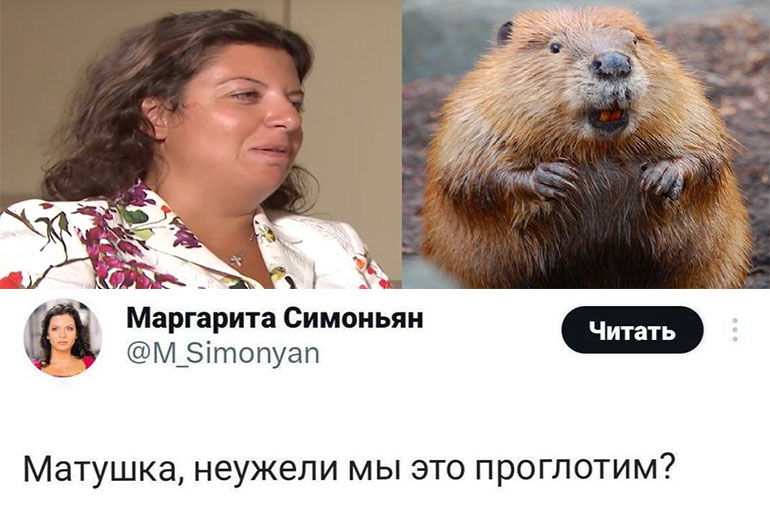
A screenshot attributed to Margarita Simonyan circulated online; it was dated to the summer of 2023 and linked to a sociopolitical dispute. However, copies of the screenshot don't confirm the authenticity of the original post. So the phrase should be called attributed rather than a verified quote. Later versions may have changed the background, cropped details, or added unrelated images.
From a political line to everyday double meaning
The political context gave the screenshot weight, but the image itself doesn't confirm that such a post was actually published. Journalist Ilya Shepelin called the screenshot a fake and said he hadn't found a matching post either on the account or in the archive. So it's more accurate to speak of a screenshot that circulated and was attributed to a public figure, rather than a confirmed quote.
In later copies, the screenshot frame may be cropped, redrawn, or supplemented with unrelated images. A beaver has been added to this version; this detail isn't part of the disputed image that was originally circulated. When describing it, the attributed phrase, the questionable screenshot, and the later collage should be named separately, rather than merged into one reliable original source.
Why the phrase works well for remixing
The word "swallow" suits memes well because it combines a bodily image with the meaning of "put up with." The caption can work on both levels at once: a person is literally looking at a questionable sandwich, while the viewer recalls how often they themselves have to accept uncomfortable terms. The question form leaves room for a reaction, so the image can supply the answer without extra text.
The screenshot look also plays a role. It creates the impression that the phrase already exists in public discourse and links an everyday image to a known statement. But screenshots are easy to fake or edit. If the author is retelling an actual event, the full context needs to be checked separately; if publishing a joking variation, it's better not to pass it off as a real post.
Examples of everyday captions
"Mother, surely we're not going to swallow this?" — a caption for a photo of a dish that relatives insist on calling a delicacy. Here the phrase reads literally and needs no political explanation. In response, you can add a second frame with an empty plate if you want to emphasize that the character ultimately agreed to try it.
The same phrasing suits a notification about a rescheduled meeting: a person opens their calendar for the third time and tries to accept yet another change of plans. Here "swallow" means not food but the need to put up with something. The specific detail makes the analogy clear and doesn't saddle the original quote with a new historical stance.
For a mild, self-deprecating variant, you could caption it over unexpectedly bitter coffee or an overly spicy sauce. Such an everyday application lowers the conflict level and keeps the expression's main feature — a question that sounds like an invitation to share the bewilderment.
Context matters more than a punchy quote
Since the authenticity of the original screenshot is disputed, the phrase shouldn't be described as a reliably published statement by Simonyan. In the article, it matters to distinguish between the fact that users circulated an image with that attribution, and whether the attribution itself is confirmed by a primary post. The meme life of the screenshot can be described even with unestablished or disputed authorship.
There's no need to invent the exact origin of each copy: the screenshot may have been reshared many times, and the caption with the animal may have been added later. It's enough to explain the general template and show how the double meaning works. If the meme is used to discuss a real political event, it's worth avoiding the false impression that the screenshot proves more than the text and date of the original post actually do.