The frame and the video
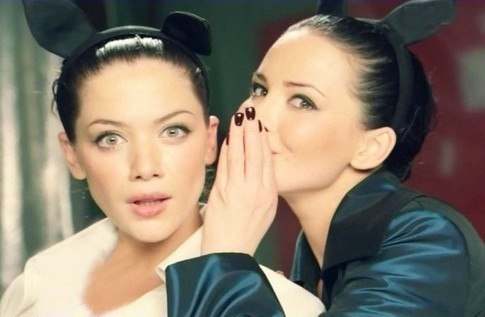
The photo shows two girls wearing dark headbands with ears. One looks straight into the camera with wide eyes, while the other covers her mouth with a hand with dark nail polish and whispers into her friend's ear. The scene looks like a staged shot filmed for a music video.
Nikita is a Ukrainian vocal group, and the song "Zaychik" dates to 2008. The specific details of the shoot, the director, and the video's release date are not known.
How the frame became a meme
The expressions of the two girls — intrigue, curiosity, and the readiness to share a secret — quickly proved to be universal. Users cut a fragment from the video and added captions about gossip, talking about acquaintances, and secret conversations. Because of this, the frame came to be seen as a sign in its own right rather than as part of the video sequence.
Interestingly, the scene itself rests on a simple dramatic setup: one girl looks surprised, while the other is clearly about to tell her something important. That is enough for the viewer to invent the rest on their own. This is precisely why the captions placed under the frame can vary widely while the meaning stays recognizable.
Over time the frame also began to be used as a sticker, where a single glance is enough to convey a situation. Unlike long text jokes, this macro needs no explanation and suits a quick reply in a conversation. This is one reason visual templates from music videos live on longer online than many text-based memes.
The gesture of whispering with a hand covering the mouth became recognizable and carried over to other pictures. The meme works almost without text: the image conveys the topic on its own, so it is easy to understand even without knowing the video.
Use
Most often the macro is used as a reply to news someone wants to retell in confidence, or as irony toward someone discussing others. The joke is gentle, so it is easy to use in friendly chats and comments where a light tone matters.
There are variants with new captions, ranging from musings about events in TV series to everyday stories. What matters is that the meaning always comes down to the characters' behavior and to the gossip situation itself, not to the girls' appearance.
Context and attitude
Memes from music videos were a common phenomenon on the Russian-language internet of the late 2000s and 2010s. Videos and their frames got a second life, since striking images are easy to cut from footage and use outside their original context. This is how macros appeared that, over time, began to live lives of their own.
The macro is built on humor about the characters' behavior rather than mockery of real people. This article does not cite any public comments from the group's members about the meme, so an assessment of their attitude toward it falls outside the scope of this piece.
Conclusions
The "Him" meme shows how a short episode from a video turned into a universal sign for gossip. A simple gesture and facial expression turned out to be clearer than any caption, which is why the frame continues to be used in conversations.