The contest and its history
Eurovision is a music contest the European Broadcasting Union has run since 1956. Each participating country sends a performer with a song, and the results are decided by viewers and professional juries. The contest has long since become not just a musical event but a spectacle, where visual images and staging matter just as much.
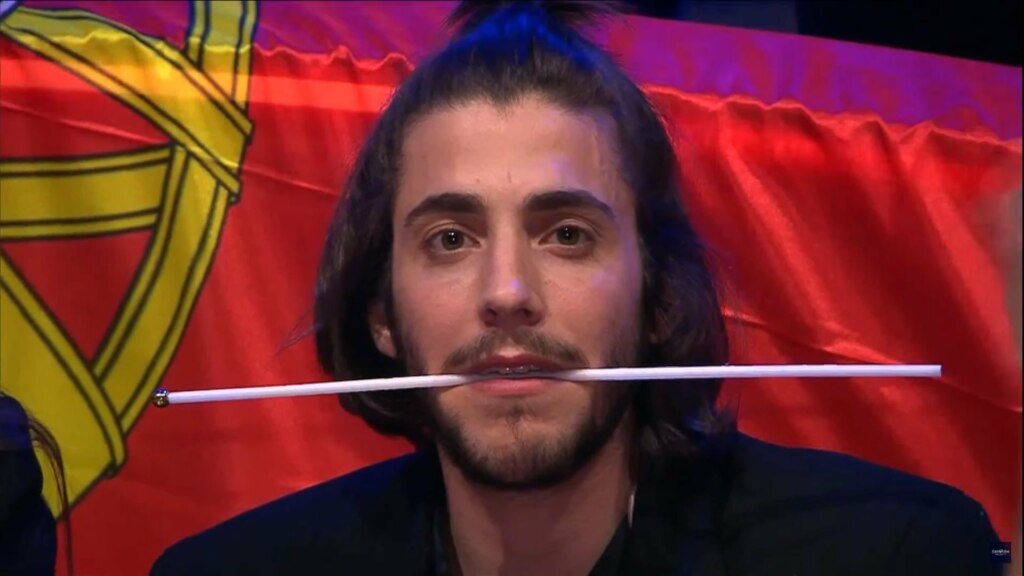
In 2017 the contest was held in Kyiv, since Ukraine had won the previous season. Preparations for the show drew extensive press attention, and the broadcast itself drew a huge audience across many countries. The winner was Portugal's representative, Salvador Sobral, with the song "Amar pelos dois," which many remembered for its restrained, simple delivery.
The season's curiosities
The main memes came from unusual costumes and stage images. Especially memorable were a contestant in a skirt with a long braid, a person in a glowing mask, a performer with a horse's head, and a fan who ended up on camera in a state of undress during the broadcast.
Most of these storylines are built on surprise: the viewer sees a striking image and quickly understands why it sparked discussion. The memes don't reflect the personal qualities of specific performers but the visual noise that piles up around the contest every year. These storylines also show how quickly a shared sense of recognition forms around a live broadcast: viewers in different countries notice the same details at the same time and start discussing them at the same time.
How the memes appeared
Most of the memes appeared right after the broadcast and spread through screenshots and short videos. Individual stills got new captions and were compared to familiar everyday situations. That's how scenes from the contest became universal templates for describing confusion, delight, or exhaustion.
The exact origin of individual memes is not known. So the text relies on describing the storylines themselves and on the typical mechanisms of spread characteristic of the internet in 2017.
Where they spread
The main venues were social networks and themed communities. In the Russian-speaking segment, the memes moved from blogs into humor feeds, and comments under news about the contest often turned into a stream of jokes. The pictures were readily remade, with captions about everyday situations added on.
Interest in the contest depended on the audience: some viewers followed the songs, others waited for the most striking images. The memes helped bring both groups together, because they could be understood without knowing the language and without close familiarity with every song.
Perception and context
It's important to separate the contest itself from the jokes about it. The memes describe the eccentricity of the stage, not the personal characteristics of the performers, and are properly understood as part of a culture of spectacle. This approach allows the humor to be appreciated without spilling over into the participants' private lives. The contest's audience is varied: some viewers watch it for the music, others for the costumes, sets, and unexpected performances. For the second group, it's exactly these quirky moments that become the main reason to discuss the show and share clips in chats.
Over time, Eurovision became a regular source of memes, and every season brings new curiosities. The 2017 season is remembered for its striking images and for the win of a song notable for its restrained delivery.