The performance people remember
Sergey Lazarev represented Russia at Eurovision for the second time: the first time was in 2016, the second in 2019. The song “Scream” was performed in the final of the contest in Tel Aviv in May 2019. The result was third place with 370 points, 244 of which were given by viewers.
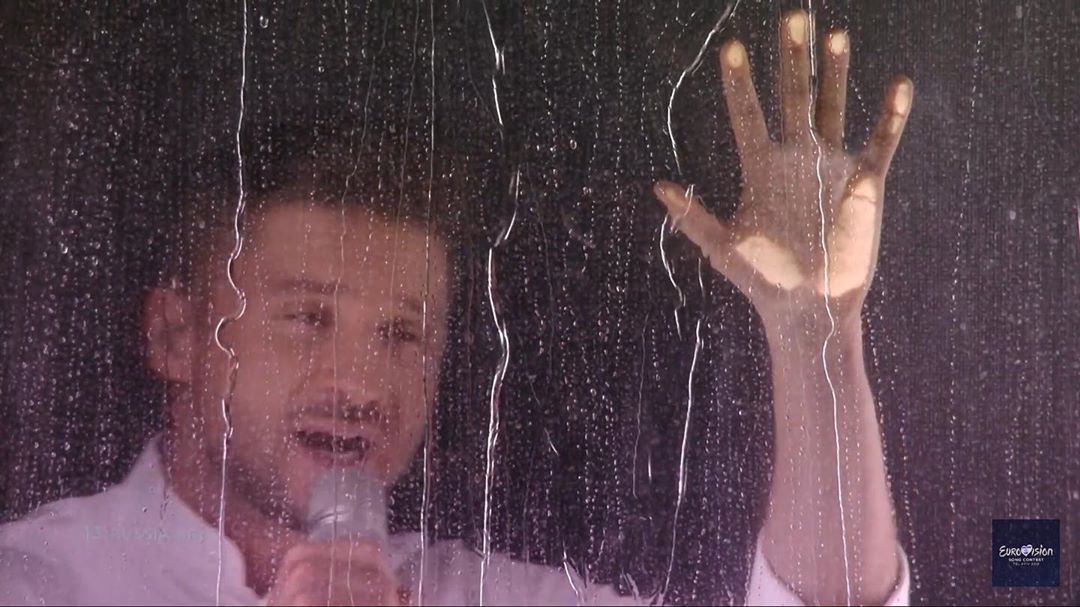
The performance was memorable visually: the stage was flooded with water, and the performer ended up behind glass down which droplets ran. These very images became the reason for jokes, because a dramatic gesture and a serious face easily carry over to any everyday situation.
What became the reason for jokes
The staging with rain: water runs down the glass, the performer stands behind it and holds a microphone. The frame with a palm on the glass recalls a scene from a melodrama: a person seems to be trying to make himself heard by someone left outside. Herein lies the comic disproportion. A serious emotional pose leaves room for captions about small everyday disappointments.
The meme is built on a specific scene rather than on the person's personal traits. It works as a universal image of waiting, longing and an awkward farewell, which the caption translates into an ordinary plane.
What is visible in the picture
The photo is taken through glass covered with droplets and streaks. In the foreground on the right, a hand with spread fingers is pressed against the glass, and light glints are visible on the palm. At the bottom right is the Eurovision 2019 logo with the word “Tel Aviv,” and in the bottom left corner a barely discernible semi-transparent inscription.
Behind the glass a man in a light shirt with a microphone in his hand is blurred. His mouth is slightly open, as if singing, and his expression is tense. The colors are cold, with a violet-pink tint. The performer's name is given in the title.
Caption examples
Three examples on the theme of work panic and everyday drama.
“The quarterly report had to go out at 5:55 PM, and I'm still looking for the “Send” button.” The pose with the palm on the glass looks like a plea to someone outside. The caption moves it into office life, and the drama of the frame turns into ordinary work panic.
“Went out for bread in the rain and realized I'd left my keys on the table.” The wet glass and the gesture become the feeling of a moment when everything is going wrong. The joke rests on a small everyday detail which, by contrast, looks almost tragic.
“She said she'd call back. Three days have passed, and I'm still standing at the window.” The image of waiting works because the frame already looks like a long standing. The caption simply explains what the hero is waiting for, and the viewer completes the pause on their own.
How to build such a joke
The template rests on exaggeration: the scene already looks dramatic, and the caption turns it into a trifle. The more mundane the cause, the stronger the contrast with the solemnity of the frame.
If the caption concerns a public performer, it is better to joke about the performance, emotions on stage and the genre of the number. Jokes about appearance or private life outside the stage do not belong to this meme, and the picture only loses its meaning because of them. Captions written in the first person work well: then the viewer sees not the performer in the frame, but themselves.