What is depicted
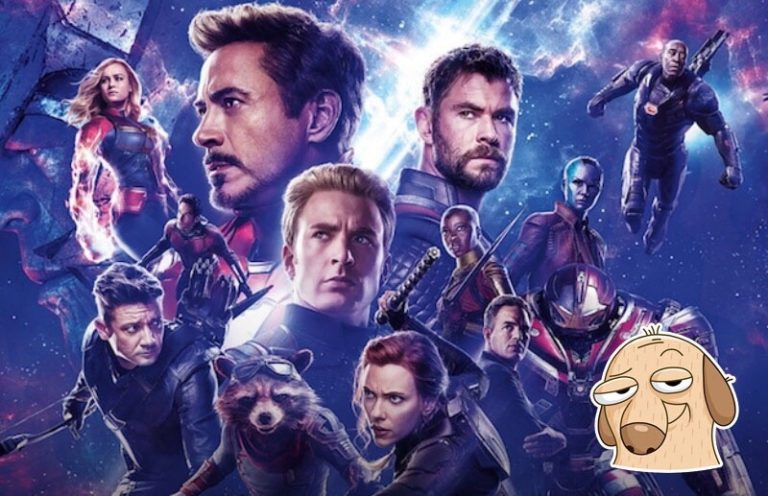
A large horizontal poster filled with figures of the heroes in costumes: some are floating, others standing, all looking in different directions. The background is blue and purple nebulae with bright glints. At the bottom is a raccoon with goggles pushed up on his forehead and a red-haired heroine in a dark suit, while at the top of the frame the faces of the heroes are shown in close-up at the center.
In the lower right corner is a cartoon dog: a beige muzzle with brown droopy ears and half-closed eyes. The expression is bored and slightly displeased, as if it is watching what is happening without any interest. The sticker clearly does not belong to the poster and has been added on top of it.
Origin of the dog
The origin of the sticker is not established: the original source, author and date of first publication are unknown. The poster is recognizable as the film's promotional image, while the dog was added separately.
Stickers like this are usually shared as standalone images for chats and comments, so their appearance is linked not to a single post but to a series of combinations. This is a general observation, not a confirmed history of this particular image.
So it is better to rely on what is visible in the picture rather than on the history of its appearance: the collage works as a standalone template for captions, regardless of who assembled it and when.
Contrast of pathos and boredom
The poster is meant as a solemn image of “everyone together before the decisive battle.” The composition is serious: the heroes are dramatically lit and the background is grand. The sticker breaks this tone: one small figure looks indifferent amid the general tension.
The viewer first takes in the scale of the poster (dozens of heroes, dramatic light, cosmic background) and only then notices the bored dog's face in the corner. This switch between the epic wide shot and a single indifferent sticker creates the funny effect.
Spoilers and context
The poster is tied to the film's finale, so the meaning of some captions relies on knowing the plot. If the reader has not seen the film, some jokes will remain unclear. Captions like these should come with a spoiler warning.
Do not read plot conclusions from the sticker: the dog does not reflect any real event in the film; it only comments on the general feeling the poster gives.
Examples of captions and their logic
Example 1: “Everyone gathered for the final battle, and I came for the popcorn.” A contrast of roles: the scale of the poster and the modest goal of the viewer.
Example 2: “When someone wrote ‘meet at the portal’ in the chat, and I already knew I'd be late.” Funny because of the everyday context, which unexpectedly deflates the epic.
Example 3: “Colleagues at a big presentation, and me at it with the same expression on my face.” The dog's expression becomes a marker of boredom, and the caption carries it into the office.
Example 4: “The final battle has begun, and I already know it will end in negotiations.” The text creates intrigue and at the same time emphasizes the calm the dog maintains.
The general scheme: the caption links an epic scene with a personal everyday situation, and the dog sets the tone. If the caption itself becomes solemn, the effect disappears.
If the caption mentions a specific hero from the poster, it is better to choose a plot situation rather than the actors' appearance: the dog in the corner sets a tone of indifference, and the joke works best when it is contrasted with the solemnity of the moment.