Two images and a caption
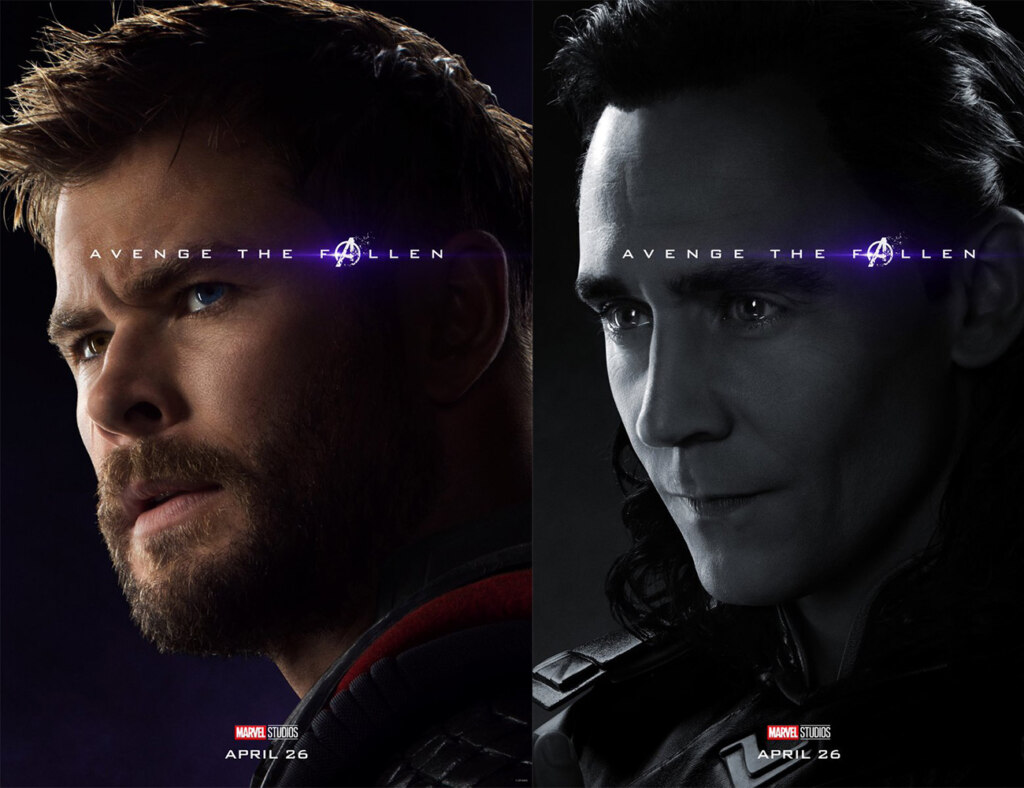
The picture consists of two vertical posters joined in the middle. On the left is Thor in color: a bearded man with tousled light hair looking off to the side against a dark blue background. On the right is Loki in black and white: dark hair combed back, a turn of the head and a restrained half-smile.
At eye level runs a glowing inscription, "AVENGE THE FALLEN," with the Avengers emblem standing in place of the letter A in FALLEN. At the bottom of each poster are the Marvel studio logo and the date "APRIL 26." For the meme, the color scheme and the inscription matter, not the specific faces.
What the color means
The poster series came out on March 26, 2019, a month before the premiere. The system was simple: characters who survived the events of the previous film were shown in color, and those the film had removed from the story appeared in black and white. These included both heroes who had turned to dust and those the villain killed in other ways, such as Loki.
That's why the poster reads well even without knowing the plot: color means "still in the game," gray means "out." When a character from another story is placed into such a scheme, color becomes a simple code: alive, relevant, still in the fight, or not.
How the parodies spread online
After the posters were published, homemade versions with other heroes began appearing on social media. At first these were characters from the same cinematic universe; then heroes from other films, series and cartoons followed. The joke needs only a recognizable composition of two portraits, so the format transfers easily to any material.
The first parody cannot be reliably named: there are several early examples, and none is confirmed as the first. What is known is that the theme quickly spilled beyond fan communities and became one of the notable formats of spring 2019.
Four captions for your own scheme
The caption should explain why the character ended up in the colored or the black-and-white group. Here are four variants made up for this scheme.
"The one who read the terms of the contract to the very end survived." Colored status goes to patience, and for an epic poster the reason seems unexpectedly petty.
"The one who promised to finish the task by Monday was eliminated." Black-and-white status ties to an everyday promise, and the gap between the poster's grandeur and the triviality creates the humor.
"Color was given to those who brought cookies to the meeting." An award with no obvious logic delights anyone who knows office traditions.
"The black-and-white version went to those who left the kettle on." A household detail turns a heroic poster into a domestic scene.
How to build your own version
The frame rests on two contrasting states: full color and no color. So comparing two objects under a shared criterion works best. If the caption changes the criterion, for example to "made it" and "didn't make it" for work events, the meme stays clear.
For the black-and-white side it's better to choose things and situations rather than real people: then the joke sounds gentler and offends no one. A good version adds its own logic instead of simply repeating the original.