Two states of one hero
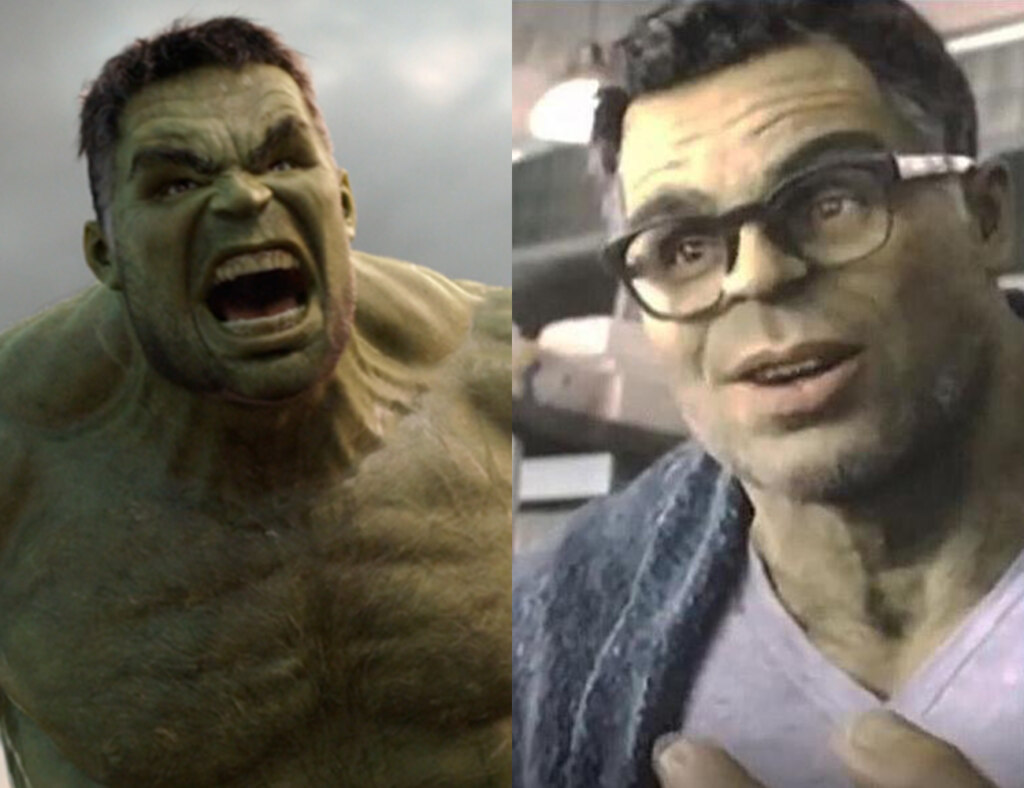
The left panel shows green Hulk with a tense face distorted by a roar, mouth wide open and a powerful torso. The background is light and blurred, the pose is aggressive, and the emotion reads at once.
The right panel shows the same character looking different: he wears glasses with dark, wide frames, his face is calm, lips parted as if he is explaining something, and his fingers are pressed to his chest. His clothes are light lilac-gray, a blue cloth lies on his shoulder, the background is blurred, and the frame looks like a scene from a short conversation.
Who plays him and where the glasses come from
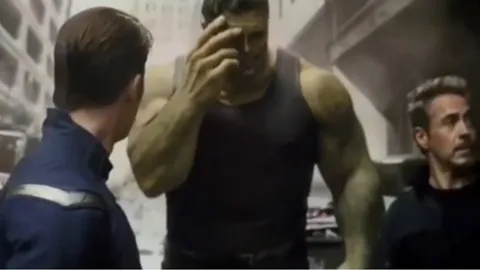
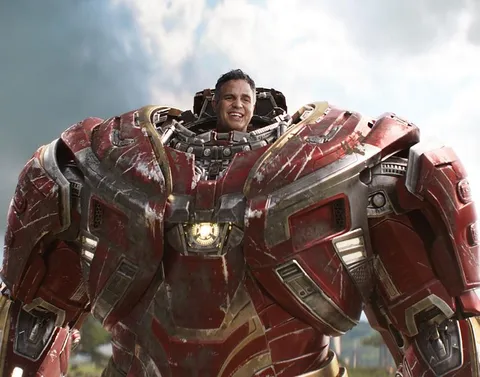
The character appears in the Marvel films, with Mark Ruffalo playing Bruce Banner and the Hulk. The version with glasses is called the “smart Hulk”: he first appears in *Avengers: Endgame* (2019), set after a five-year time jump. In the plot, Banner merged the Hulk's strength with his own mind, so the hero stays green and powerful but speaks calmly and reasonably.
It is important to separate the film's plot from the meme: the glasses in the frame are tied to this particular version of the hero, while in the joke they become the image of a person who has already pulled himself together. The left panel with the furious Hulk serves as the reference point against which calm is compared.
Why the two-panel format works
The two-panel layout is built on comparison. The viewer sees the first panel and expects a continuation, and the second panel flips the emotion. The stronger the contrast between fury and reasonableness, the clearer the joke's meaning.
The origin of this particular pairing of frames, with its specific panels and captions, is not established. However, the device of comparing one character in two states is widely used in memes and is recognized without explanation.
Caption examples
Example 1. “Monday, 9:00: ‘Everything has to be redone right now!’ Monday, 9:05: ‘Well, let’s sort this out calmly.’” The change of tempo shows how quickly the mood shifts after the first panic.
Example 2. “When the cat sees an empty bowl / when the cat sees a full bowl.” The caption moves the pattern to a domestic scene, and the contrast between the furious look and the calm contentment works without extra words.
Example 3. “Me before my first cup of coffee / me after my first cup of coffee.” A simple example where the joke lies in the difference of states alone: one personality with different levels of alertness.
In all the examples the order of the panels matters. First the viewer sees the emotion, then the rational continuation, and the gap between them produces the laugh.
How to make your own version
Situations suit this meme when the same action can be shown in two modes: rushing and calm, noise and quiet, panic and plan. It works well if the second panel not only calms but offers a concrete solution.
Do not change the frame too much: the character's recognizability holds the joke. It is better to use short captions and one clear contrast, so the meme reads quickly and does not lose its meaning.
A good option for your own version: one panel shows a stormy reaction to a task, the second shows the same person with a cup of tea and a to-do list. It matters that the second panel looks confident, otherwise the point of the comparison is lost.