A line from a discussion
By late 2009, the abbreviation >mfw already appears on 4chan — the opening of a post about a situation to which the author is reacting. The earliest surviving example is linked to a discussion of music on the /mu/ board; the archived date points to November 29. This is an early documented use, not an established moment of the phrase’s invention: old threads have survived only partially.
In 2010 the abbreviation entered Urban Dictionary, and in 2011 a separate subreddit about it appeared on Reddit. The move from text to images was natural: an author could first describe an expression in words, then add a photo or drawing of a face showing that reaction. Alongside MFW people use TFW — “that feel when” or “that feeling when”: this formula denotes a feeling caused by a situation. It can also be accompanied by an expressive image, but it does not require describing another person’s face.
A collage instead of a single reaction
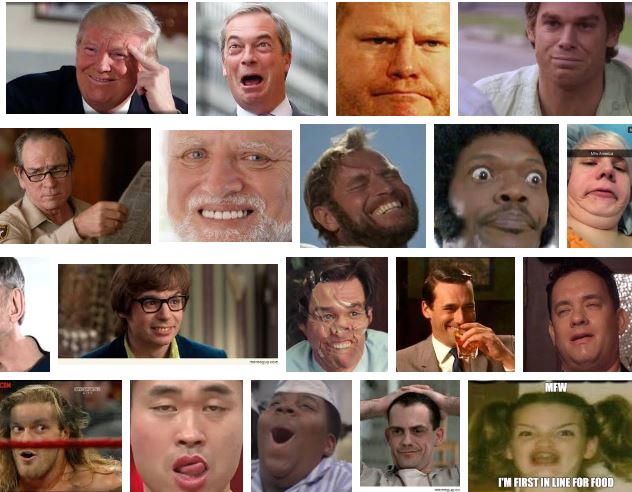
The picture gathers, in a tight grid, smirks, open mouths, tired looks, surprise and grimaces. In the bottom right a caption is visible saying the author is first in line for food. The collage does not tell one story: it shows a range of faces that can accompany different situations.
For MFW, the text names the occasion, while the chosen face signals how calm, exaggerated or awkward the reaction is. Without a situation the grid remains a catalogue of expressions; with a short phrase, one of them becomes a response to a specific episode. That is why this collage is less a ready-made macro than a set of possible intonations.
How the situation changes the face
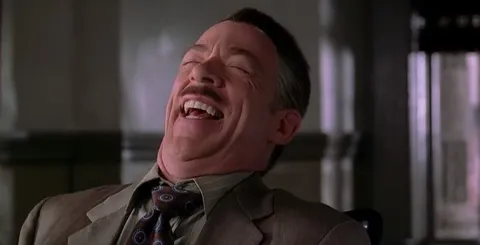
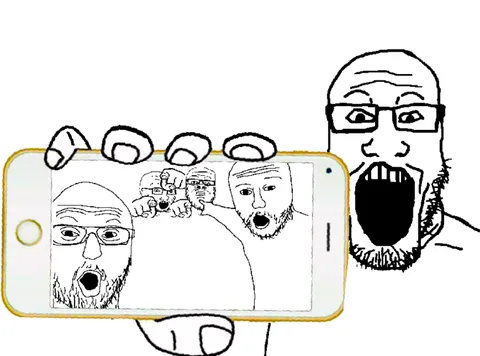
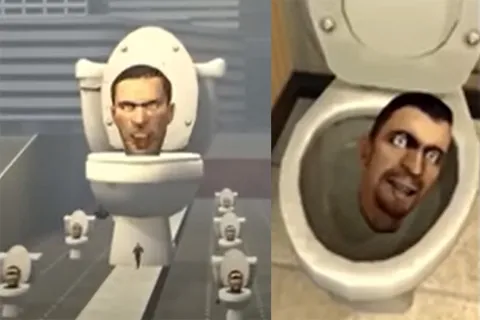
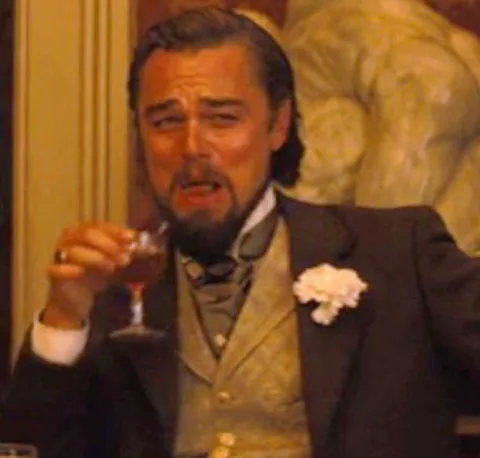
In memes the face does not have to depict the author of the post. It can be a film still, a photo of a celebrity, a drawing or a random grimace: the image speaks for a conditional participant in the situation. One phrase can be paired with a smile, disbelief or confusion — the meaning changes along with the chosen face.
In this grid the different faces do not form a sequence; they show how the same occasion can be read as joy, disbelief or confusion. For example, a message about an unexpectedly free evening can be paired with either a delighted grin or a suspicious look — the chosen expression sets a tone that is not in the situation itself.
Invented captions
Invented caption: “MFW the tests are green, but I forgot to check the mobile version.” A bewildered face would suit this grid: the trigger has already happened, and only now have the consequences caught up with the author.
Invented caption: “MFW the meeting was canceled, but they sent a new invitation for the same time.” A tired or distrustful grimace works better here — it adds a reaction that the text only implies.
Invented caption: “TFW my neighbor quietly returned the borrowed tool and attached a new pack of batteries.” The formula signals the author’s feeling on getting the tool back; the facial expression conveys unexpected gratitude for a small gesture.