Source of the line
The phrase comes from Oleg Tinkov's interview with journalist Yuri Dud, published in May 2022. In the conversation, Tinkov recounted his dispute with Mikhail Fridman and his reaction to criticism of his own statements. The short phrase “Misha, I [expletive], that's how I feel” quickly separated from the long conversation and became convenient to quote. This is a line from a specific person in an interview, not an independent political program.
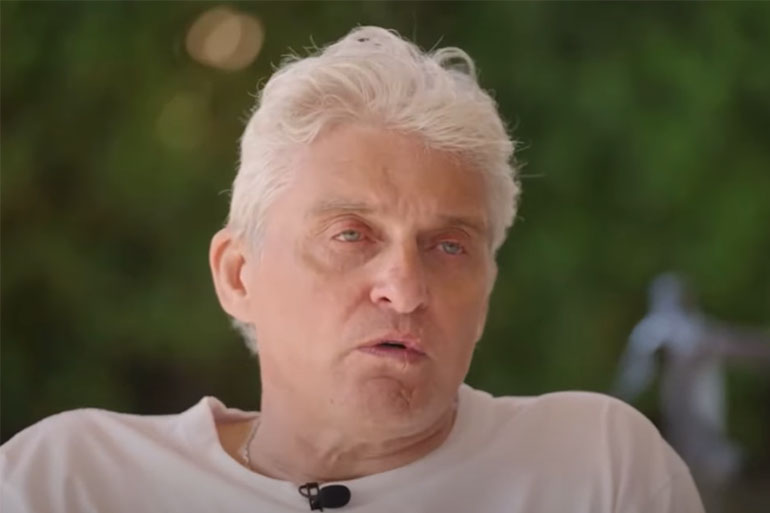
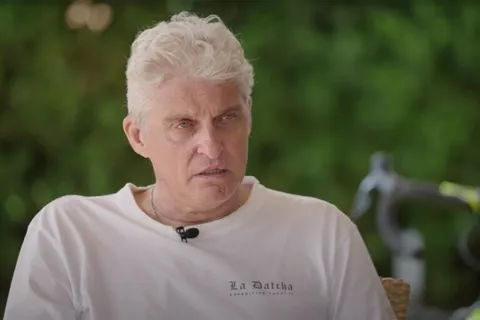
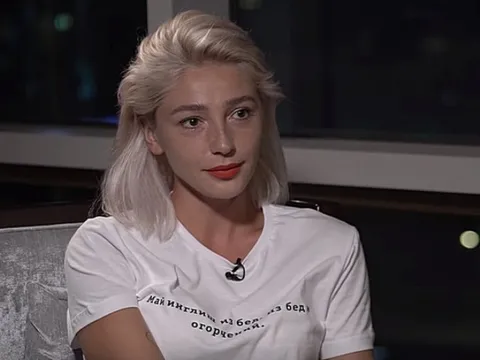
The local card shows a light-haired man resembling Tinkov, but from a single image it cannot be established whether the frame was taken during that conversation. The portrait may be an illustration added later. Reposts often keep only the final part of the phrase and remove the topic of the conversation. Therefore, one should not treat every version of the picture as a record of the original episode.
How the phrase became a template
The line transfers easily to other topics because it expresses a clear position: a person acknowledges that they are speaking about a subjective feeling and does not want to present it as strict proof. From this grew a meme formula for situations where an argument no longer changes one's inner decision. The profanity adds sharpness, but the meaning can be conveyed more gently: “I simply perceive it this way.”
After it spread, the quote began to be applied to conversations about tastes, habits, forecasts and everyday choices. There may be self-irony or stubbornness in this: the author understands that they are not citing data, yet honestly states what seems right to them. Some posts keep the political context of the original interview, while others use the phrase only as an expressive sound shell.
Meaning and tone
In a calm reading, the phrase marks the limits of an argument: “that's how I feel, although I can't prove it with numbers.” In a sharper reading, it means “I don't want to continue this argument.” It can end a light discussion about food or a film when the matter is a personal preference. But in public debate, the same words can sound like a refusal to answer reasoned criticism or to check one's own claims.
The tone depends on the relationship between the interlocutors and the subject of the conversation. Between friends, the line can soften an argument about a favorite series, while in a discussion of an important decision it may be perceived as a deliberate disregard for facts. When transferring it to a new topic, one should not pretend that Tinkov was speaking about it. The quote keeps its origin, even if the meme's author uses it as a universal reaction.
Examples and appropriateness
A new caption might read: “Friends are comparing two series, and I'm watching my favorite for the fourth time: that's how it feels to me.” Or: “The navigator suggests another street, but this one seems shorter.” A more tactful variant: “I understand the arguments, but I still prefer blue.” In all these examples the subject is personal taste, not a fact that can be proven.
The original phrase contains coarse language, so a softened version can be chosen for family, business and public settings. In a political dispute, a meme must not replace verification of claims. It works as an acknowledgment of one's own feeling, but it does not turn a feeling into proof and does not cancel responsibility for one's words. The portrait in the picture also does not reveal anything about the health or private life of the person depicted.