Three women in front of a warm wall
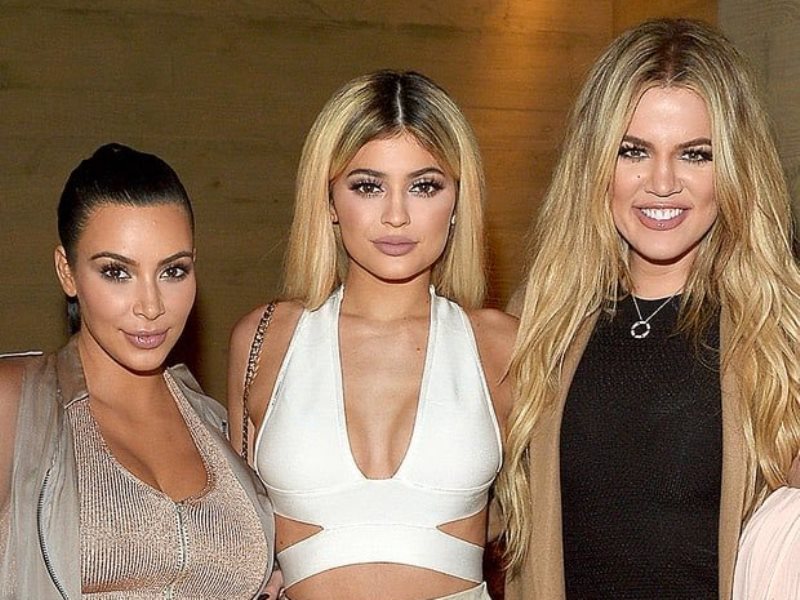
The photo shows three women standing almost shoulder to shoulder against a warm wooden wall. On the left, a woman with dark hair gathered in a high bun, wearing a light gray jacket over a pink-beige top. In the center, a blonde with straight shoulder-length hair in a white top with a deep neckline and cutouts at the sides. On the right, a woman with long light wavy hair, in a black top and a sand-colored cardigan, with a pendant on a thin chain. All look into the lens; the woman on the right is smiling broadly, the other two more reserved. A fragment of another light-colored garment is visible at the right edge.
The picture itself has no caption with names, so who is pictured cannot be determined from the frame. The meme is associated with the Kardashian sisters trio; anything about names rests on that well-known association, not on the people's appearance. Names are not needed to get the joke: the image of three confident people side by side is enough.
Where the formula came from
The formula “Name a more iconic…” came from Twitter and was built on duos: a user showed a pair and asked people to name the more famous one. The trio version appeared as a follow-up. Who first published this exact photo with this caption, and when, is not reliably known, and early versions from different years are retold differently.
The source of the original photograph, the photographer, and the event where it was taken are also not established. The template has long since separated from the place and occasion of the shoot and works as a universal frame for any trio of people standing together.
How the caption works
The construction is short and made of three moves. First, the command “name,” which demands an answer. Then the bar “more iconic,” which sets up a comparison. And finally “I'll wait,” after which the answer becomes a contest. The humor lies not in the comparison itself but in the waiting: the other person must come up with something equally bold, or the challenge hangs in the air.
The more obvious the status of the original trio in the eyes of the caption's author, the sharper the contrast with any everyday answer, and the humor rests on that contrast. Respondents usually propose trios from movies, music, and literature, or flip the challenge and name something completely unexpected.
Caption examples and why they work
Below are several captions written for this template. The first: “Name a more iconic trio: a cat, a refrigerator, and the sound you hear from the kitchen at night.” The comparison with famous names shifts into a domestic scene, and ordinary things become legendary.
The second: “Name a more iconic trio: three employees who read the email to the end.” The contrast between the grand formula and a dull feat creates a short pause, after which the caption seems funny.
The third: “Name a more iconic trio: three things you always forget to take with you.” The formula stays intact, but the content breaks expectations: the challenge turns into a list of trivia, and the reader supplies the ending.
The fourth: “Name a more iconic trio, I'll wait” and everyone at the table goes silent. Here “I'll wait” works as irony about the genre itself: the challenge goes unanswered, and that is already a joke about the joke.
How to use this template
The template fits when the picture actually shows a group of three standing or sitting together, because the structure of a “trio” must be readable without hints. Good captions are short: one part for the comparison, one for an unexpected object, one for the phrase “I'll wait.”
It's important not to carry the joke over to the appearance of real people. The format rests on comparing statuses and habits, not looks, so captions about how people look in a photo tend to come across harshly and don't work as intended. It's better to look for objects, situations, and everyday details that can easily be set next to the grand word “iconic.”