A line from a song about a lack of resources
The meme's name repeats a line from the song "Mozgi & Dengi" ("Brains & Money"), usually credited to the Russian group Komsomolsk; the track's authorship is not established. The chorus lists the absence of both money and brains; the short, rhythmic formula is especially easy to remember and pick up in music clips. The viral sound is used as a caption for situations where a character spends impulsively or does something obviously foolish. The expression shouldn't be treated as a standalone proverb with an ancient history: the meme reference rests on a specific song.
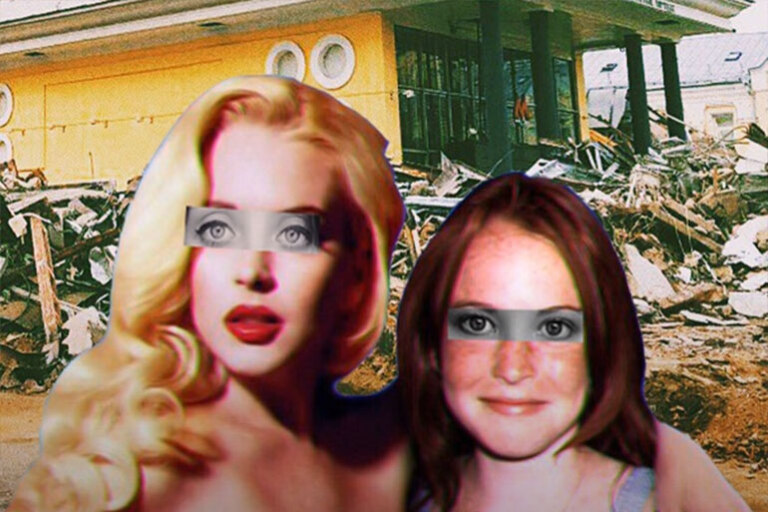
The image shows two stylized female figures with dark bars over their eyes and a contrasting background. The illustration itself doesn't reveal whether they're connected to the video or to specific characters. So it's more accurate to describe the visual as an edited pairing rather than attribute an invented backstory to the women. The musical line sets the meaning, and the picture adds an image-driven, somewhat glossy presentation.
Self-deprecation, not a serious diagnosis
The words sound harsh and deliberately self-blaming, but in short videos they're often used as exaggeration. An overspend, a forgotten appointment, or an impulsive decision is accompanied by the song's repeated line. The comedy appears when the character already understands the consequences but keeps the same habit anyway. The music turns an ordinary failure into a collective chorus the viewer can recognize and sing along to.
The phrasing can sting if aimed at another person. It's safer to apply it to yourself or to a fictional character — "there I go again," not "there you go again." Money and intelligence shouldn't become a way to belittle people for poverty, lack of educational opportunity, or life difficulties. In the original meme usage, what matters is hyperbole about one's own choices, not a reliable judgment of a person's abilities.
Examples about purchases and plans
"Got paid, made a budget, saw a sale — the budget went on vacation." The song can play over a shot of a purchase, while the caption spells out the chain of impulsive decisions. For studying: "Downloaded a planner app so I wouldn't forget assignments, and forgot to open the app." Here the lack of resources turns into a joke about the habit of relying on a new tool.
For a trip with friends: "We bought the tickets, then remembered we also need to book a hotel." This version doesn't blame one person but jokes about the group's planning in general. In the image, you can contrast two states: "the decision seemed reasonable" and "remembered the price." Real people shouldn't be used as the target of the song line without their consent.
The musical reference and the image's context
The meme suits self-deprecation about budgeting, forgetfulness, a bad decision, and plans that didn't survive the first reality check. It's especially recognizable when the sound itself or a short chorus line is added, but a static image also works as a caption for a situation. It's best to keep the words "no brains, no money" in a context where it's clear this is an exaggeration.
Don't pass off the pair of figures as an official video: the illustration is separate and isn't tied to any clip. Don't attribute to the song a moral claim that poverty is caused by a lack of intelligence. The verifiable fact here is simpler and more specific: the formula is tied to the song "Mozgi & Dengi," usually credited to the group Komsomolsk, and later memes use it as a musical reaction. Keep this reference and your own interpretation of the image separate.