The film the frame comes from
The frame is taken from a film by the Aardman studio, released in 2012. In Britain it was titled The Pirates! In an Adventure with Scientists!, and in the United States The Pirates! Band of Misfits. The director was Peter Lord, and the co-director Jeff Newitt. The production involved Aardman Features, Columbia Pictures, and Sony Pictures Animation.
The pirate captain is voiced by Hugh Grant. He leads a team of unlucky pirates who compete for the title of “Pirate of the Year.” The character is self-assured and loud, and it is precisely this intonation that makes his lines easy to retell.
The line that got misheard
In the short film So You Want to Be a Pirate!, lasting about eighteen minutes, the Captain answers a question about what he owes his success to, saying it is not the beard. The Pirate King guesses “Shouting?!”, and the Captain replies: “Good guess, but actually no,” meaning “a decent guess, but no.”
This line is easy to hear as “Well yes, but actually no,” and the mishearing turned into a meme. The version about mishearing by ear remains just a version: the only confirmed fact is that the line in the film sounds like “good guess, but actually no.”
A Reddit post from February 13, 2019, in a history community, is considered the widely noticed one: a user shared a screenshot with the misheard line and a caption on a historical theme. Other users quickly made similar pictures, and the format spread to other communities. Earlier uses have not been established.
What the frame shows
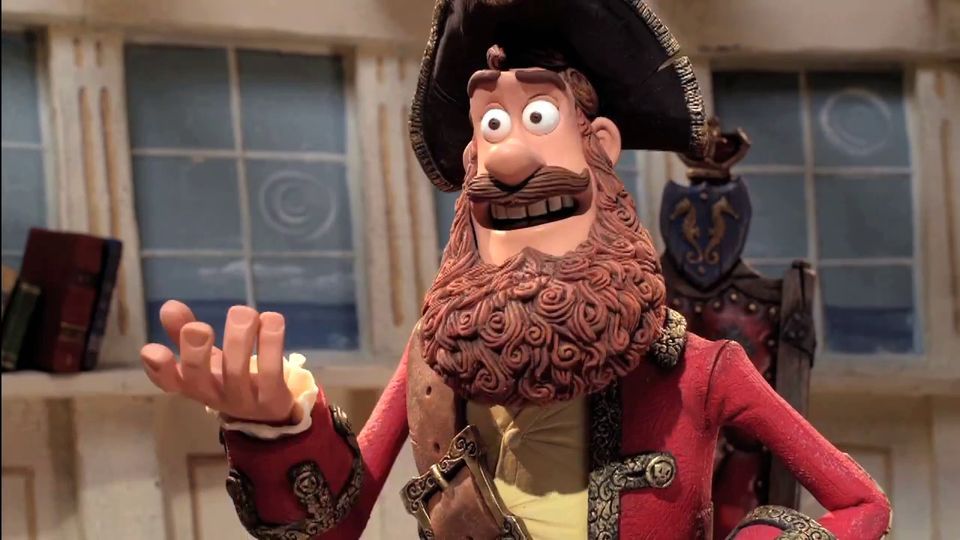
This is a frame from stop-motion animation: a puppet captain in a red coat with dark gold trim and a black tricorn hat with a gold edging. The beard is thick, brown, and curled in ringlets; the eyebrows are raised, the eyes wide open, and the mouth stretched into a smile with visible teeth. One hand is raised palm up, fingers slightly bent, with a white lace cuff at the wrist.
In the background is a window with blue panes, books on a shelf, and in the depths a blue shield with a seahorse. The setting underlines that this is a cozy cabin rather than an abstract stage. The expression is built on contrast: the face looks both pleased and bewildered, and that is exactly what makes the frame suitable for jokes about other people’s confident answers.
Three captions and how they work
The phrase rests on a “yes, but” pattern: first the other person agrees, then turns the meaning around. The three examples are invented for this card.
“You promised to finish by Friday. — Yeah, but actually no, Friday was yesterday.” The turn here is literal: the word “yesterday” makes the agreement false, and the reader grasps this instantly.
“This is simple work. — Yeah, but actually no, first you need to understand what’s simple about it.” The point is a shift in definition: the admission that simplicity turned out to be a matter of taste.
“Can you cook? — Yeah, but actually no, the recipe cooks, and I just read it out loud.” The comedy lies in the admission sounding like bravado. The captain in the frame looks exactly that way: confident, but clearly caught on his words.
When the phrase works
The phrase works best when the first part sounds confident and plausible. If the agreement is obviously false, the joke falls flat, because the turn is not prepared by anything.
What matters for the joke is a small detail that is easy to check: a Friday, an instruction, a deadline. The more specific the turn, the funnier it is. The picture suits both friendly irony and everyday scenes equally well, as long as the turn is clear without explanation.