Where the image came from
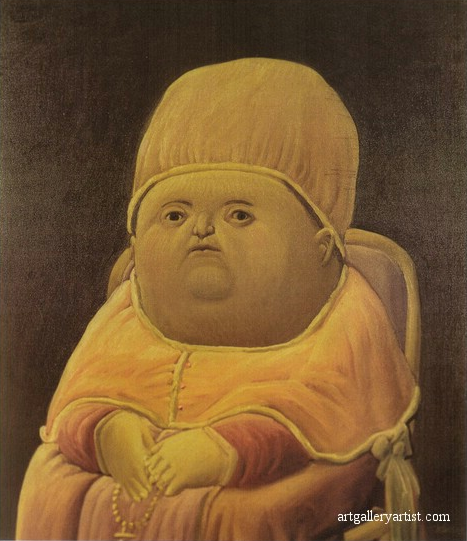
The image that forms the basis of the meme is a painting by Fernando Botero, an artist known for his rounded, deliberately voluminous figures. He works with exaggerated forms, and his characters often look comical and stately at the same time. The frame shows a plump figure in yellow robes, wearing a headdress, with a rosary in folded hands and a focused, almost stern gaze.
The exact title of the painting and the year it was created are not confirmed in this article. They're worth checking against museum catalogs and collections of Botero's work, since the image itself only carries the name of the site where it was published.
How the caption came about
The meme's main element is the caption "Y tho," short for the English "why though." It arose on English-language forums and social networks as a way to express bewilderment or disagreement with an obviously ridiculous statement. Combined with the character's almost motionless face, it produces an effect of dry, stony bewilderment: he isn't shouting or outraged, but it's clear to everyone that he's not pleased.
In 2014 the picture with this caption began spreading as a macro in comments, on forums, and on social networks. It was chosen as a reaction to unexpected statements, bad decisions by management, pointless rules, or ridiculous news. The Russian version, "Nu pochemu" ("But why"), took hold as a direct translation and kept the ironic flavor of the original.
How the meme is used
Most often the picture is posted under news that looks absurd, for example under statements where logic clearly falls apart. It also works as an answer to a question with no reasonable explanation: "why does the service work this way" or "why was this even done." In such cases the caption sounds almost like an exhale after a long pause.
Variations are built on the contrast between the character's calm face and dramatic text. Sometimes the caption is paired with a long description of the situation, sometimes it's left as one short phrase to sharpen the effect. Thanks to the frame's static quality, the meme adapts easily to sports, politics, pop culture, and everyday situations.
Why the meme has lasted
The meme's strength lies in its simplicity: the viewer doesn't need to know the painting's history to understand the emotion. The stout figure with a focused gaze looks both stern and funny at the same time, and the contrast between the stately pose and the everyday remark creates the comic effect. Botero's style is recognizable, so the figure registers quickly even at a small size in a feed or in comments.
The meme also fits into a broader line of internet reactions where images paired with captions express a lack of understanding. Its distinguishing feature is calm: instead of anger, the character shows weary bewilderment, which is closer to the modern ironic style of communication.
Notes on origin
The year 2014 is listed in the meme's catalog entry as the year it became popular, and this article relies specifically on that note. The first publication of the image with this caption, as well as the author of the adaptation, have not been established in this article. If further confirmation is needed, the dates should be checked against forum archives and catalogs of artworks.